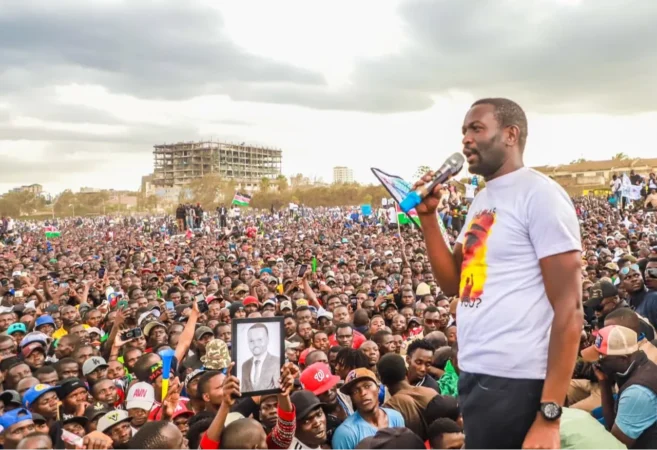
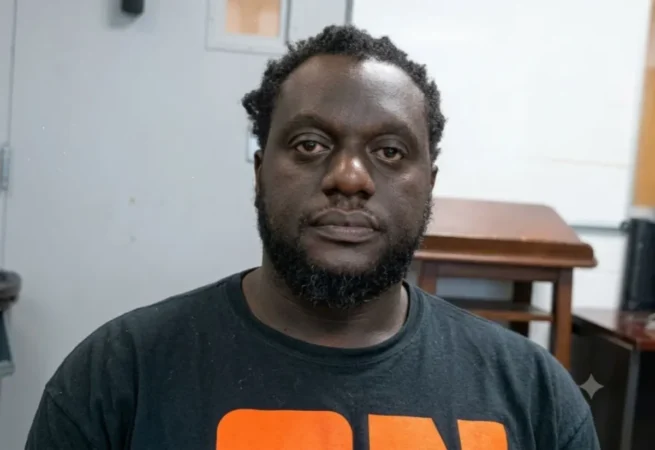



NAIROBI, Kenya — Democratic Action Party of Kenya (DAP-K) leader Eugene Wamalwa has announced that the opposition will move to court to challenge the government’s proposed annual inspection requirements for private vehicles older than four years, arguing that the policy is impractical and would place an additional financial burden on struggling motorists.
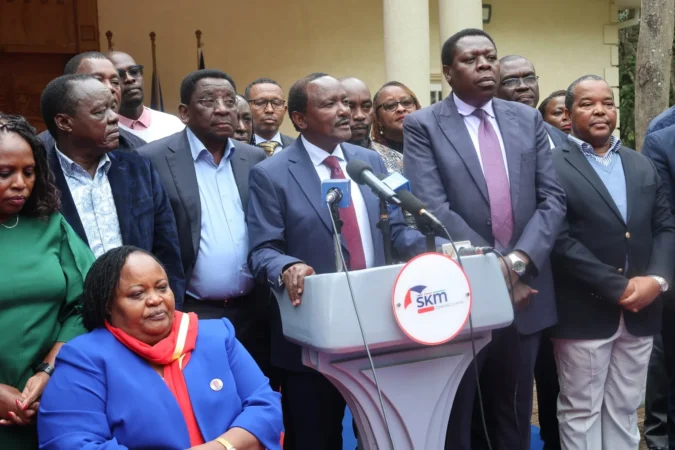
Speaking during an interview on Monday, June 29, Wamalwa said opposition leaders had instructed lawyer Ndegwa Njiru to file a petition challenging the regulations introduced by the National Transport and Safety Authority (NTSA).
According to Wamalwa, the proposed inspection regime would add to the financial pressures already facing millions of Kenyans amid rising living costs, taxes and transport expenses.
“We are going to court to challenge the practicability and the illegality of this policy,” Wamalwa said.
“I have seen them now giving in to pressure and backing down, but we are still going to court to challenge it.”
He added:
“We have instructed our lawyer, Ndegwa Njiru, to be in court to challenge that regulation. Kenyans are stretched. How much more do you think Kenyans can take?”
Opposition questions cost and practicality
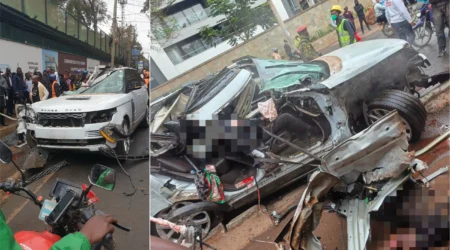
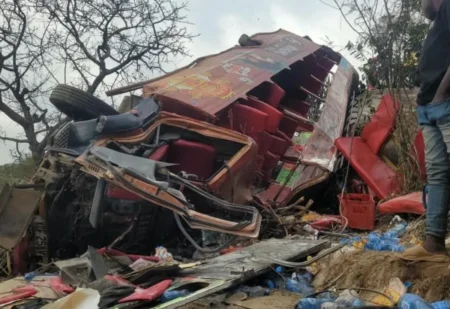
The proposed annual inspections have sparked public debate, with supporters arguing that regular inspections would improve road safety and remove unroadworthy vehicles from Kenyan roads.
Critics, however, contend that the policy could impose additional costs on vehicle owners already grappling with high fuel prices, insurance premiums, maintenance expenses and other economic challenges.
Wamalwa said the opposition believes the government should prioritize easing the cost of living rather than introducing measures that could increase the financial burden on households.
His remarks reflect broader concerns raised by motorists and consumer groups since details of the inspection proposals emerged.
NTSA issues clarification
The opposition’s announcement comes shortly after NTSA sought to clarify the implementation of the new regulations following widespread public concern and misinformation circulating online.
In a statement issued on Sunday, the authority said mandatory vehicle inspections for private vehicles would not be enforced during routine roadside checks conducted by traffic officers.
“During route checks, traffic officers shall not enforce the mandatory inspection requirement on private motor vehicle owners,” NTSA said.
The authority further stated that details regarding implementation and enforcement mechanisms would be communicated at a later stage.
The clarification was widely interpreted as an attempt to reassure motorists amid growing concerns about potential penalties and enforcement actions.
Relief for school and commercial operators
NTSA also announced temporary relief measures affecting school transport operators and commercial vehicle owners.
The regulator said school transport operators would not be penalized for failing to comply with specific provisions of the Traffic (School Transport) Rules, 2026, including requirements relating to reflectorised stop arms and telematics systems.
“School transport operators shall not be penalized for non-compliance with Rule 13 (Reflectorised red stop mechanical signal arms) and Rule 14 (Telematic system) of the Traffic (School Transport) Rules, 2026,” the authority stated.
Similarly, commercial service vehicle operators will not face penalties for failing to install telematics systems as required under the NTSA (Operations of Commercial Vehicles) Regulations, 2026.
“Commercial service vehicle operators shall not be penalized for non-compliance with paragraph d (Telematic system) – 9 of the NTSA (Operations of Commercial Vehicles) Regulations, 2026,” NTSA said.
Road safety versus affordability
The dispute highlights the continuing debate over how Kenya should balance road safety objectives with the economic realities facing motorists.
Proponents of vehicle inspections argue that periodic checks are common in many countries and help reduce accidents caused by mechanical failures.
Also Read: NTSA’s new traffic fines regime sparks debate among Kenyan motorists
However, opponents contend that implementation must take into account the financial impact on vehicle owners and the capacity of inspection infrastructure across the country.
Legal experts say the anticipated court challenge could force the government to clarify the legal basis, scope and enforcement framework of the regulations before they are fully implemented.
Court battle looms
Should the petition be filed, the courts may be asked to determine whether the regulations comply with constitutional requirements, administrative law principles and public participation obligations.
The case is also likely to test the extent of NTSA’s regulatory authority and whether the proposed measures place an unreasonable burden on motorists.
For now, the authority has indicated that enforcement details will be communicated later, while the opposition appears determined to challenge the policy before implementation advances further.
The unfolding dispute is expected to remain a major issue in public policy debates as Kenya seeks to improve road safety while addressing growing concerns over the cost of living.