


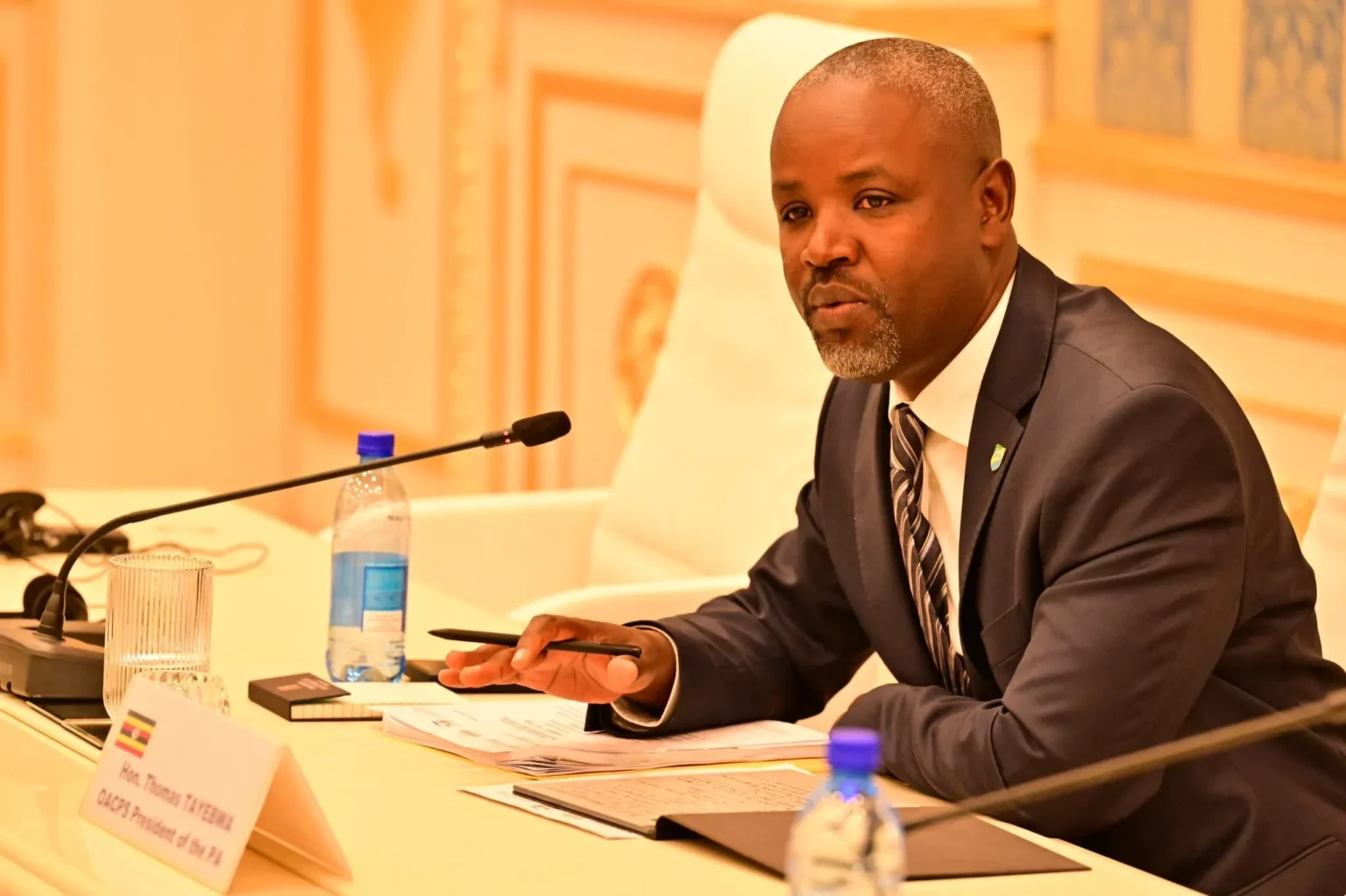
KAMPALA, Uganda — The endorsement of Thomas Tayebwa to continue serving as Deputy Speaker in the 12th Parliament has triggered renewed public scrutiny over his role in the leadership of the outgoing House, as the ruling National Resistance Movement (NRM) consolidates its hold on parliamentary leadership.
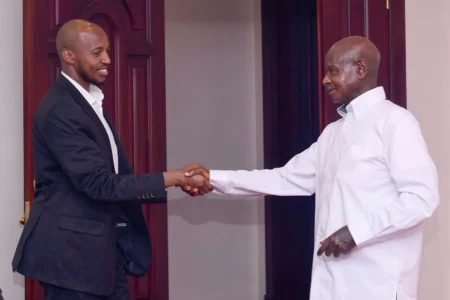
Tayebwa, who served as Deputy Speaker in the 11th Parliament under outgoing Speaker Anita Annet Among, was endorsed on Sunday by the NRM Central Executive Committee (CEC) in Entebbe, alongside Jacob Marksons Oboth-Oboth as the party’s flag bearer for Speaker.
The CEC endorsement was later adopted by the NRM parliamentary caucus, effectively positioning both candidates as frontrunners in Monday’s election, given the party’s numerical majority in Parliament.
However, while Oboth-Oboth’s endorsement has largely attracted internal consensus, Tayebwa’s continuation in the leadership has generated debate over his proximity to the controversies that have engulfed the outgoing parliamentary leadership.
Among stepped aside from the Speaker race following sustained scrutiny and investigations into allegations of illicit wealth accumulation, paving the way for Oboth-Oboth’s elevation within the party structure.
Rising debate over accountability and continuity
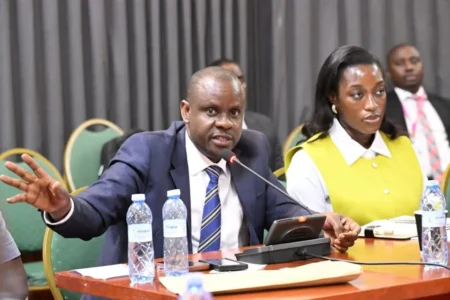
Critics argue that as Deputy Speaker during the same parliamentary term, Tayebwa cannot be fully separated from the institutional leadership that is now under investigation.
On social media, several commentators and political figures have questioned why scrutiny has largely focused on Among while Tayebwa has remained politically unaffected.
Among those weighing in is interdicted Principal Road Safety Officer at the Ministry of Works and Transport, Ronald Amanyire, who suggested the developments reflect perceptions of selective accountability.
He argued that the Speaker and Deputy Speaker function as a unified constitutional office and questioned the logic of isolating responsibility within parliamentary leadership.
Allegations of networked influence
Former Makerere University Vice Chancellor Prof Venansius Baryamureeba also criticised Tayebwa’s political trajectory, alleging that he operates within a broader network of influence across government institutions.
He further claimed that such networks extend into public agencies and governance structures, though these assertions have not been independently verified.
Activist Agather Atuhaire of Agora Centre for Research also maintained that Tayebwa was part of what she described as a wider system of financial excesses within Parliament, citing increases in allowances, administrative budgets and constituency-linked allocations.
Parliamentary budget figures show that the Deputy Speaker’s office allocation increased significantly in recent years, rising from approximately Shs 2.76 billion in FY 2020/21 to about Shs 14.4 billion in FY 2024/25.
Government and party defence
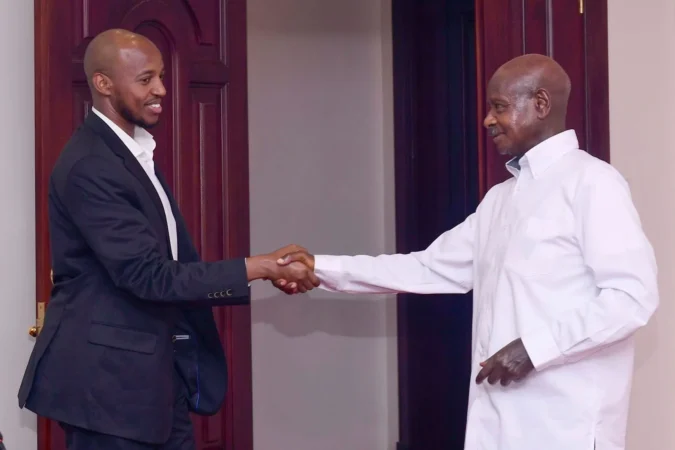
President Yoweri Museveni welcomed the endorsement of Oboth-Oboth and Tayebwa, saying the decision reflected ideological alignment rather than individual interests.
He urged party members to prioritise national development goals over personality-driven politics, citing wealth creation and socio-economic transformation as core priorities.
The NRM maintains that its internal selection process was based on consensus following consultations within the Central Executive Committee and parliamentary caucus.
Political consolidation ahead of Parliament vote
The endorsement follows weeks of internal realignment within the ruling party after several aspirants reportedly withdrew from the race for both Speaker and Deputy Speaker positions.
Also Read: Anita Among drops out of Speakership race amid pressure
With the NRM commanding a parliamentary majority, Oboth-Oboth and Tayebwa are widely expected to secure election during the inaugural sitting of the 12th Parliament at Kololo Ceremonial Grounds.
Opposition parties have fielded candidates including National Unity Platform’s Paul Mwiru and Democratic Party (DP) president Norbert Mao, who is also in contention for the Speakership.
Outgoing Parliament under scrutiny
The developments come against the backdrop of intensified scrutiny of the 11th Parliament leadership, particularly surrounding allegations of corruption and misuse of public funds.
Tayebwa has publicly acknowledged excesses within the previous parliamentary term and expressed regret over aspects of institutional conduct.
As Parliament transitions into its new term, attention is now shifting to whether the leadership choices signal continuity, reform, or a recalibration of internal accountability within Uganda’s legislature.