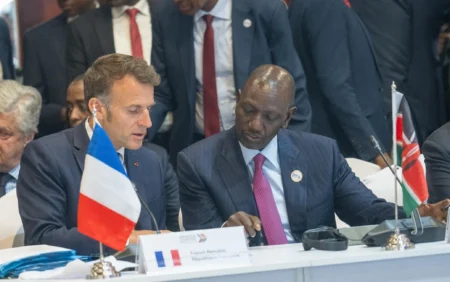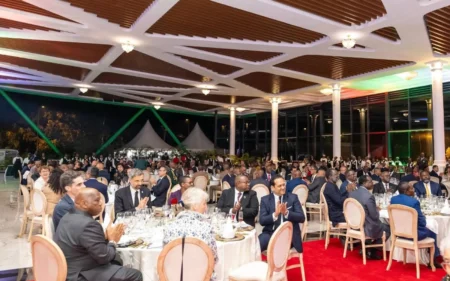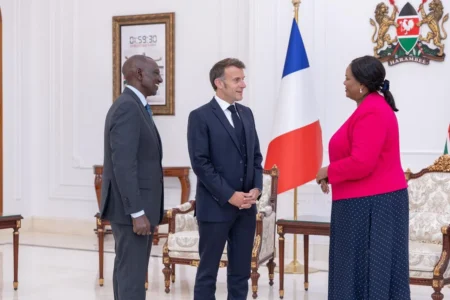


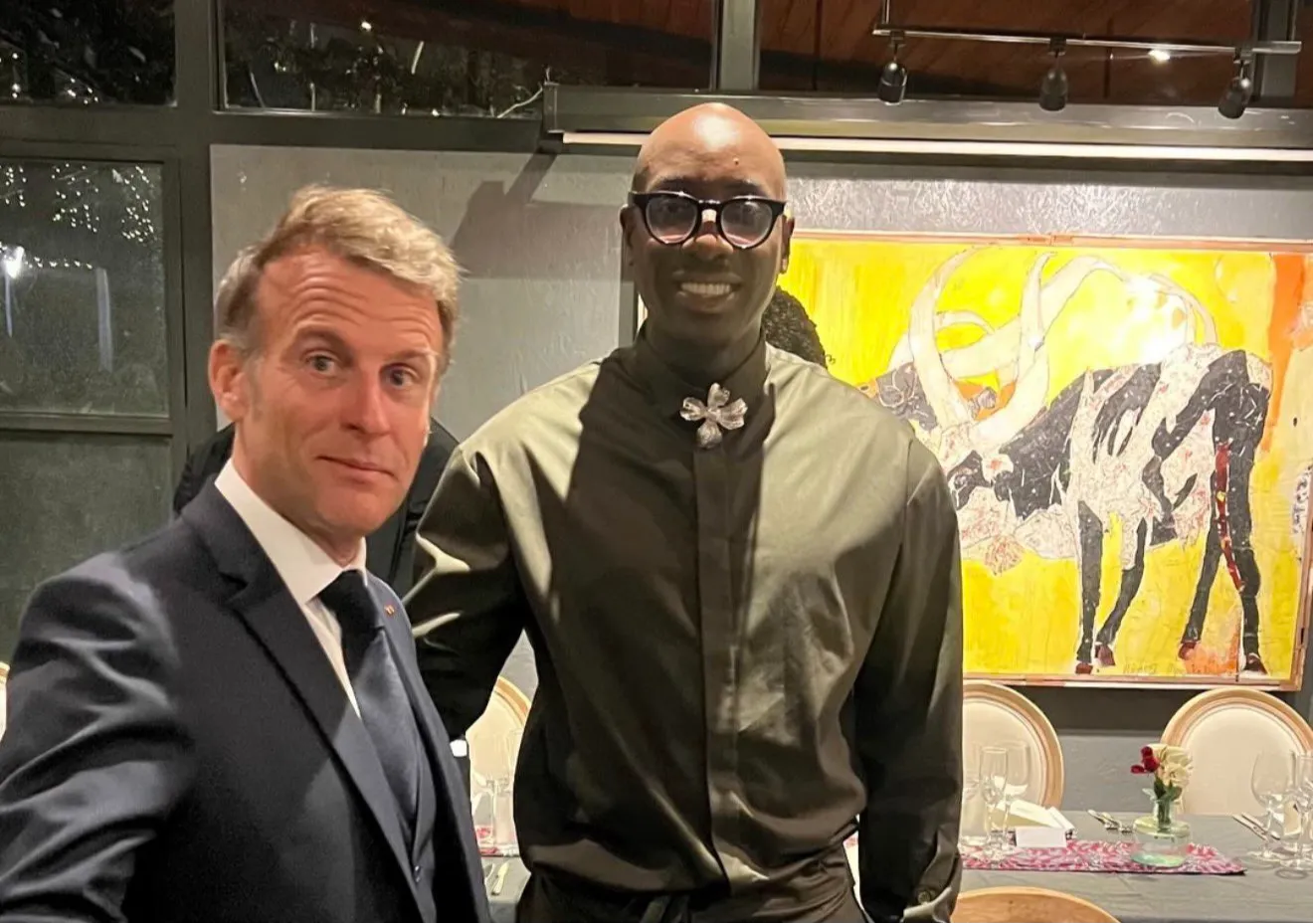
NAIROBI, Kenya — Kenyan singer Bien-Aimé Baraza has pushed back against a wave of online criticism following his meeting and dinner with Emmanuel Macron during the Africa–France Summit in Nairobi.
The backlash erupted after images circulated on social media showing the artist among invited guests interacting with the French president, prompting debate over the role of African creatives in global diplomatic spaces.
Critics argued that such engagements risk projecting alignment with Western political interests at a time when France’s influence in parts of Africa remains contentious.
Some commentators framed the meeting within broader concerns about neo-colonial dynamics, with a small but vocal segment calling for boycotts of the artist’s music.
Responding to the criticism, Bien defended his presence at the event, emphasizing autonomy and cultural identity.
“I can sit at a table with global leaders and still remain fully African, fully critical, and fully myself. Presence is not submission,” he said in a post on Tuesday, May 12.
Protests and arrests near summit venue
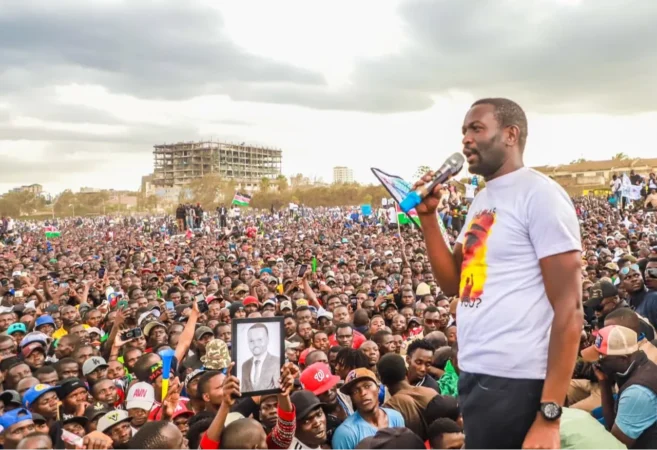
The controversy unfolded against a backdrop of heightened tensions on the streets of Nairobi, where police arrested several human rights activists attempting to access the Kenyatta International Convention Centre (KICC), the venue hosting the Africa Forward Summit.
Witnesses said protesters were intercepted along Uhuru Highway as they moved toward the venue, with some demonstrators, including foreign nationals, forcibly bundled into police vehicles.
Security around the convention centre was significantly reinforced following the incident, with access roads sealed off and a heavy deployment of officers.
The demonstrators were protesting against France and President Macron, accusing the French government of imperialism and opposing its involvement in the summit.
Also Read: ‘This is a total lack of respect’: Angry Macron scolds Nairobi Summit attendees over noise
Chanting anti-imperialism slogans and carrying placards, they called for an end to what they described as foreign interference in African affairs.
Police responded by firing teargas and shooting into the air to disperse the crowd, although some protesters regrouped shortly after. Additional security units later arrived, leading to further arrests as others fled the scene.
Diplomacy, culture and growing scrutiny
The twin developments, Bien’s high-level engagement and the protests, highlight a broader and increasingly visible tension across the continent: the intersection of culture, diplomacy and geopolitics.
France’s relationship with African nations has come under renewed scrutiny in recent years, particularly in West and Central Africa, where military withdrawals and shifting alliances have reshaped regional dynamics.
At the same time, summits such as the Africa Forward gathering reflect attempts to redefine partnerships around trade, climate cooperation and cultural exchange.
For artists like Bien, the debate underscores the evolving role of African creatives on the global stage — not only as entertainers, but as cultural ambassadors navigating complex political landscapes.