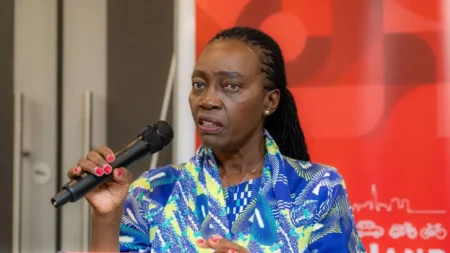


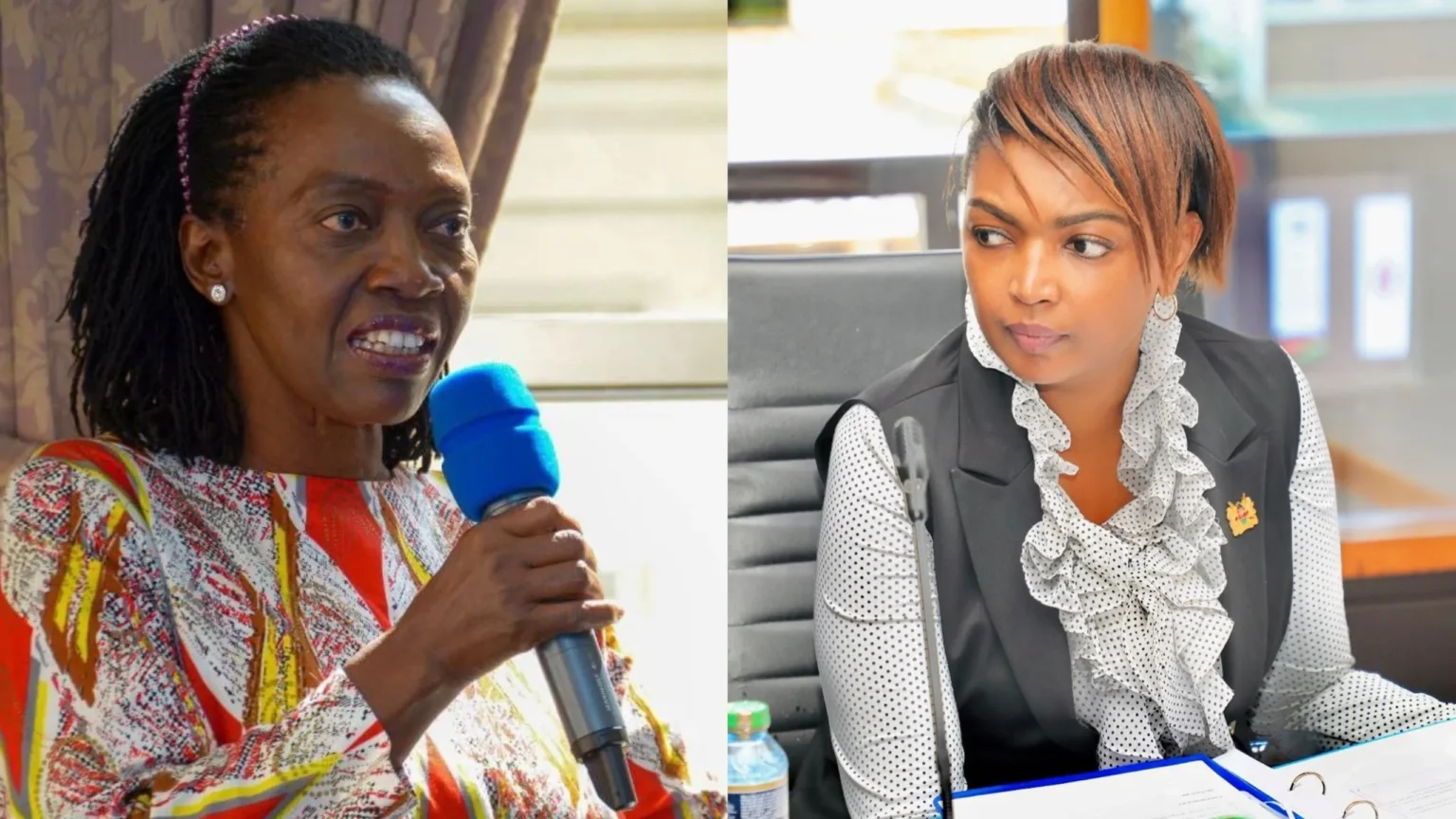
NAIROBI, Kenya — Martha Karua has joined growing calls for accountability against Karen Nyamu following controversial remarks the nominated senator made toward a Grade 10 student during a Senate session, a controversy that has sparked widespread criticism from political leaders, lawyers and members of the public.
In a statement shared on her social media platforms, Karua described the incident as “reprehensible and unacceptable,” arguing that Parliament should inspire young people interested in leadership rather than expose them to humiliation.
“What happened to Gabriella in the Senate is reprehensible and unacceptable,” Karua stated.
“She came to Parliament to witness democracy in action and perhaps to imagine herself in leadership one day. Instead, she was humiliated by a leader entrusted to protect the dignity of citizens, especially the young ones.”
The incident has reignited debate in Kenya over conduct in public office, gender-sensitive leadership and the treatment of young people within national institutions.
Karua, a former justice minister and longtime advocate for women’s political participation, said the incident contradicted the values many women leaders have fought to advance in public life.
“As a mother, a former parliamentarian, and a woman who has spent decades fighting for the dignity and inclusion of women and girls in public life, I know this is not the leadership we envisioned or struggled for,” she added.
She also encouraged the student, identified as Gabriella, not to allow the experience to discourage her ambitions.
“Gabriella, do not let this moment diminish your voice or your dreams. Women can serve with dignity and purpose and there’s a number of us who would love to share a cup of chai with you and show you how.”
Karua further reminded leaders that holding public office requires discipline, restraint and respect for citizens, particularly children and young learners visiting state institutions.
The controversy stems from remarks made by Nyamu during a Senate sitting on March 25 while acknowledging students attending proceedings under the School Voluntary Service Scheme.
“Mr Speaker, probably you should have made it clear which service to the Senate she’s offering, because I saw Senator Cherargei getting very excited when he saw a lady,” Nyamu said during the session.
The comments immediately triggered backlash online, with critics accusing the senator of humiliating the student and trivialising a programme designed to expose learners to parliamentary processes and civic education.
The issue has since drawn condemnation from several legal and civic leaders, including former Law Society of Kenya President Faith Odhiambo, who criticised Nyamu’s apology as inadequate and called for stronger disciplinary measures.
“A young female student who went to Parliament under the School Voluntary Service Scheme to learn was met with inappropriate and degrading remarks from Senator Karen Nyamu,” Odhiambo stated.
“The Senate must be a safe space that affirms the dignity and future of our children.”
The controversy escalated further after the Senate directed Nyamu to issue what panel Speaker Veronica Maina described as an “unreserved apology” to the student, her family, the Senate and the public.
Also Read: Kenya’s Karua joins African women leaders in condemning victimisation of Ugandan women
However, the apology itself generated renewed criticism after Nyamu suggested she had been instructed on what to say before attempting to defend her earlier remarks.
“Madam Speaker, this apology has been written for me to read, and parts of it constitute an admission to what I have been accused of, which cannot be further from the truth,” Nyamu said before reading the statement.
Amason Kingi, the Senate Speaker, had earlier described the comments as “disrespectful” and “inappropriate,” saying they fell below the standards expected of members of the House.
Despite eventually apologising, Nyamu again attempted to justify her remarks before being interrupted by Maina, who directed her to “leave it at that.”
The episode has fuelled broader conversations about ethical leadership, parliamentary conduct and the responsibility public officials bear when engaging with young people and vulnerable groups in official settings.