




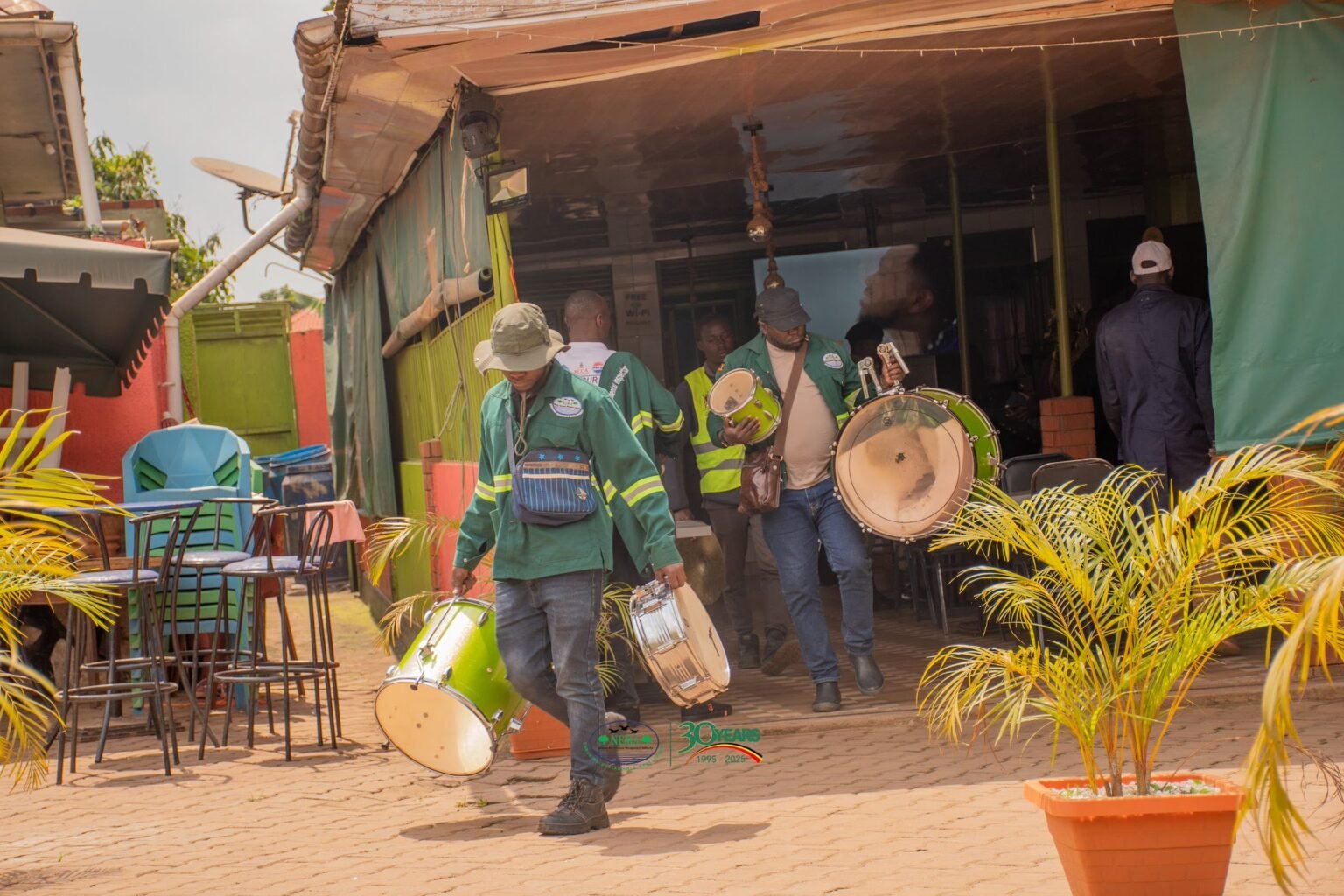
Bars, nightclubs and entertainment venues across Kampala are facing stricter regulation after the Kampala Capital City Authority (KCCA) issued a 14-day ultimatum requiring businesses to comply with noise pollution standards or face enforcement action.
City authorities say the directive is part of a broader effort to tackle rising complaints about excessive noise in residential and mixed-use areas, where nightlife businesses have increasingly come into conflict with surrounding communities.
KCCA Executive Director Sharifah Buzeki said the authority, working jointly with the National Environment Management Authority (NEMA), had already issued nuisance notices to affected establishments.
“We have issued nuisance orders to these business premises and given a grace period of 14 days to ensure that they insulate their premises, put noise limiters and do not bypass them,” Buzeki said.
“After that, we are going to enforce in line with the law,” she added.
Under Uganda’s environmental regulations, permissible noise levels are capped at 75 decibels during daytime hours and 50 decibels at night in urban areas. Authorities argue that many entertainment venues have consistently exceeded these limits, particularly in densely populated neighbourhoods.
“The noise levels in these areas must not exceed 75 decibels during day and 50 decibels at night,” Buzeki warned.
The crackdown targets a broad section of Kampala’s entertainment industry, including bars, clubs, lounges, event venues and late-night establishments operating near residential communities.
Officials say businesses will now be required to install soundproofing infrastructure, acoustic insulation and calibrated noise-limiting devices to control sound output.
The directive is expected to increase operational costs for some venue operators, many of whom are still recovering from economic pressures that followed the COVID-19 pandemic and subsequent shifts in consumer spending.
However, city authorities insist the move is necessary to protect public health and restore order within rapidly urbanising neighbourhoods.
Medical and environmental experts have increasingly linked prolonged exposure to excessive noise with sleep disorders, stress, hearing complications and mental health challenges, particularly in densely populated urban centres.
The renewed enforcement also reflects growing pressure on Kampala authorities to improve urban planning and environmental compliance as the city’s nightlife economy continues to expand.
In recent years, Kampala has witnessed a rapid increase in entertainment venues, especially in areas such as Kololo, Najjera, Ntinda, Kabalagala and Makindye, sparking recurring disputes between business operators and residents over noise disturbances.
Also Read: NEMA cracks down on noise pollution in Kampala
NEMA has previously warned that noise pollution remains one of the fastest-growing environmental concerns in Uganda’s urban centres, with enforcement historically weakened by inconsistent monitoring and limited compliance mechanisms.
Industry players, however, argue that nightlife businesses contribute significantly to employment, tourism and the broader urban economy, and have called for balanced enforcement that does not cripple the sector.
KCCA says enforcement operations will begin immediately after the expiry of the 14-day grace period, marking one of the city’s strongest attempts yet to regulate Kampala’s fast-growing entertainment industry.