

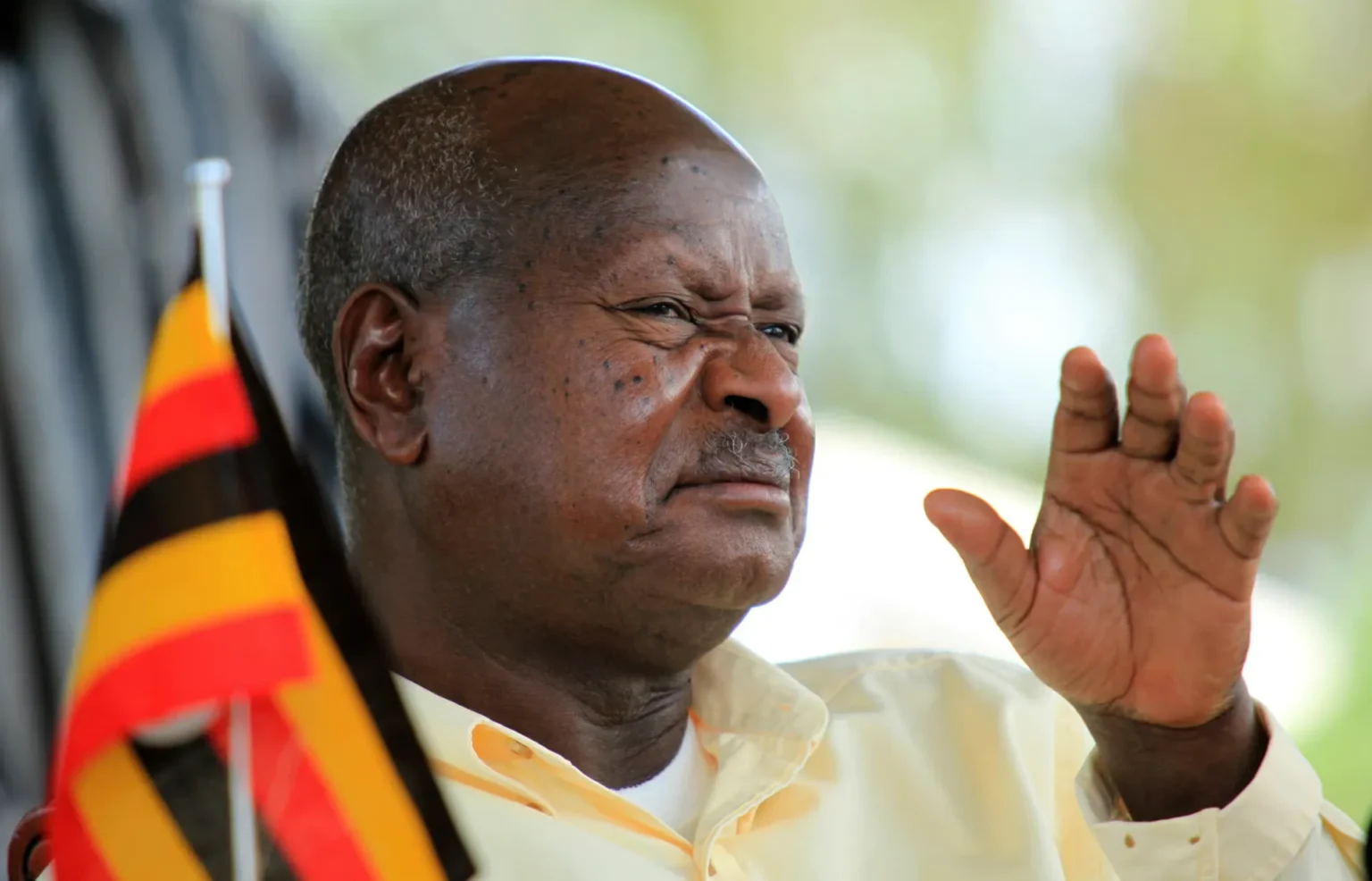
KAMPALA, Uganda — As President Yoweri Museveni prepares to be sworn in for a seventh term, scheduled for May 12 at Kololo Ceremonial Grounds, Uganda enters another political cycle shaped by a complex legacy of economic transformation, expanding state power, and rising public debate over governance, democracy and the country’s future direction.
Museveni’s victory in the January 2026 elections was widely expected after nearly four decades in power. Uganda’s Electoral Commission declared that the veteran leader secured 7.9 million votes, representing 71.6 percent of ballots cast, while opposition leader Bobi Wine garnered 2.7 million votes, or 24 percent.
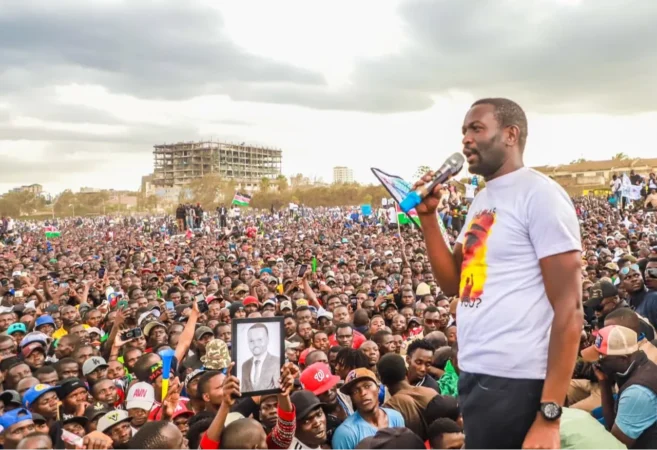
Bobi Wine and sections of the opposition rejected the outcome, alleging widespread irregularities, intimidation and electoral malpractice.
The election once again placed Uganda at the centre of a broader continental debate about long-serving African leaders, democratic accountability and state control over political institutions.
From liberation figure to long-serving President
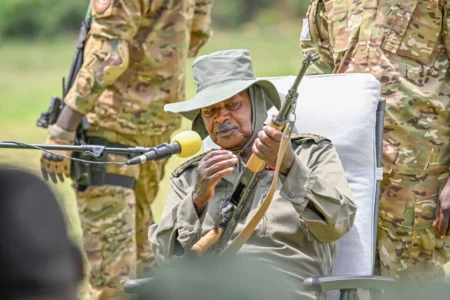
Museveni, 81, now among the world’s longest-serving heads of state, came to power in 1986 after leading a guerrilla war that toppled the governments that followed the brutal regimes of Idi Amin and Milton Obote.
In his early years, Museveni was widely praised for stabilising Uganda after years of conflict, restoring economic order and rebuilding state institutions.
At his 1986 swearing-in ceremony, he famously declared: “The problem of Africa in general and Uganda in particular is not the people but leaders who want to overstay in power.”
That statement has increasingly returned to public discussion as Museveni approaches four decades in office.
Over the years, constitutional changes removed presidential term limits and later the presidential age limit, allowing him to remain eligible for office indefinitely.
Critics argue that these reforms weakened democratic safeguards and consolidated executive authority around the ruling National Resistance Movement.
International rights groups, including Human Rights Watch (HRW), reported that the 2026 elections were marked by arrests of opposition figures, restrictions on rallies and pressure on critics of government.
The African Union commended the overall conduct of the elections, although observer missions also documented procedural concerns and irregularities.
Economic recovery and growth
Despite growing criticism over political freedoms, Museveni’s administration continues to receive recognition for overseeing one of East Africa’s longest periods of relative macroeconomic stability and growth.
According to World Bank and IMF projections, Uganda’s economy is expected to grow by about six percent in 2026, supported by infrastructure investment, expanding services and preparations for oil production.
Uganda’s GDP has risen significantly since the late 1980s, while poverty rates have fallen sharply over the past three decades.
The country’s economy has diversified from heavy dependence on subsistence agriculture toward telecommunications, financial services, manufacturing and construction.
Economic analysts note that Uganda’s urban middle class has expanded substantially during Museveni’s rule, particularly in Kampala and other growing urban centres.
Veteran Ugandan journalist Charles Onyango-Obbo has previously argued that Museveni can legitimately point to economic stabilisation and post-war reconstruction as major achievements, even as political freedoms continue to narrow.
Still, Uganda’s economy remains smaller than those of neighbouring Kenya and Tanzania in overall GDP terms, while income inequality and unemployment remain persistent concerns.
Oil production seen as a turning point
Much of the government’s economic optimism now centres on Uganda’s emerging oil sector.
Commercially viable oil reserves discovered in the Albertine region nearly two decades ago are expected to begin full commercial production in mid-2026.
The development of the East African Crude Oil Pipeline, which will transport crude oil from western Uganda to Tanzania’s Tanga port, is nearing completion after years of delays linked to financing, environmental concerns and infrastructure planning.
Ugandan officials believe oil revenues could push economic growth into double digits over the coming years if production targets are achieved.
Finance ministry projections suggest that oil exports could significantly improve government revenues, foreign exchange earnings and public investment capacity.
Chartered accountant and tax adviser Joshua Kato said the oil sector presents major opportunities if revenues are managed transparently and invested strategically.
“Oil and gas production could actually strengthen governance revenues through royalties. If governance is strong, I see a very good future for Uganda with international oil companies coming in,” he noted.
However, critics caution that Uganda risks falling into a pattern where natural resource wealth primarily benefits politically connected elites rather than the wider population.
Growing concerns over governance and inequality
Concerns about corruption, nepotism and elite concentration of wealth continue to dominate public discourse ahead of Museveni’s inauguration.
Members of Museveni’s family occupy several influential positions within government and security structures.
First Lady Janet Museveni serves as Minister of Education and Sports, while his son Gen. Muhoozi Kainerugaba is Chief of Defence Forces (CDF).
Critics argue that political and economic opportunities have increasingly become concentrated among networks closely linked to the ruling establishment.
Although headline economic indicators have improved, millions of Ugandans remain trapped in subsistence agriculture and informal employment.
Government statistics indicate that about one-third of Ugandan households still depend on subsistence farming, while youth unemployment and underemployment remain among the country’s biggest socio-economic challenges.
Debt and infrastructure questions
Uganda’s rising public debt has also become a growing point of debate.
Government borrowing has increased sharply over the past decade, largely driven by infrastructure projects tied to oil production, including highways, dams and energy investments.
The IMF has described Uganda’s debt as sustainable but vulnerable to shocks, especially if oil production faces delays or global crude prices weaken.
Some governance experts argue that several large public infrastructure projects have been inflated by procurement inefficiencies and corruption concerns.
A recent parliamentary committee report criticised excessive costs in some state-funded road projects, intensifying scrutiny over public spending and accountability.
Youth pressure and political risks
Analysts say Uganda’s rapidly growing young population may ultimately become the defining challenge of Museveni’s next term.
Roughly 75 percent of Uganda’s population is under the age of 30, creating enormous pressure on the labour market, education system and public services.
While official youth unemployment figures vary, many economists argue the bigger crisis is underemployment and the dominance of informal, low-paying work.
Also Read: Why Museveni keeps winning: The truth no one admits
Political analysts warn that economic frustrations among young people could increasingly translate into political pressure, particularly as opposition movements continue to gain traction among urban youth.
At the same time, supporters of Museveni argue that Uganda’s relative stability distinguishes it from several countries in the region that have experienced prolonged conflict or political upheaval.
Uganda at a defining crossroads
As Uganda heads into another Museveni term, the country faces a defining moment.
The coming years are expected to test whether oil revenues can accelerate broad-based development, whether democratic institutions can regain public trust, and whether economic growth can translate into meaningful opportunities for ordinary citizens.
For many Ugandans, the debate surrounding Museveni’s rule is no longer simply about longevity in office.
It is increasingly about the type of political and economic system Uganda is building as it approaches a new era shaped by oil wealth, youthful demographics and mounting demands for accountability.