



BUIKWE, Uganda — President Yoweri Museveni has attributed Uganda’s persistent unemployment challenge not to a lack of jobs, but to what he described as a failure by citizens to fully exploit available opportunities, particularly in agriculture.
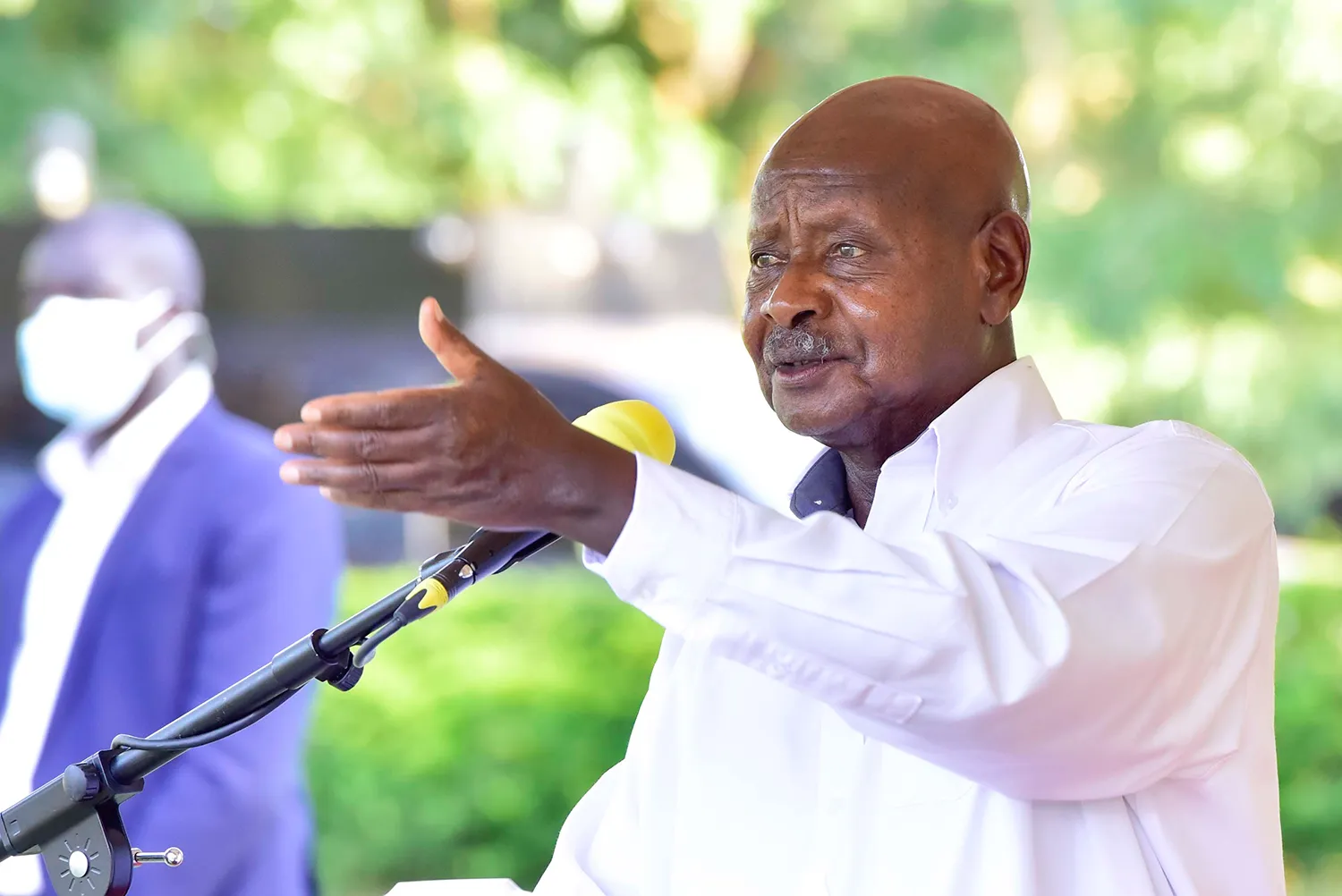
Speaking during International Labour Day celebrations at Nkoyoyo Boarding Primary School in Matale, Buikwe District, the President argued that the country’s economic potential remains significantly underutilised.
He cited land use data, noting that Uganda has approximately 40 million acres of arable land, yet only about 7 million acres are currently under productive use.
According to his projections, if each acre supported 15 jobs, the country could theoretically generate up to 105 million jobs, more than double its population.
“The problem is not the lack of jobs; the problem is that people are asleep,” Museveni said.
The President urged Ugandans to shift focus toward agriculture and value addition as engines of employment, positioning them as central pillars of his government’s economic strategy.
He cautioned entrepreneurs against overreliance on high-interest commercial bank loans, instead recommending borrowing from the Uganda Development Bank, which offers lower lending rates of between 10 and 12 percent.
Museveni also pointed to the Parish Development Model as a key intervention aimed at stimulating grassroots economic activity and improving household incomes.
In a broader policy signal, he revealed plans to require industrial parks to allocate land for worker accommodation, an initiative aimed at improving productivity while addressing urban housing constraints.
The President raised concerns about a structural mismatch between education and labour market demands, arguing that many graduates pursue academic paths that do not align with the country’s economic needs.
He said the government intends to recalibrate the education system to produce more “job-ready” graduates, reflecting a growing policy emphasis on technical and vocational training across East Africa.
Museveni also questioned the investment strategy of the National Social Security Fund, suggesting that it should prioritise higher-return ventures such as infrastructure projects, including toll roads, rather than focusing heavily on government securities.
His remarks come amid wider regional debates on how public funds can better support long-term development and job creation.
The President’s comments follow his assent to the Employment (Amendment) Act, 2025, which updates the Employment Act of 2006 to expand protections for workers.
The amended law introduces safeguards for vulnerable groups, including domestic workers, casual labourers and migrant employees. It formalises domestic work, strengthens protections against exploitation, and enhances oversight of recruitment agencies involved in foreign employment.
Other provisions include:
- Mandatory nursing breaks for breastfeeding mothers
- Conversion of casual labour into formal contracts after six months
- Expanded protections against workplace sexual harassment
- Clearer guidelines on severance pay and sick leave
However, the legislation stops short of introducing a national minimum wage, an omission that continues to draw criticism from labour unions and civil society organisations.
Also Read: Museveni urges Africa to ‘wake up’ as Kenya, Uganda push SGR integration drive
Uganda still operates without an enforceable minimum wage, despite the existence of a legal framework under the Minimum Wages Advisory Board, which has yet to be fully operationalised.
Analysts warn that without clear wage benchmarks, legal protections alone may not significantly improve living standards, particularly for workers in the informal sector, which dominates Uganda’s labour market.
The absence of a minimum wage remains a central issue in the national labour discourse, raising questions about income inequality and economic inclusivity.
As Uganda marks Labour Day, attention is increasingly shifting to whether the government will move toward implementing a comprehensive wage policy, balancing market-driven growth with worker protections.