


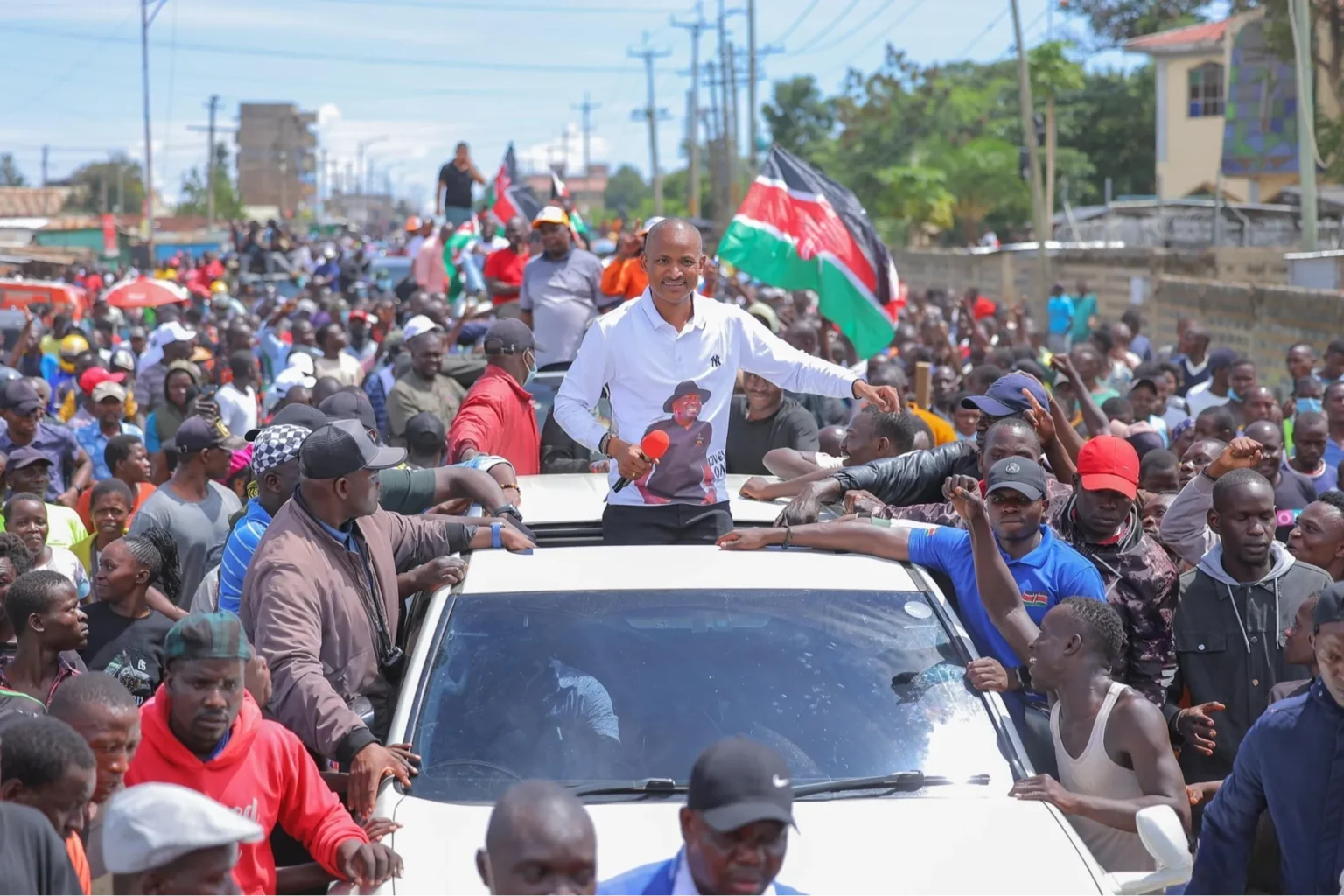
KISUMU, Kenya — Embakasi East MP Babu Owino has publicly declared his intention to run for Kenya’s presidency in 2032, outlining a strategic political path that begins with a bid for the Nairobi governorship in 2027.
Speaking at a rally in Kisumu, the outspoken legislator told supporters he plans to serve a single term as governor before seeking the country’s top office.
“On most occasions people tell me not to let anyone know of my plans at early stages, but I have to set the record straight,” he said.
“I will go for governor in 2027 for one term; then after that, I will be on the ballot for president in 2032.”
The announcement offers one of the clearest indications yet of Owino’s long-term ambitions, signalling a transition from legislative politics to executive leadership at both county and national levels.
His strategy mirrors a broader trend in Kenyan politics, where national contenders often seek executive experience at the county level, particularly in Nairobi, widely regarded as a powerful political springboard due to its economic significance and national visibility.
Framing his ambitions within a generational context, Owino positioned himself as part of a new wave of leaders seeking to reshape Kenya’s political direction.
He referenced the long-standing presidential bids associated with Jaramogi Oginga Odinga and Raila Odinga, suggesting that younger leaders must now take up the mantle.
“We started this journey a long time ago. Baba tried five times. The young people must now take over and move the country forward,” he said.
The remarks tap into a growing narrative among younger politicians and voters calling for leadership renewal ahead of the 2027 election cycle.
Owino used the platform to urge greater youth participation in governance, warning against exclusion from decision-making spaces.
“If we are not on the table, we will break the table. And young people, if you are not on the table, break the table,” he said.
His rhetoric reflects a broader shift in Kenya’s political discourse, where youth mobilisation—particularly among Gen Z voters, has become increasingly central, driven by concerns over unemployment, governance and economic inequality.
Beyond succession politics, Owino criticised the rising cost of living, aligning his message with one of the most dominant issues in Kenya’s current political environment.
Also Read: Babu Owino crowned Kenya’s best performing MP again amid rising political profile
“The cost of living is too high. Fuel prices have gone up, and there is no money in people’s pockets,” he said.
Recent fuel price adjustments and inflationary pressures have intensified public debate, with opposition figures increasingly using economic grievances to galvanise support.
Despite the early declaration, analysts note that Owino faces a complex political path.
The Nairobi gubernatorial race is historically one of the most competitive in Kenya, often attracting well-established candidates with strong party backing, financial resources and extensive grassroots networks.
Securing the governorship would be a critical step in building the administrative experience and political capital required for a credible presidential bid.