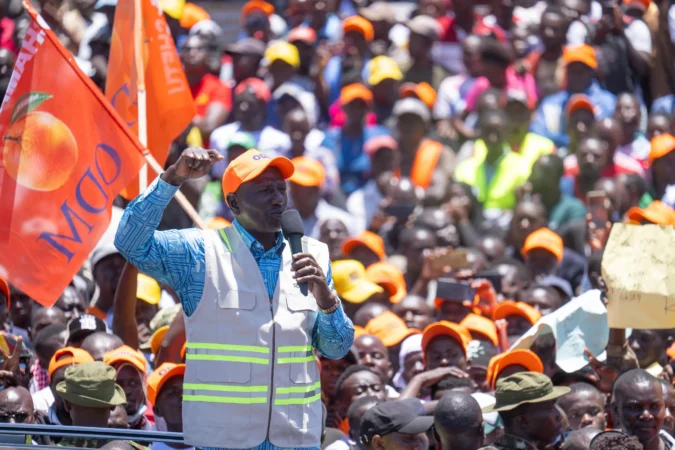


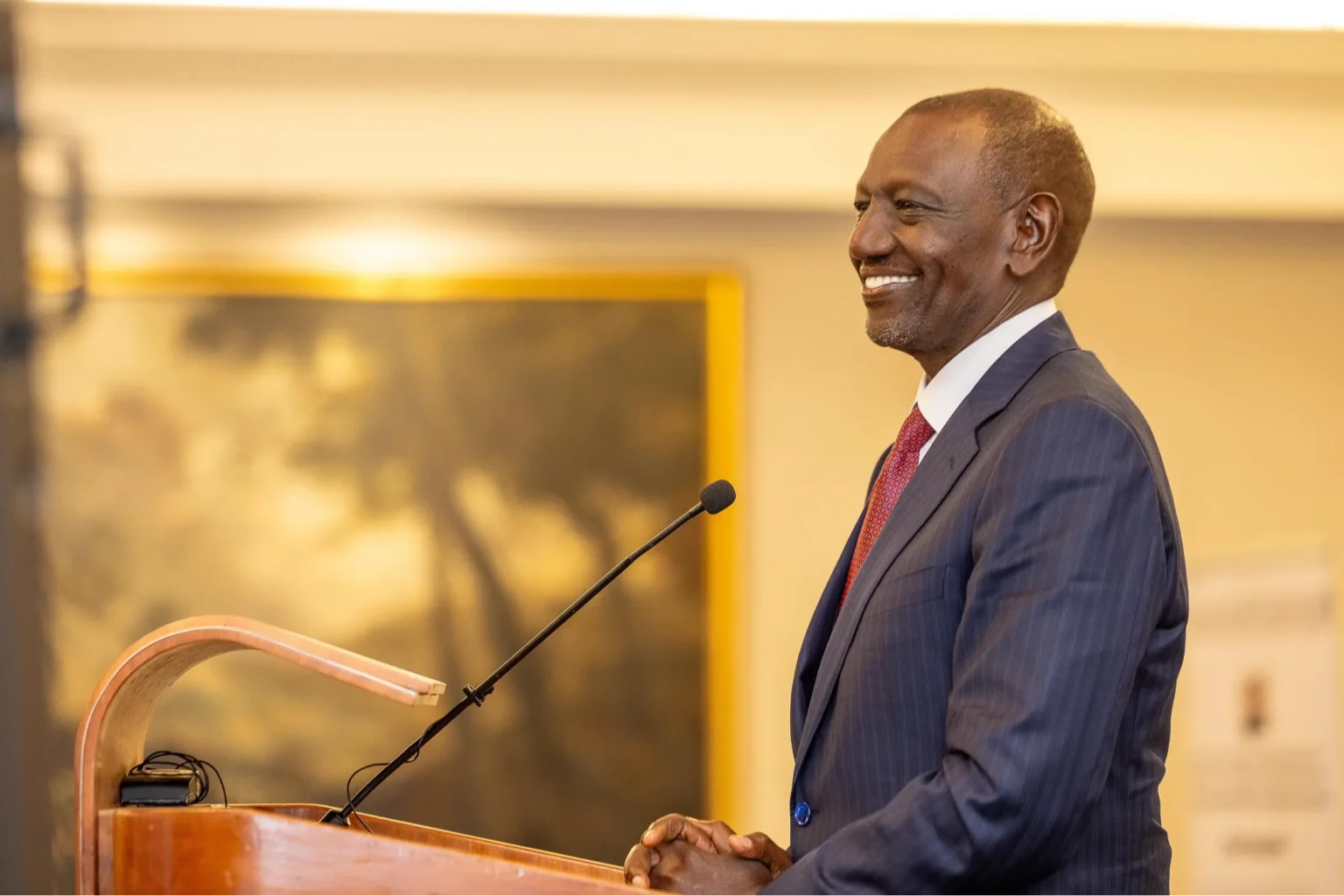
ITALY, Rome — William Ruto has cautioned Kenyans living abroad against relying entirely on social media for news from home, warning of widespread misinformation, manipulated content and politically driven narratives.
Speaking during a meeting with Kenyans in Rome on Monday evening, the President said diaspora communities must verify information carefully amid what he described as deliberate attempts to distort public perception.
“If you go to social media today, you’ll think there is nothing good happening in Kenya. I ask you not to rely on social media for news about home,” President Ruto told the meeting.
Ruto’s remarks come at a time when governments globally are grappling with the influence of digital platforms on public opinion, particularly within diaspora communities that often rely heavily on online sources for updates from home.
During his two-day official visit to Italy, the President framed his administration as being focused on long-term transformation despite criticism and political resistance.
“My focus is not about the next General Election. I am focused on transforming Kenya,” he said.
He added that Kenya’s economic reforms required difficult decisions, arguing that past leadership failures had delayed progress.
Ruto pointed to Kenya’s avoidance of a sovereign debt default as a key achievement, noting that the country had previously been flagged among high-risk economies.
“Many people predicted that six countries in Africa would default on debt. Out of the six, five defaulted. Kenya did not,” he told the meeting.
The government has in recent months pursued fiscal consolidation measures, including subsidy reforms and tax adjustments, as part of efforts to stabilise public finances and secure international confidence.
The President highlighted progress under the Social Health Authority (SHA), which replaced the defunct National Hospital Insurance Fund (NHIF).
“As we speak, 30.6 million Kenyans have registered with SHA in the past 18 months compared to eight million in the 60 years of the defunct National Health Insurance Fund,” he said.
He added that the scheme is expected to disburse KSh13 billion to hospitals for March 2026 services, signalling increased funding flows within the health sector.
Ruto also cited the Affordable Housing Programme, which he said is driving large-scale construction and job creation.
According to the President, nearly 270,000 housing units are under development across 210 sites, generating over 640,000 jobs.
In agriculture, he attributed rising output to subsidised fertiliser programmes and sector reforms.
“We’ve restored law and order in the coffee, tea and sugar cane sectors by eliminating cartels who had frustrated farmers’ efforts and produce more for local consumption and surplus for export,” he said.
He said maize production had increased from 44 million bags in 2022 to 70 million bags in 2025, while sugar output rose from 500,000 tonnes to 815,000 tonnes.
The President said overseas employment initiatives had enabled 540,000 Kenyans to secure jobs abroad, supported by bilateral labour agreements with countries including Germany, Saudi Arabia, United Arab Emirates, Qatar and United Kingdom.
He added that more than 600 recruitment agencies had been deregistered in a crackdown on exploitation.
Diaspora remittances, he noted, have grown significantly:
“Diaspora remittances remain the largest source of foreign exchange in the country,” he said.
Official data shows inflows rising from $4 billion in 2022 to $5.2 billion in 2025, reinforcing the diaspora’s role as a key pillar of Kenya’s external earnings.
Also Read: How Michael Wandati is redefining independent journalism in a noisy digital world
Musalia Mudavadi said the establishment of the State Department of Diaspora Affairs reflects a shift toward structured engagement with Kenyans abroad.
“For the first time in the history of Kenya, the country will have a representative at the Vatican. This has been long overdue, but an envoy has been posted to the Holy See,” Mr Mudavadi said.
The government has in recent years expanded diplomatic and labour frameworks to address concerns over worker welfare, recruitment practices and consular support.
James Mwangi urged diaspora Kenyans to invest in sectors such as leather and coffee to drive economic growth.
“We must agree in commercialisation and modernisation if we are to succeed in business,” Dr Mwangi said.
Community leaders, including Kenyans in Italy chairman Rollex Onyango, welcomed the creation of diaspora-focused institutions, saying they have begun addressing long-standing challenges faced by citizens abroad.