




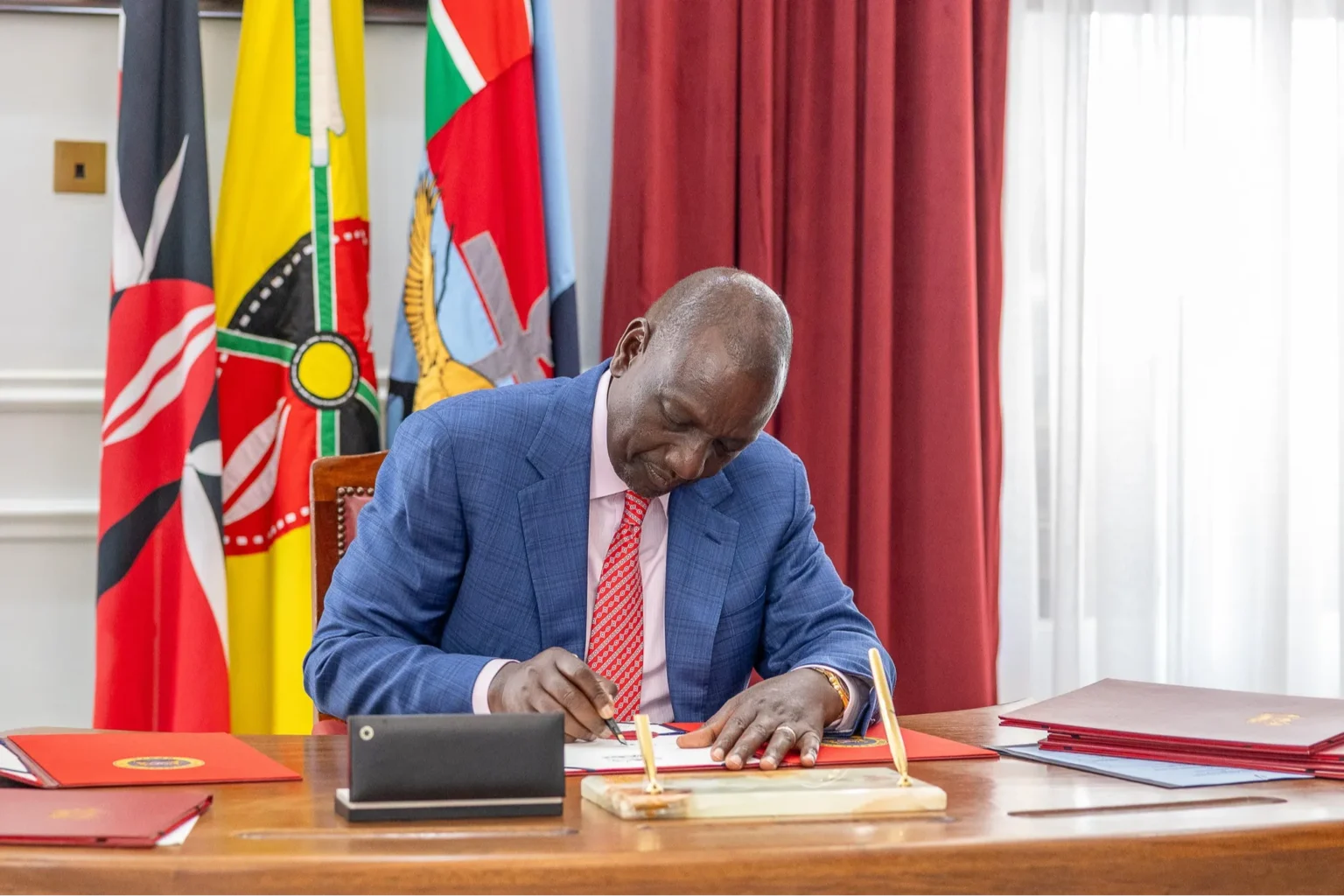
NAIROBI, Kenya — President William Ruto has signed into law the Value Added Tax (Amendment) Bill, 2026, reducing VAT on petroleum products from 16 per cent to 8 per cent in a move aimed at easing pressure on consumers following a recent surge in fuel prices.
The legislation was assented to at State House in Nairobi, marking a swift policy intervention by the government amid rising public concern over the cost of living.
The Bill, sponsored by National Assembly Majority Leader Kimani Ichung’wah, was introduced, debated, and passed by lawmakers on April 16, 2026, without amendments, underscoring the urgency of the measure.
The amendment lowers VAT on petroleum products to 8 per cent for an initial 90-day period. It also grants Treasury Cabinet Secretary John Mbadi authority to extend the relief for an additional 90 days if necessary.
The tax cut has been backdated to April 15, 2026, in line with the Executive’s request to Parliament.
Officials say the move is intended to cushion households and businesses from the impact of global supply disruptions, particularly linked to ongoing geopolitical tensions affecting oil markets.
According to the Energy and Petroleum Regulatory Authority (EPRA), the VAT reduction translates into lower pump prices, with super petrol decreasing by Ksh9.37 per litre and diesel by Ksh10.21 per litre.
This brings the maximum retail price of super petrol to Ksh197.60 per litre, while diesel now retails at Ksh196.63 per litre. Kerosene prices remain unchanged at Ksh152.78 per litre.
Fuel costs play a central role in Kenya’s economy, influencing transport fares, food prices, and the cost of essential goods and services.
Also Read: Kenya tops East Africa fuel price chart as petrol crosses KSh206 per litre
Analysts say the reduction could provide short-term relief to consumers, particularly in urban centres where transport costs are highly sensitive to fuel price fluctuations.
While the move has been welcomed by some as a necessary intervention, critics argue that it reflects a reactive policy approach.
Some observers contend that the government’s earlier tax adjustments contributed to the rise in fuel prices, and that subsequent reductions may appear as a response to public pressure rather than a long-term solution.
Kenya’s fuel pricing structure remains closely tied to global oil markets, exchange rate fluctuations, and domestic taxation policies.
The temporary VAT relief is expected to be closely monitored, with its potential extension likely to depend on global price trends and domestic economic conditions.