




NAIROBI, Kenya — Online taxi drivers operating under the Organisation of Online Drivers (OOD) have announced a new minimum fare of Sh450 for trips of up to three kilometres, citing rising fuel prices and escalating operating costs.
In a statement, the group said the adjustment follows the latest fuel price review by the Energy and Petroleum Regulatory Authority (EPRA), which has pushed pump prices above Sh200 per litre in major towns.
“Following the recent fuel price review announced by the Energy and Petroleum Regulatory Authority (EPRA) and the ongoing rise in operational costs, we, the Organisation of Online Drivers (OOD), have set a new minimum fare for short trips to ensure sustainable earnings for our drivers,” the statement said.
The new pricing applies to journeys covering a maximum distance of three kilometres and will affect drivers operating across multiple ride-hailing platforms.
“This minimum fare of Sh450 for a maximum of 3KM for short trips will ensure that drivers earn a fair and sustainable income amidst the changing economic environment,” the statement added.
The fare adjustment comes in the wake of a sharp increase in fuel prices announced for the April–May 2026 cycle.
Under the latest review:
- Super Petrol rose by Sh28.69 per litre
- Diesel increased by Sh40.30 per litre
- Kerosene prices remained unchanged
In Nairobi, pump prices now stand at:
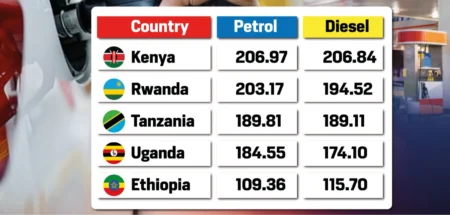
- Petrol: Sh206.97 per litre
- Diesel: Sh206.84 per litre
- Kerosene: Sh152.78 per litre
The new rates took effect from April 15 and will remain in place until May 14, 2026.
EPRA attributed the increase to higher global oil prices, exchange rate pressures, and rising landed costs, even as the government implemented measures to cushion consumers.
To moderate the impact, the government reduced Value Added Tax (VAT) on petroleum products from 16% to 13% and deployed approximately Sh6.2 billion from the Petroleum Development Levy (PDL) Fund to stabilise pump prices.
Also Read: Matatu fares increase after fuel price hike in latest EPRA review
Despite these interventions, transport operators, including ride-hailing drivers, say the cost of fuel, which accounts for a significant portion of their daily expenses, has made current fare structures unsustainable.
The regulator also noted that some fuel shipments, including cargo delivered by One Petroleum via the MT Paloma, were excluded from the latest pricing computation.
The fare increase by ride-hailing drivers adds to a growing wave of cost adjustments across the transport sector, following similar moves by matatu operators and freight companies.
Economists warn that sustained increases in fuel prices are likely to feed into higher transport costs, potentially driving up the price of goods and services and adding pressure on household budgets.
The latest developments come amid reports of fuel supply disruptions and continued volatility in global oil markets, underscoring the fragility of Kenya’s fuel-dependent economy.