




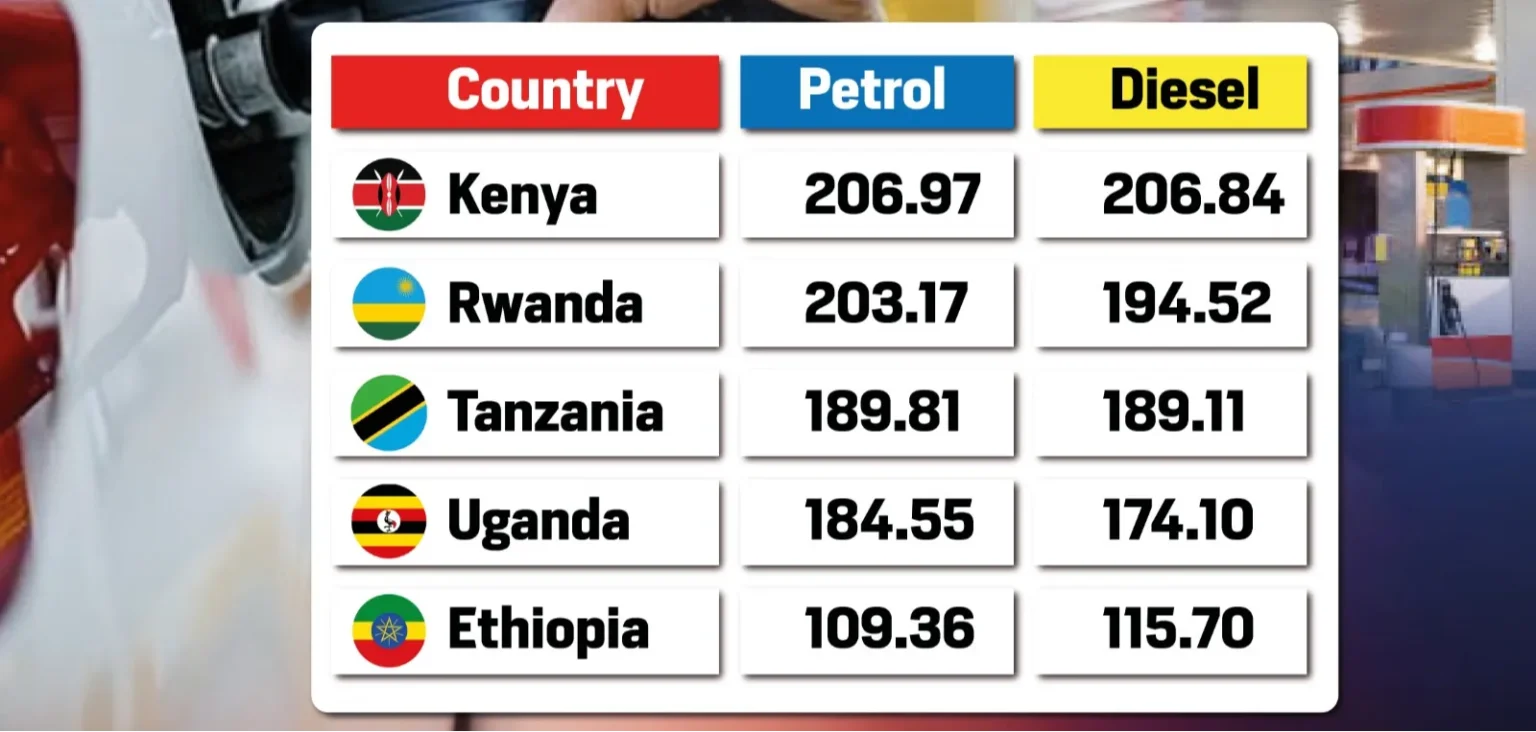
NAIROBI, Kenya — Kenya has emerged as the most expensive fuel market in East Africa, with motorists paying significantly higher prices for both petrol and diesel compared to neighbouring countries, according to the latest regional market data.
The figures highlight wide disparities in fuel pricing across the region, reflecting differences in taxation regimes, import costs, currency stability, and subsidy policies.
In Kenya, petrol currently retails at 206.97 shillings per litre, while diesel stands at 206.84 shillings, placing the country at the top of the regional cost ranking.
The narrow gap between petrol and diesel prices in Kenya is notable, with both fuels priced at almost identical levels, a pattern not widely observed across neighbouring markets.
In Rwanda, motorists pay 203.17 shillings per litre for petrol and 194.52 shillings for diesel, making it the second most expensive market in the region after Kenya.
Tanzania maintains relatively lower prices, with petrol retailing at 189.81 shillings and diesel at 189.11 shillings, reflecting a more balanced pricing structure.
In Uganda, petrol is priced at 184.55 shillings per litre, while diesel is significantly cheaper at 174.10 shillings, showing a wider spread between the two fuel types.
The most striking contrast is observed in Ethiopia, where fuel prices remain significantly lower than its East African peers.
Petrol is priced at 109.36 shillings per litre, while diesel costs 115.70 shillings, making Ethiopia the only country in the comparison where diesel is more expensive than petrol.
Also Read: Ruto defends fuel price hike, announces VAT cut from 16% to 8%
The sharp difference highlights the impact of varying subsidy regimes, foreign exchange controls, and state-managed pricing systems across the region.
Fuel prices across East Africa are heavily influenced by global crude oil trends, import logistics, taxation frameworks, and currency fluctuations against the US dollar, which is the standard currency for petroleum trade.
Kenya’s higher prices have been attributed to a combination of high taxes, landed import costs, and reduced subsidy buffers compared to some neighbouring countries.
Economists note that sustained fuel price differences across the region may continue to shape:
- Transport costs
- Cross-border trade competitiveness
- Inflation rates
- Cost of living pressures