





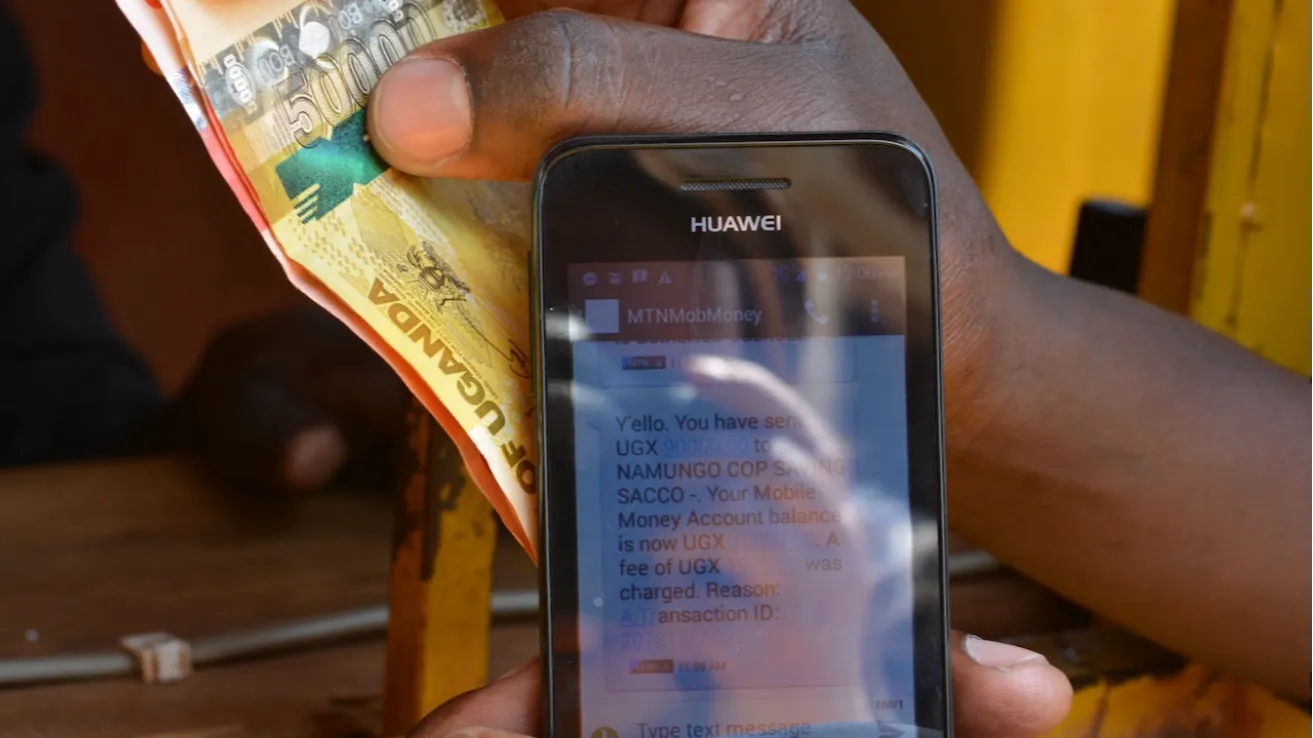
KAMPALA, Uganda — Uganda’s government has opted to retain the 0.5 per cent excise duty on mobile money withdrawals, shelving a proposed reduction that industry players say could have eased transaction costs and accelerated the shift towards a cashless economy.
The decision, confirmed by the Ministry of Finance, Planning and Economic Development, comes amid mounting concern from telecom operators, financial institutions, and civil society groups over the affordability of digital financial services.
Officials had earlier considered a reform under the 2026/27 Revenue Enhancement and Compliance Measures that would have cut the levy to 0.25 per cent and distributed it across banks and mobile money operators. The proposal was designed to create a more balanced tax framework and reduce the cost burden on users.
However, the plan has now been dropped.
“Nevertheless, we intend to undertake further analysis on how to incentivise a gradual shift away from excessive cash transactions towards more transparent and formal financial channels,” said Ramathan Ggoobi, Permanent Secretary and Secretary to the Treasury.
Under the current structure, users pay a 0.5 per cent tax on the total value of withdrawals, whether conducted via agents, ATMs, or bank counters.
At the same time, bank-to-mobile transfers attract separate fees, often ranging from Shs 1,000 to Shs 12,000 depending on the transaction size, alongside a 15 per cent excise duty on those charges.
This layered cost structure has created pricing distortions in the market.
In practice, many users find it cheaper to withdraw cash directly from banks or ATMs and then transact physically, rather than move funds digitally between accounts and mobile wallets.
Industry players, including MTN MoMo and Airtel Money, have argued that the current regime disproportionately affects mobile money platforms and discourages digital transactions.
Former MTN MoMo general manager Richard Yego has previously supported a shared tax model, noting it would reduce the overall cost of moving money across the financial ecosystem.
Advocacy groups warn that the persistence of high transaction costs is undermining Uganda’s financial inclusion agenda.
The Civil Society Budget Advocacy Group (CSBAG) says the cumulative effect of multiple taxes, ranging from withdrawal levies to telecom excise duties and withholding taxes on agent commissions, is pushing low-income users back to cash.
According to CSBAG Executive Director Julius Mukunda, the cost gap between digital and cash transactions remains significant.
“Sending and withdrawing Shs 1 million can cost more than Shs 20,000, nearly four times the cost of physically transporting the same amount,” he said.
Data illustrates the disparity: withdrawing Shs 1 million via mobile money can cost approximately Shs 16,630, compared to about Shs 3,000 through traditional banking channels.
Despite the cost challenges, Uganda’s mobile money sector continues to expand.
Figures from MTN Uganda show active fintech users rose by 6.5 per cent to 14.7 million in 2025. Transaction volumes increased by 16.8 per cent to five billion, while total transaction value surged by 23 per cent to Shs 195.5 trillion.
However, historical trends suggest taxation has a direct influence on usage patterns.
When Uganda introduced a 1 per cent levy on mobile money transactions in 2018, later reduced to 0.5 per cent, studies by institutions including the International Monetary Fund recorded a decline in transaction volumes, particularly among low-income users.
Also Read: Kenya’s mobile money shifts online as agent visits decline despite network expansion
The government’s decision underscores a broader policy tension: balancing revenue mobilisation with the need to promote digital financial inclusion.
Uganda has positioned mobile money as a cornerstone of its financial system, particularly for underserved populations without access to traditional banking.
Yet analysts warn that high transaction costs risk slowing adoption and reinforcing reliance on cash-based transactions.
Experts argue that lowering transaction friction, through tax reform and fee rationalisation, will be critical if Uganda is to achieve its long-term goal of a more digitised, transparent economy.
For now, the retention of the 0.5 per cent levy signals continuity in fiscal policy, even as debate intensifies over its long-term impact on users and the financial ecosystem.