




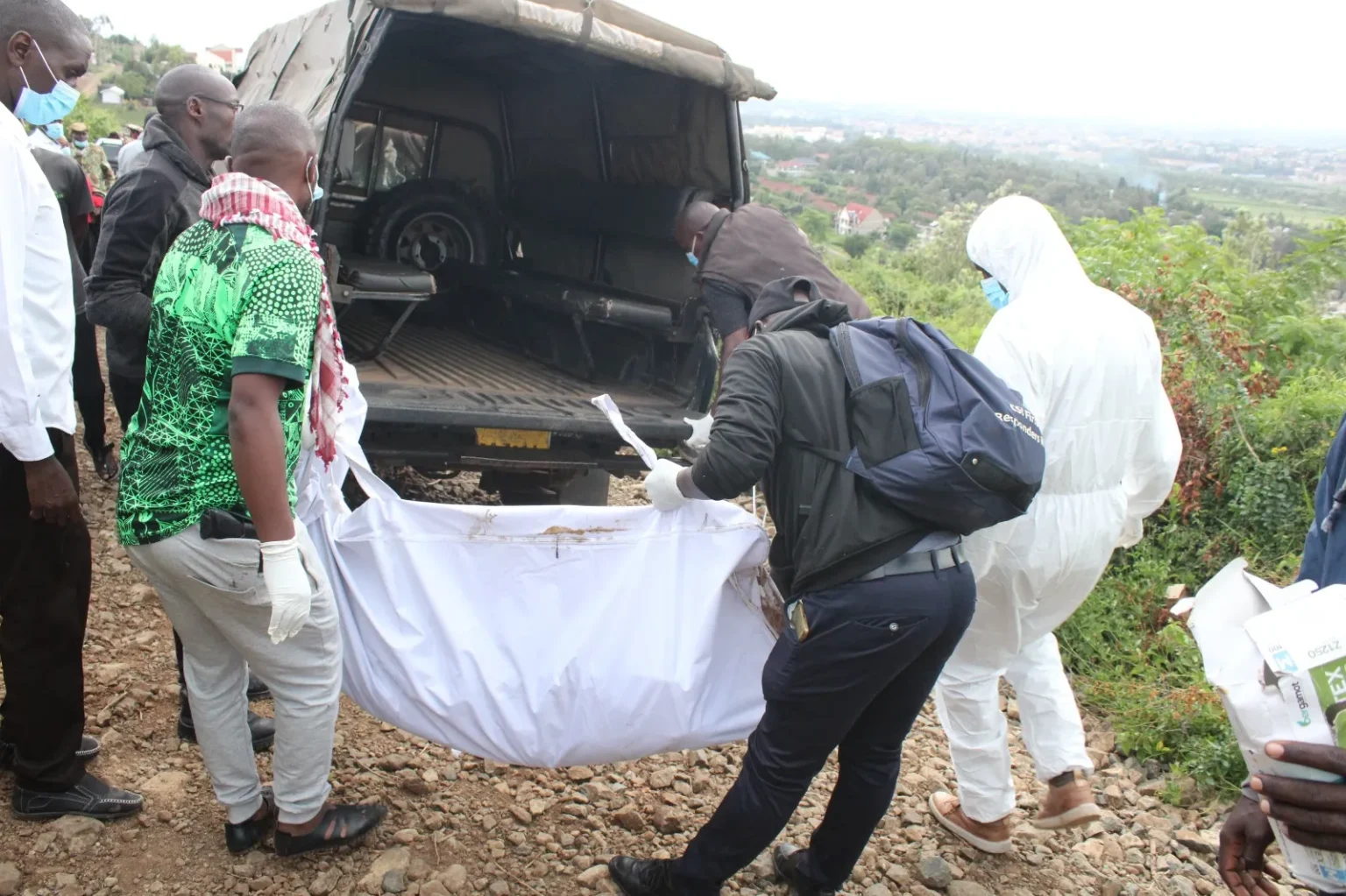
KISUMU, Kenya — Detectives in western Kenya say they have uncovered a chilling sequence of events behind the killing of a 21-year-old college student, in a case that has reignited concerns over gender-based violence and intimate partner crimes.
Rose Benter Apondi, a student at Ramogi Institute of Advanced Technology (RIAT), was reported missing on April 6 at Maseno Police Station. Her disappearance has since evolved into a murder investigation, with police alleging a premeditated attack orchestrated by her former boyfriend.
Her decomposing body was discovered on April 12 in a thicket at the foot of Riat Hills, bringing a tragic end to days of searching by family and authorities.
According to investigators, the suspect, who reportedly identified himself as a teacher, confessed to killing Apondi after allegedly finding WhatsApp messages suggesting she was planning a future with another man.
Hillary Toroitich, the Kisumu County Police Commander, said the suspect admitted during interrogation that the killing was carried out on April 5, a day before she was officially reported missing.
Police say the suspect lured the student from her home under the pretext of helping her secure an industrial attachment opportunity.
Unaware of the alleged plot, Apondi left to meet him, marking the last time she was seen alive.
Investigations indicate that the suspect enlisted accomplices, allegedly paying them Sh500 to participate in the attack. Detectives believe the group assaulted her before fatally stabbing her and dumping her body in a nearby thicket.
By the time the remains were recovered, they had begun decomposing and had been partially mauled by wild animals.
A major breakthrough came when detectives traced and recovered the victim’s mobile phone from a septic tank in Milimani Estate, where she had been working as a social worker.
Police say the device provided critical leads linking the suspect to the crime.
“On April 6, a report was made at Maseno Police Station that a student from Riat College had gone missing. Officers, together with the family, conducted a thorough search until we received intelligence linking her disappearance to her ex-boyfriend,” Toroitich said.
“Through interrogation, he confessed that he killed her and dumped the body in a thicket. Officers were able to recover the remains and other crucial exhibits as investigations continue,” he added.
At the Jaramogi Oginga Odinga Teaching and Referral Hospital mortuary, family members described the distressing events leading up to Apondi’s disappearance.
Her sister, Dorine Achieng, said the victim had sent alarming WhatsApp messages shortly before she went missing, claiming she had been drugged and gang-raped.
However, she questioned how someone in such a state could type lengthy messages.
Family members rushed to her residence in Riat after receiving the messages but did not find her. Neighbours confirmed she had been seen earlier that day, but her whereabouts remained unknown until the discovery of her body.
Dorine said her sister had previously spoken about being in a toxic relationship, and she had advised her to leave.
Police say the case underscores the dangers associated with unresolved domestic disputes.
“There is no justification for taking someone’s life. If a relationship ends, it should not lead to revenge or heinous acts. Such criminal activities will not be tolerated,” Toroitich said.
Also Read: Ritual murder probe deepens as Mbale suspect confesses to killing 49 girls
The suspect is expected to appear before the Maseno Law Courts on April 23 for plea-taking, as investigations continue and authorities pursue alleged accomplices.
The killing has once again drawn attention to rising cases of Gender-Based Violence in Kenya, where advocacy groups have repeatedly called for stronger enforcement, early intervention, and public awareness.
According to recent national data, cases of intimate partner violence and femicide have remained a persistent concern, prompting renewed calls for legal reforms and improved protection mechanisms for vulnerable individuals.
As the case proceeds to court, it is likely to attract sustained public attention, not only because of its brutality, but also due to the broader societal issues it reflects.
For Apondi’s family, however, the focus remains on justice.