

KYANKWANZI, Uganda — President Yoweri Museveni has praised his brother Gen. Caleb Akandwanaho, popularly known as Salim Saleh, for what he described as a lifelong commitment to Uganda’s liberation and development, while issuing a stern warning to corrupt public officials.
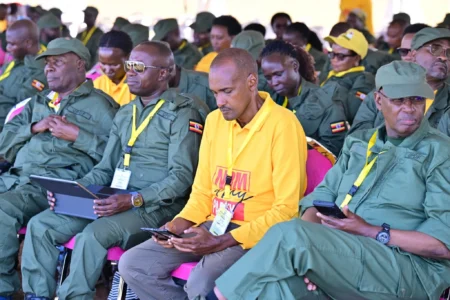
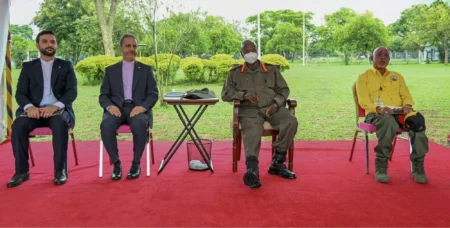
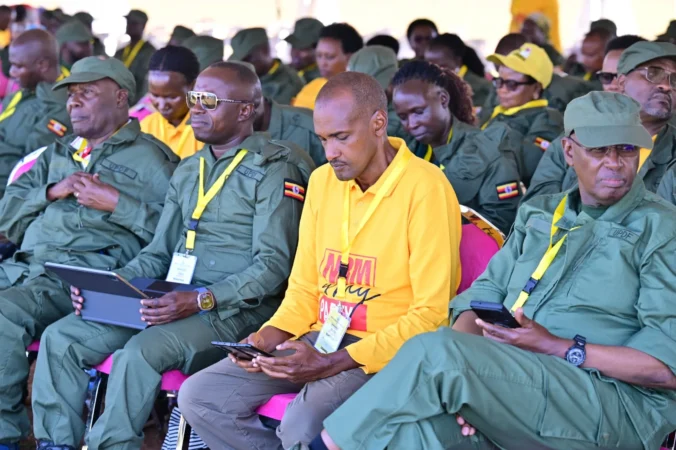
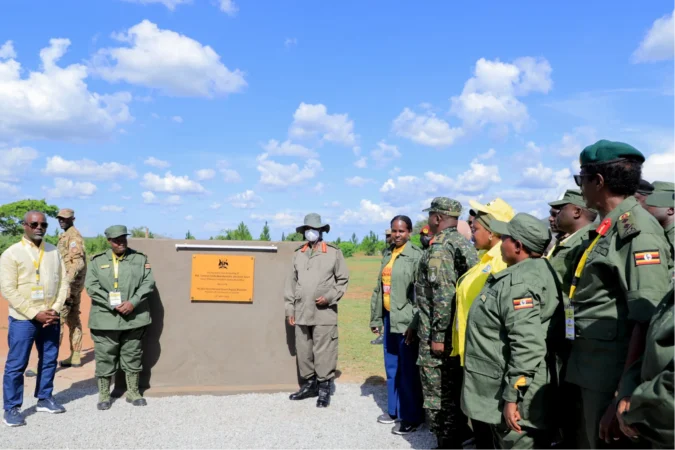
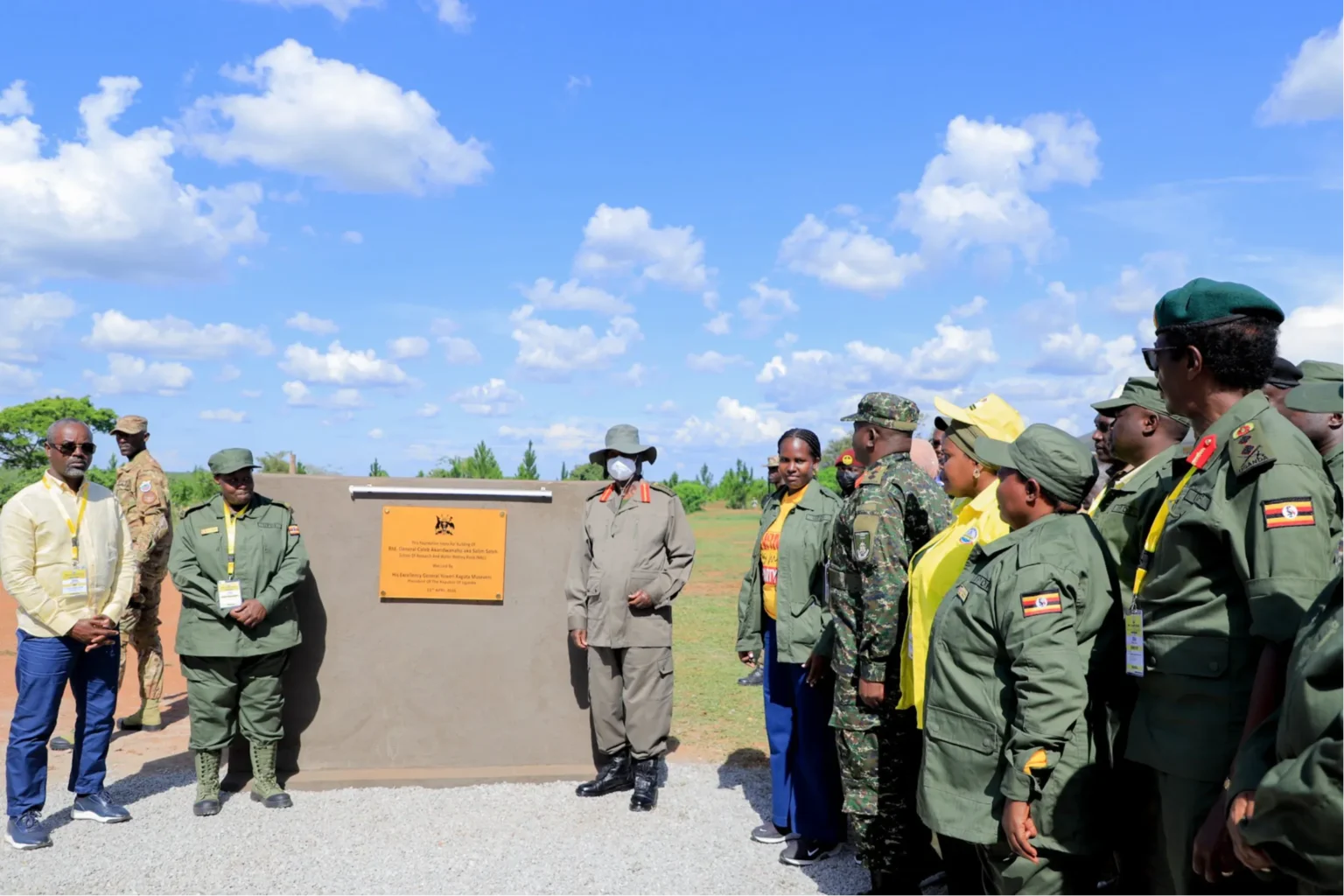
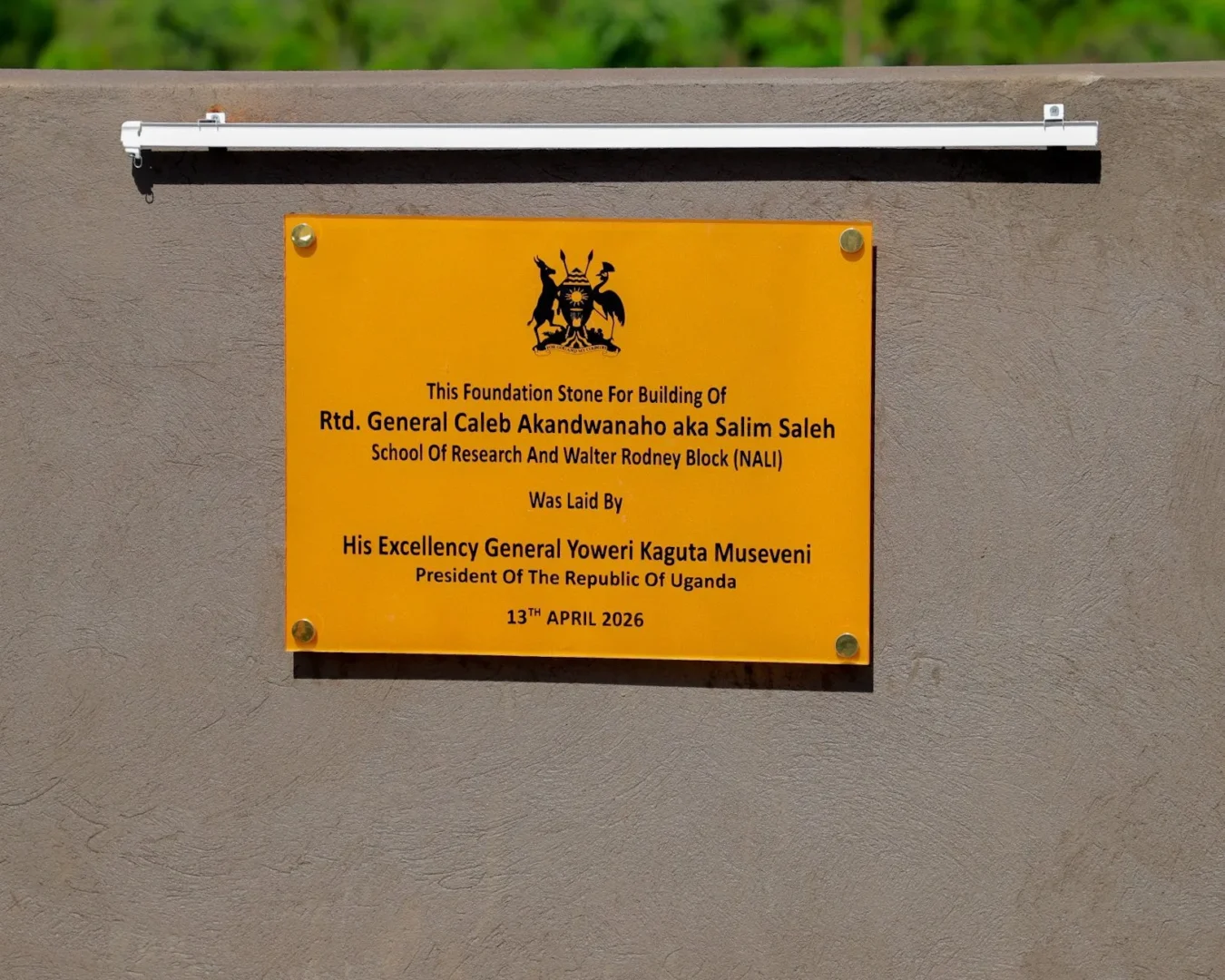
Speaking on Monday at the National Leadership Institute in Kyankwanzi, where newly elected National Resistance Movement (NRM) MPs are attending a retreat, Museveni laid the foundation stone for the Gen. Caleb Akandwanaho (Salim Saleh) School of Research and the Walter Rodney Block.
The president highlighted Saleh’s early involvement in Uganda’s liberation struggle, portraying him as a model of patriotism for younger leaders.
“People like Saleh should act as good examples to you young people to show you what patriotism means and how what you do can help your country,” Museveni said.
“Saleh joined us in the war against Idi Amin in 1976 when he was just 16 years old. He ran away from school at Kako and joined us in Tanzania together with other fighters like Ivan Koreta. Between 1979 and 1986, he did a lot of good work, especially during the 1981–1986 war. Saleh commanded many of the big battles, including the battles of Masindi, Kabamba, Masaka, and Kampala.”
Museveni also pointed to Saleh’s post-war involvement in economic activities and development initiatives.
“After the war, he became very much involved in wealth creation. He is now busy with development, working with others in areas like coffee and playing a very active role in the north,” he said.
“That development in Kapeka was started by Saleh. I am very glad that this is a good idea, and I commend you.”
The president used the platform to deliver a strong message on corruption, signalling possible action against offenders.
“The corrupt are now in danger and will be dealt with. You cannot underestimate us. You will see what will happen,” he said.
“You in Parliament are now on the frontline. You should not accept bribes. If you have problems, come and tell us, but don’t take bribes,” he added.
“We are going to finish this corruption.”
Museveni likened the retreat to a process of ideological reinforcement, stressing the need for discipline among political leaders.
“Christians go to church every Sunday to renew their faith, and Muslims go to the mosque many times a day. It is important that cadres also come to the seminary to renew their commitment,” he said.
The Kyankwanzi retreat has historically served as a key forum for shaping policy direction within the ruling NRM and aligning lawmakers with the party’s ideological framework.
On regional matters, Museveni reiterated his long-standing call for deeper African integration, particularly within the East African Community.
“We cannot achieve prosperity with fragmented markets, policies, and infrastructure,” he said.
“The whole of the East African Community should move towards full integration.”
He also paid tribute to former regional leaders Julius Nyerere and Benjamin Mkapa for their role in advancing regional cooperation.
Also Read: Museveni urges NRM MPs to fight corruption at Kyankwanzi retreat
Okei Rukogota, director of the institute, said the new facility would serve as a centre for ideological training, research and public engagement.
“Your Excellency, this complex will promote African culture and provide a forum for ideological struggle, complete with a modern multimedia auditorium and studios for both physical and online engagement,” Rukogota said.
“It will be an arena for Musevenomics studies and will honour Gen. Saleh’s contribution, from mobilization during the war to the practical implementation of economic transformation programmes such as SACCOs and community development initiatives,” he added.
Analysts note that Museveni’s remarks come amid renewed focus on governance and accountability in Uganda, as well as ongoing efforts by the NRM to consolidate internal cohesion ahead of future political cycles.
The emphasis on ideological training and anti-corruption messaging reflects a broader strategy to reinforce discipline within the ruling establishment.