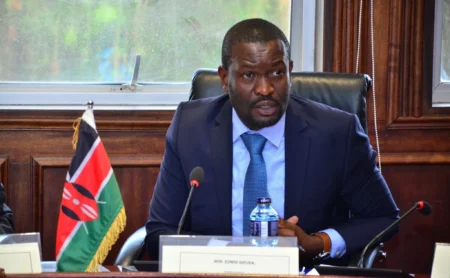



MOMBASA, Kenya — Edwin Sifuna has publicly insisted that he remains Secretary-General of the Orange Democratic Movement (ODM), in a show of defiance following recent leadership changes within the party.
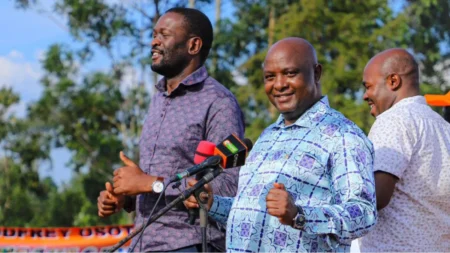
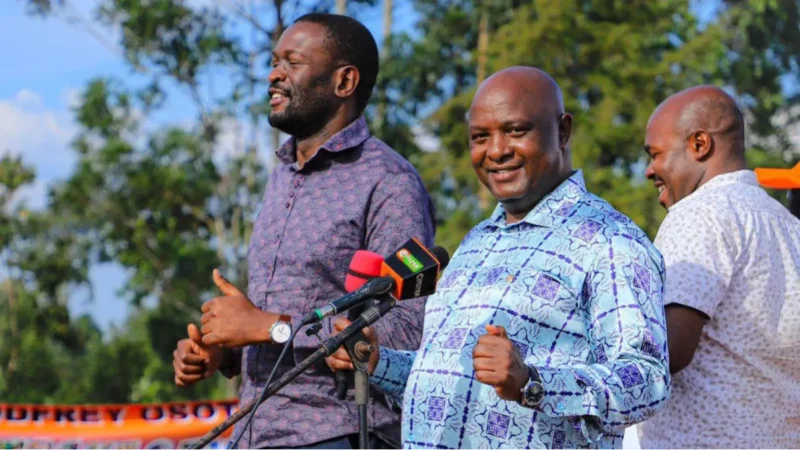
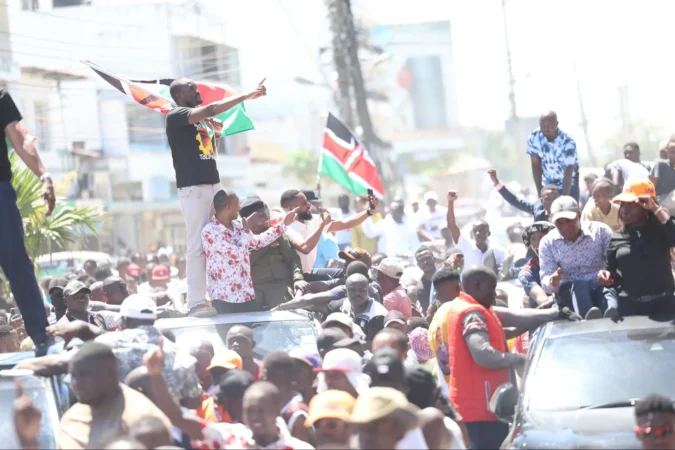
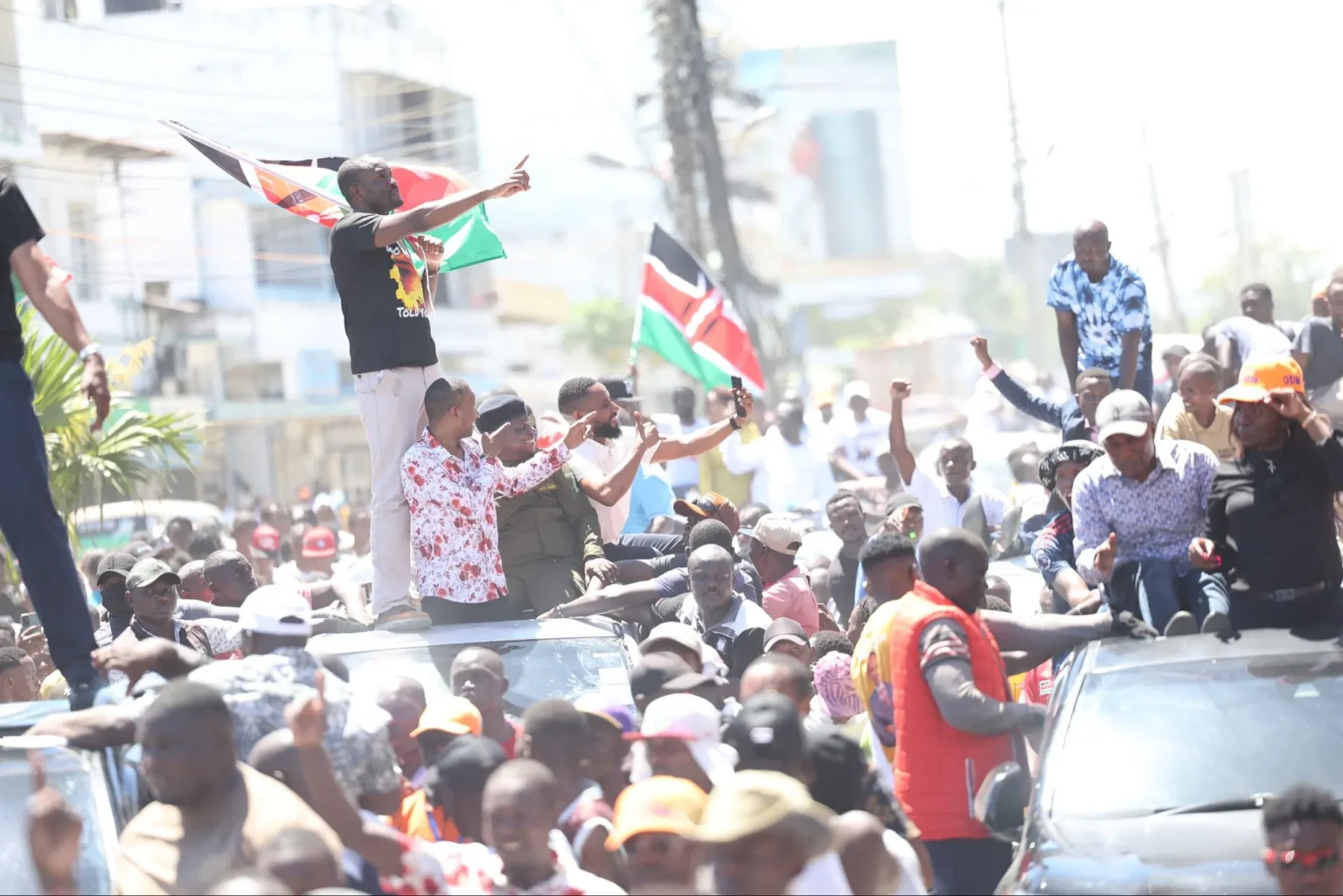
Speaking at a charged public gathering at Tononoka Grounds in Mombasa County, Sifuna struck a confrontational tone, at one point pausing and daring authorities to disperse the crowd with teargas, an apparent reference to rising tensions around political assemblies.
He defended ODM’s political legacy, invoking the influence of party leader Raila Odinga.
Sifuna also launched a sharp critique of the ruling United Democratic Alliance (UDA), questioning its support base across key regions.
“I want all to know that UDA has no votes in Western. They have no votes in Ukambani. They say he has votes in Coast—is that true? I don’t see those votes here,” Sifuna said.
He further accused the government of addressing complex regional issues superficially, particularly at the Coast, where land ownership disputes remain a longstanding concern.
According to Sifuna, local residents are demanding solutions to large-scale land ownership by absentee landlords rather than symbolic interventions targeting smaller holdings.
The senator also criticised the government’s “Kazi Ni Kazi” slogan, arguing it misrepresents the aspirations of educated youth.
“We have not gone to university to work as masons,” he said.
Sifuna maintained that he does not recognise any ODM leadership structure that lacks the backing of Raila Odinga, emphasising that the party’s foundation is rooted in unity.
“I cannot be Secretary-General of mediocrity,” he said.
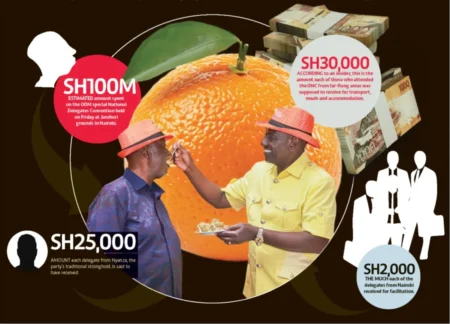
He also expressed scepticism about the leadership of Oburu Odinga, who was recently ratified as ODM party leader during the Special National Delegates Conference held at Jamhuri Grounds.
“I know positions are decided by the people. Even if they take away my position, I know the people will give me another position,” Sifuna declared.
The conference, presided over by party officials including Junet Mohammed, saw significant changes in the party’s leadership structure.
In a notable development, Godfrey Osotsi was dropped as deputy party leader after failing to secure a proposer and seconder.
“So therefore, Vihiga Senator has no proposer or seconder… so if you don’t have a proposer and seconder, it means you cannot get the seat. Let us move to the next agenda,” Junet said amid loud applause.
“Senator Godffrey Osotsi has been dropped at the Special Delegates Convention as the deputy party leader of the Orange Democratic Party,” he affirmed.
Meanwhile, Simba Arati and Abdulswamad Nassir were retained as deputy party leaders.
Other appointments included Ahmed Abdullahi as National Organising Secretary, while Otiende Amollo and Ariko Nyamoit were elected deputy chairpersons.
Rozzah Buyu was named Secretary for Political Affairs, while Ruth Odinga was elected Deputy National Organising Secretary.
The conference also endorsed a proposal to initiate pre-election talks with UDA aimed at forming a potential broad-based government ahead of the 2027 general election, an indication of shifting political strategy within ODM.
Also Read: ODM rift deepens as Edwin Sifuna rejects role under Oburu Odinga
Sifuna’s defiance reflects deeper structural tensions within ODM as it navigates a critical transition period.
At its core, the dispute is not merely about positions but about ideological direction and control of the party’s identity. Sifuna’s insistence on loyalty to Raila Odinga signals resistance from a faction that views recent leadership changes as a departure from the party’s traditional power centre.
The ratification of Oburu Odinga and the sidelining of figures such as Godfrey Osotsi highlight an internal consolidation effort, possibly aimed at streamlining leadership ahead of 2027. However, the absence of key figures and the emergence of dissenting voices suggest unresolved divisions that could affect party cohesion.
At the same time, ODM’s openness to engaging UDA in pre-election talks marks a pragmatic shift toward coalition-building—potentially redefining alliances in Kenya’s political landscape.
The coming months will be critical in determining whether ODM can maintain unity while repositioning itself strategically, or whether internal fractures will weaken its influence in the run-up to the next general election.