




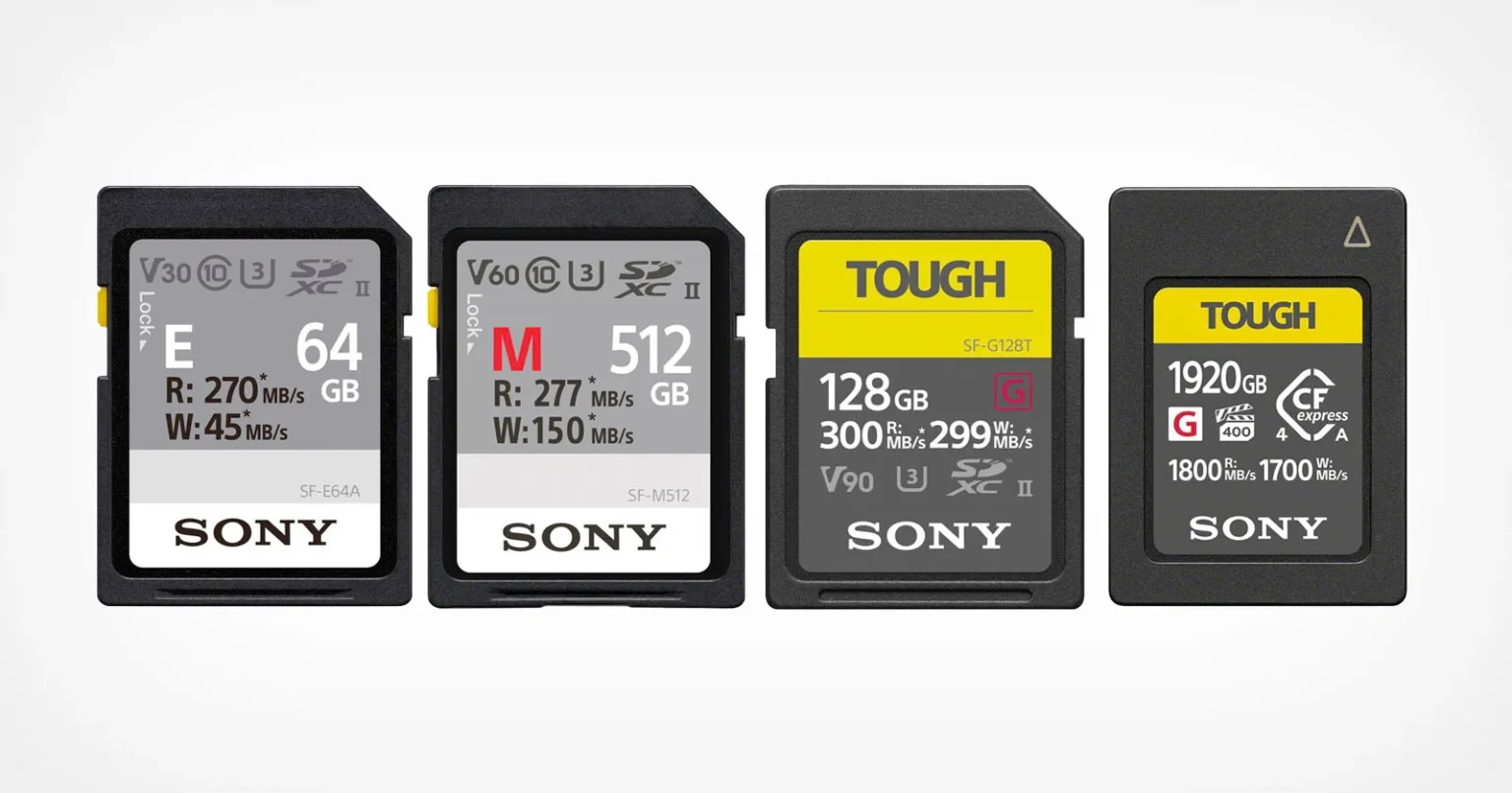
TOKYO, Japan — Sony has temporarily suspended the sale of several of its memory card products, citing an ongoing global shortage of semiconductors that continues to disrupt supply chains across multiple industries.
The company confirmed that it has halted orders and shipments of key storage products, including high-performance SD and CFexpress cards, after determining it can no longer meet global demand.
The suspension affects both retail consumers and professional distributors, with no clear timeline provided for a return to normal supply levels.
The disruption reflects a broader global semiconductor shortage that has persisted in recent years, driven largely by surging demand for advanced computing technologies.
The rapid expansion of artificial intelligence systems and hyperscale data centres has significantly increased the need for high-performance memory chips, placing pressure on global production capacity.
At the same time, manufacturers continue to face constraints linked to complex supply chains, high capital costs, and limited fabrication capacity.
As a result, chipmakers are increasingly prioritising sectors such as AI infrastructure and enterprise computing, where margins and demand are higher, often at the expense of consumer electronics.
Sony’s decision is expected to have immediate consequences for content creators, particularly professionals who rely on high-speed, high-capacity storage for demanding workflows.
Photographers and videographers working with 4K and 8K formats are likely to face difficulties sourcing reliable memory cards, especially those designed for intensive data capture.
Reduced availability is also expected to drive up prices, increasing operational costs for creators who must regularly upgrade or expand their storage capacity.
Beyond cost pressures, the shortage may disrupt production workflows. Limited access to storage could force creators to reuse existing cards more frequently, increasing the risk of data loss, corruption, or inefficiencies in file management.
For professionals operating under tight deadlines, such disruptions could directly affect project delivery timelines and client relationships.
While some creators may turn to alternative brands to bridge the supply gap, industry experts caution that not all storage products offer the same level of performance, durability, and reliability.
Using lower-grade memory cards can introduce significant risks, particularly for professionals handling high-value or irreplaceable content. In such cases, even minor failures can lead to substantial financial and reputational losses.
Also Read: Teen hacks brother to death in Bungoma after quarrel over memory card
The effects of the shortage are expected to be more pronounced in emerging markets such as Kenya, where access to high-end equipment is already constrained by import costs and limited supplier networks.
Reduced availability of professional-grade storage solutions could slow the growth of local creative industries, particularly among independent filmmakers, photographers, and digital content creators.
This may widen the gap between creators in developed markets, where supply chains are more resilient, and those in developing economies, who face higher barriers to accessing essential production tools.
Sony’s move underscores the continued ripple effects of the global semiconductor imbalance, highlighting how supply chain prioritisation is reshaping access to consumer technology.
As demand for advanced computing infrastructure continues to rise, shortages in components such as memory chips may persist, forcing industries, including the creative sector, to adapt to a more constrained and competitive hardware environment.