

KAMPALA, Uganda — Uganda’s national identity agency, the National Identification and Registration Authority (NIRA), is facing mounting scrutiny following a damning audit that reveals widespread operational failures, staffing gaps, and severe delays in issuing national identity cards.
A report by the Auditor General highlights systemic inefficiencies within the institution, raising concerns about its ability to deliver one of the country’s most critical public services, identity registration.
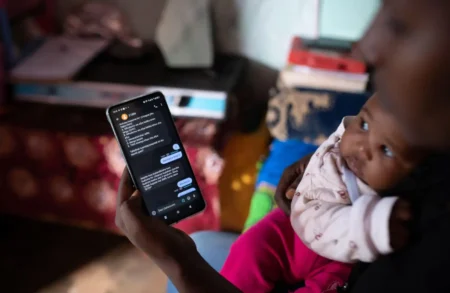
Millions of Ugandans remain without national IDs, affecting access to essential services such as banking, voting, and telecommunications.
Leadership under pressure
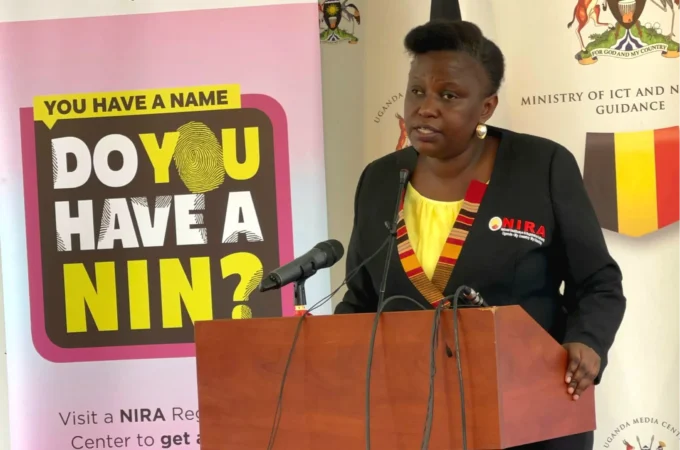
At the centre of the crisis is NIRA’s Executive Director, Rosemary Kisembo, who assumed office in May 2021 with a mandate to modernise the authority’s systems. Her tenure followed that of Judy Obitra Gama, whose departure was linked to operational challenges.
With her contract set to expire in May, questions are emerging over whether she will secure a second term.
“She came in as the technocrat to fix things,” an insider whispered. “But now the system is exposing her. The pressure is unbearable.”
Staff shortages and operational strain
The audit reveals that NIRA is operating significantly below its required staffing levels. Out of an approved workforce of 571 positions, only 422 are filled, leaving a 26 percent vacancy rate.
Critical departments such as Internal Audit, Communication and Public Relations, and ICT are among the most affected, with some units operating at less than half capacity.
“How do you run a national identity system without people?,” a frustrated insider asked. “This is not just a gap — it’s a collapse.”
The institution is also operating from temporary premises at Kololo Independence Grounds, raising concerns about efficiency and service delivery.
Members of the public have reported confusion and long queues due to the absence of structured customer support services.
“You go there and it’s confusion,” one citizen complained. “No direction, no help, just queues and frustration.”
Financial and procurement challenges
NIRA is also grappling with financial pressures, including domestic arrears exceeding UGX 6 billion. While the increase from the previous year appears marginal, analysts say it signals deeper issues in financial management and planning.
Procurement processes have also come under scrutiny, with the audit indicating gaps in compliance and limited capacity within the Procurement and Disposal Unit.
“This is a system limping from one mistake to another,” a source revealed.
In addition, the authority lacks a comprehensive asset management framework for critical infrastructure such as ICT equipment, further complicating operations.
“It’s like running a digital authority with analogue thinking,” an analyst scoffed.
Strategic and performance concerns
The report further points to weaknesses in strategic planning, including delays in finalising a new roadmap aligned with national priorities. A funding shortfall of nearly UGX 70 billion has hindered implementation of key programmes.
Performance metrics used to assess the authority were also criticised as inadequate and poorly defined.
“It’s like they are measuring shadows,” a policy expert remarked.
Service delivery crisis
The most significant impact of these challenges is evident in service delivery. NIRA’s mass enrolment and ID renewal programme is struggling due to funding gaps, staffing shortages, and operational inefficiencies.
Out of the planned UGX 666.85 billion budget, only UGX 410.05 billion has been disbursed, leaving a substantial deficit. Even then, part of the allocated funds remains unutilised.
“They don’t have enough money, and the little they have, they don’t use properly,” an insider said bluntly.
The shortage of temporary staff has further slowed progress, with nearly 4,000 fewer workers deployed than planned.
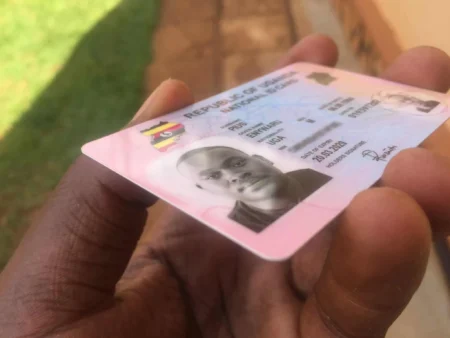
As a result, a significant backlog has built up. By October 2025, more than 11.5 million Ugandans had applied for ID renewals, but fewer than half had been cleared for processing. For new applicants, approvals remain extremely low.
“That is basically zero,” an analyst noted. “It means the system is not working.”
Even among approved applications, a large proportion of ID cards has yet to be printed, while millions of National Identification Number (NIN) applications remain pending.
“This is not just delay,” a source said. “It is a complete system failure.”
Technology and security gaps
The audit also highlights significant weaknesses in NIRA’s digital infrastructure. The National Security Information System (NSIS), which underpins identity registration, is not fully integrated with other systems and lacks key functionalities.
“There is nothing ‘national’ about a system that cannot talk to itself,” an ICT expert observed.
Concerns have also been raised about the absence of a business continuity system, exposing the authority to potential risks in the event of system failure or disaster.
“This is a national security risk,” a senior official warned.
Governance and oversight issues
Oversight mechanisms have also come into question, with only a fraction of recommendations from Parliament’s Public Accounts Committee fully implemented.
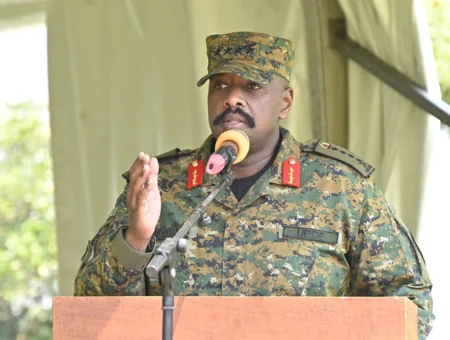
Also Read: Gen Muhoozi orders removal of immigration officers over ID denials for Banyarwanda
At the governance level, pressure is mounting on board leadership, with reports of internal divisions and tensions within the institution.
“There is a war going on,” a source revealed. “People are feeding information to State House, trying to influence what happens next.”
Uncertain future
As Yoweri Museveni weighs decisions on leadership at the authority, attention is increasingly focused on whether reforms can be implemented quickly enough to restore public confidence.
“Yes, she has achievements,” a senior observer admitted. “The ID renewal process did start. Systems were introduced. But leadership is judged on outcomes, and right now, the outcomes are deeply troubling.”
For millions of Ugandans still waiting for national identity cards, the stakes remain high as the future of the country’s identity system hangs in the balance.