



KAMPALA, Uganda — Uganda’s public debt has risen to $34.86 billion (Shs 131.2 trillion) as of December 2025, up from $34.21 billion (Shs 128.7 trillion) three months earlier, highlighting mounting fiscal pressures despite ongoing debt repayments.
According to data from the Ministry of Finance Uganda, the country’s debt now stands at 52.7% of Gross Domestic Product (GDP), exceeding the sustainability threshold set by the East African Community (EAC).
However, officials maintain that the debt remains manageable, citing Uganda’s relatively lower ratio compared to some regional peers and the anticipated boost from future oil revenues.
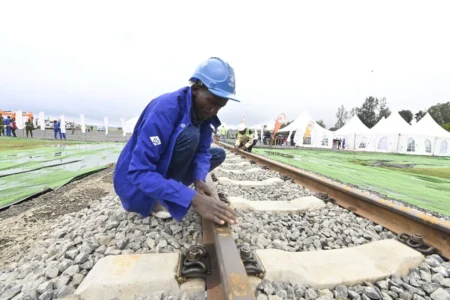
Authorities argue that a significant portion of the borrowing has been directed towards infrastructure development, which they say will support long-term economic growth.
Uganda is preparing for commercial oil production, a factor the government believes will strengthen its repayment capacity.
A breakdown of the debt portfolio shows that domestic borrowing accounts for 54.5% of the total, equivalent to $19.02 billion (Shs 68.86 trillion), while external debt stands at $15.84 billion (Shs 57.33 trillion).
The recent increase has been largely driven by expanded domestic borrowing, reflecting a strategic shift away from external commercial loans, which are considered more expensive and risk-prone.
Multilateral lenders, including the International Development Association, International Monetary Fund, and African Development Fund, remain the largest external creditors, collectively accounting for more than half of Uganda’s external debt.
Among bilateral lenders, China’s Exim Bank and the UK Export Finance agency are key creditors, while local commercial banks such as Stanbic Bank Uganda dominate the domestic debt market.
Permanent Secretary and Secretary to the Treasury Ramathan Ggoobi said the government is working to reduce reliance on non-concessional borrowing to ease the debt servicing burden.
Data shows a modest increase in concessional loans, largely from institutions such as the World Bank and the Islamic Development Bank.
Despite this, debt servicing costs have continued to rise. External debt service reached $416.62 million (Shs 1.563 trillion) in the second quarter of the 2025/26 financial year, driven by higher principal and interest payments. At the same time, domestic debt expanded significantly, fuelled by increased issuance of treasury bills and bonds.
International assessments by the IMF and World Bank indicate that Uganda’s debt remains sustainable in the medium to long term, though with a “moderate risk” of distress.
These projections are supported by factors such as steady economic growth, relatively low inflation, and stable foreign exchange reserves.
However, analysts warn of emerging vulnerabilities, particularly the growing reliance on domestic borrowing and exposure to external shocks such as commodity price fluctuations, climate-related risks, and potential delays in oil production.
Some economists argue that the commonly used debt-to-GDP ratio offers an incomplete picture of fiscal health. While it provides a standard benchmark, critics say it does not fully capture a government’s ability to service debt, especially in economies with large informal sectors.
Economist Dr Fred Muhumuza cautioned that focusing solely on the debt-to-GDP ratio can mask underlying fiscal stress. He noted that Uganda allocates more than 30% of its domestic revenue to interest payments, well above the sub-Saharan African average of around 14%.
Also Read: Uganda report reveals Shs 42bn bribery scandal in local government jobs
He warned that this trend risks crowding out critical spending on sectors such as health, education, and infrastructure, describing the situation as a potential “debt trap” if borrowing continues without corresponding economic returns.
Similarly, Julius Mukunda of the Civil Society Budget Advocacy Group emphasised the need to assess debt sustainability using broader indicators, including revenue mobilisation, project efficiency, and overall fiscal discipline.
“Even if the ratio reached 100 per cent, the critical question is productive use of debt, not the percentage itself.”
Analysts broadly agree that while Uganda’s debt remains within manageable limits for now, maintaining sustainability will depend on stronger revenue collection, prudent borrowing, and ensuring that borrowed funds are channelled into high-impact, growth-enhancing investments.