


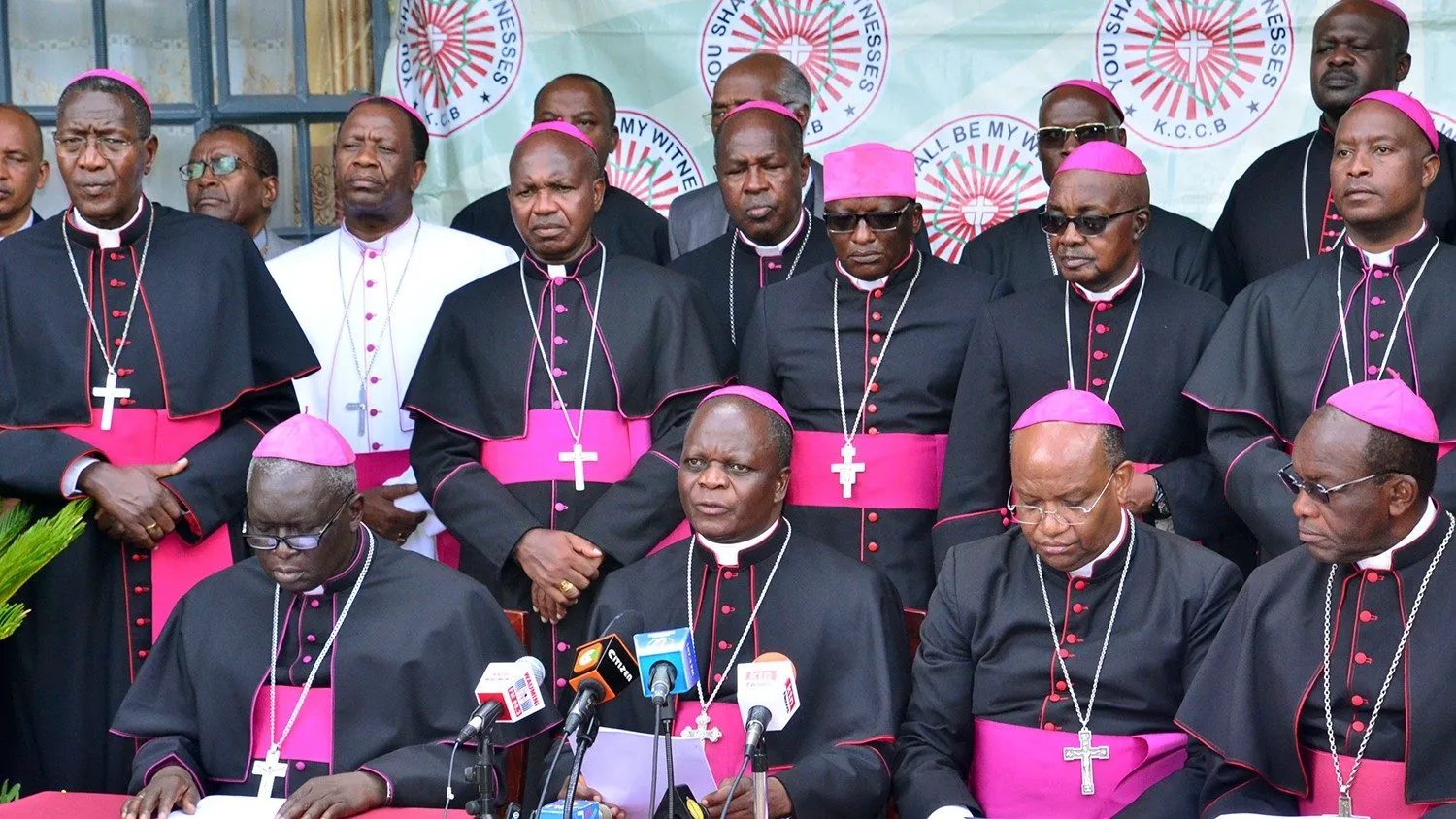
NAIROBI, Kenya — The Kenya Conference of Catholic Bishops (KCCB) has sharply criticised Kenya’s political leadership over what it describes as escalating “verbal indiscipline,” warning that the tone of public discourse is eroding national dignity and public trust.
Speaking during the reception of Coadjutor Bishop Joseph Mwongela, following the retirement of Bishop Norman King’oo, KCCB chairman Most Rev. Maurice Muhatia Makumba said the country’s leaders must demonstrate restraint and uphold integrity in their public conduct.
“We want to call for restraint and decorum in public speaking and we call upon leaders, especially political leaders, to exercise restraint. The children listening to you are shocked, the young people listening to you are traumatised because in you is represented the collapse of their aspiration for leadership,” he said.
“The adults listening to you are embarrassed; you are a poor representation of our generation, Please exercise restraint. This country belongs to more than 50 million Kenyans and not only to yourselves.”
The bishops expressed concern over an increasing pattern of public insults among political figures, urging leaders to engage respectfully despite differences.
“The verbal indiscipline we are experiencing is indicative of something worse. Please let us respect each other as our respect for our fellow brothers and sisters. You can disagree with people without insulting them,” Muhatia added.
In a pointed appeal, the clergy urged politicians to keep personal disputes out of the public domain.
“If you want to insult each other, look for some bunker underground in the earth, go there, insult each other, and when you finish, come back and join us in nation building,” he said.
Muhatia further emphasised the responsibility that comes with public office, cautioning against reckless speech.
“Not everything that crosses your mind must drop on your lips. Your opinions are not only to yourselves. The verbal indiscipline we are experiencing is indicative of something worse. Please, let us respect each other,” Muhatia stated.
The remarks come at a time of heightened political tension in Kenya, as early alignments and rivalries ahead of the 2027 General Election begin to take shape. Observers note a growing trend of abrasive rhetoric, including personal attacks, body-shaming and inflammatory language, increasingly dominating political exchanges.
Recent public spats involving William Ruto and his former deputy Rigathi Gachagua have drawn criticism from religious leaders and civil society groups, who warn that such conduct risks undermining institutional credibility and national cohesion.
Also Read: Ruto defends remarks against opposition, says he is ‘not apologetic’
More than 20 civil society organisations have also condemned the tone of political discourse, describing some remarks by senior leaders as profane and divisive, and cautioning that they diminish the dignity of the presidency.
Despite the criticism, President Ruto has defended his stance, saying he is unapologetic for his recent remarks directed at opposition figures and remains prepared to confront his critics directly.
The intervention by the Catholic bishops adds to mounting pressure on Kenya’s political class to recalibrate its tone, as concerns grow that deteriorating public discourse could inflame divisions and weaken democratic engagement ahead of the next election cycle.
