


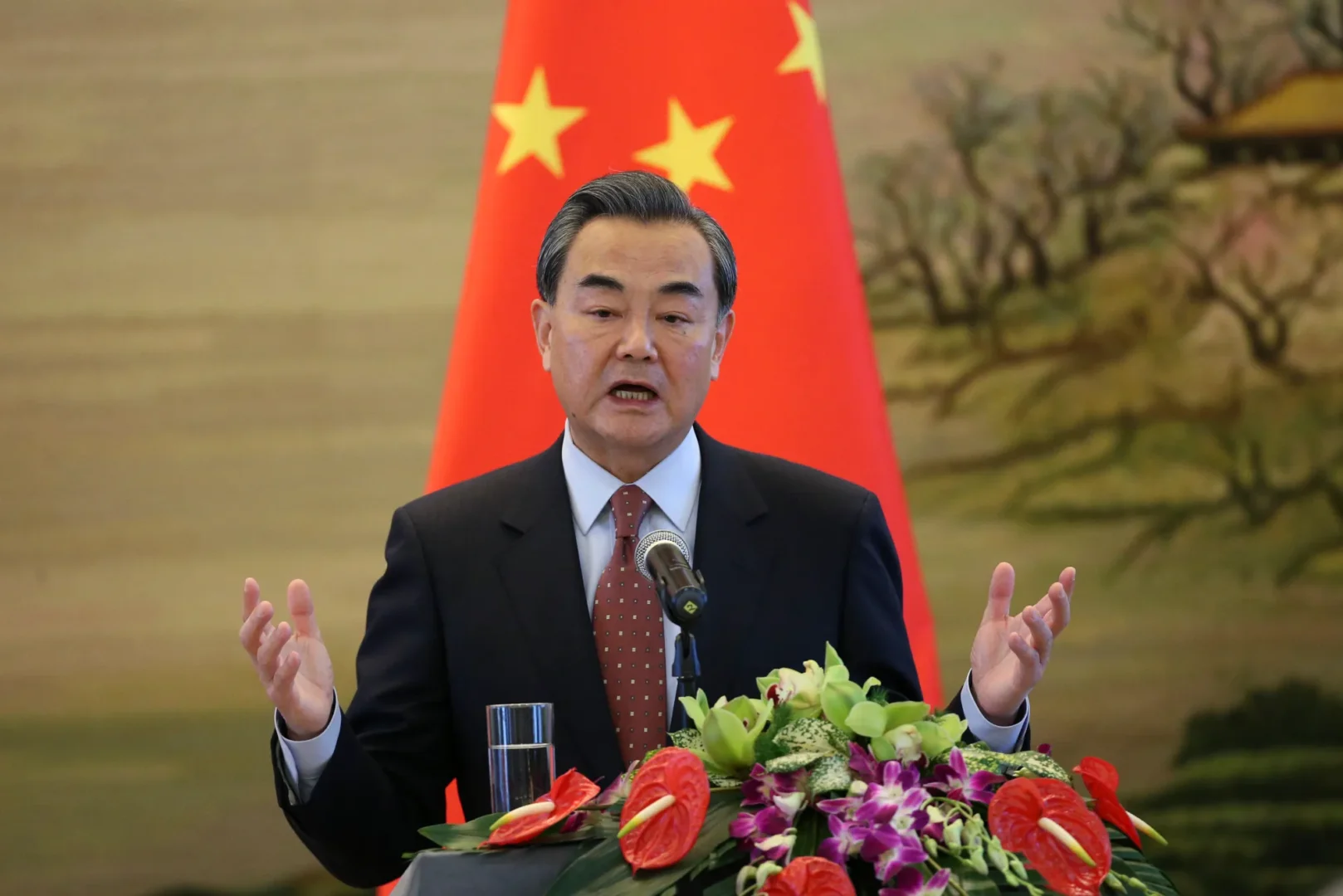
BEIJING, China — China’s Foreign Minister Wang Yi has called for an immediate halt to military operations in the Middle East, warning that the conflict risks spiralling beyond control.
In a phone conversation on Monday with Oman’s Foreign Minister Sayyid Badr bin Hamad Al Busaidi, Wang said the urgent priority was to prevent further escalation and avoid a broader regional spillover.
Oman has played a central mediation role in recent Iran–US talks, which Muscat says had made significant progress before hostilities resumed.
During the call, Al Busaidi said that, with Oman’s mediation, Iran-U.S. negotiations had achieved unprecedented progress. However, he added, it was regrettable that the United States and Israel abandoned the existing outcomes of the talks and launched a war.
If the war continues, it will lead to further casualties and property losses, he said, urging all parties to work together for an early ceasefire.
China backs mediation and UN role
Al Busaidi described China as a “reliable positive force” in international affairs and expressed hope that Beijing would play a constructive role at what he termed a sensitive moment.
Wang said that Oman has actively mediated the Iran-U.S. negotiations and made great efforts to safeguard regional peace, which China appreciates.
Despite progress in the talks, the United States and Israel deliberately provoked a war against Iran, clearly violating the purposes and principles of the UN Charter, Wang said.
Calling for keeping the situation from reaching a point of no return, Wang said that China urges all parties to make joint efforts to this end and supports Oman in continuing its mediation work, Wang said, adding that China is also willing to play a constructive role, including upholding fairness and justice at the UN Security Council, striving for peace and stopping the war.
China is a permanent member of the United Nations Security Council, where it holds veto power and has frequently positioned itself as a counterweight to Western-led interventions.
Gulf security concerns
Wang also addressed the broader security implications for Gulf states, many of which host critical energy infrastructure and international shipping lanes.
Wang said China attaches importance to the legitimate concerns of Gulf countries and supports them in safeguarding their sovereignty and national security.
The spillover of war does not serve the fundamental and long-term interests of Gulf countries, he added.
China expects Gulf countries to strengthen independence, oppose external interference, develop good-neighborly relations, enhance solidarity and cooperation, and take their future into their own hands, Wang said.
Also Read: US says three F-15 jets downed in Kuwait in apparent ‘friendly fire’ incident
Beijing has expanded its diplomatic and economic footprint in the Gulf in recent years, brokering a landmark rapprochement between Iran and Saudi Arabia in 2023 and deepening energy partnerships across the region.
Analysts say China’s call for restraint reflects both geopolitical interests and concerns about energy market stability.
The renewed conflict follows a breakdown in negotiations between Washington and Tehran over Iran’s nuclear programme and regional security arrangements.
Oman has historically served as a discreet channel for dialogue between the two sides, including during earlier backchannel talks that led to the 2015 nuclear agreement.
With military operations intensifying and regional actors increasingly drawn in, diplomatic observers warn that miscalculation could trigger a broader confrontation affecting global oil markets and maritime trade routes.
China’s intervention signals its intent to position itself as a diplomatic stakeholder in Middle Eastern stability, particularly as competition between major powers shapes responses to the crisis.
