





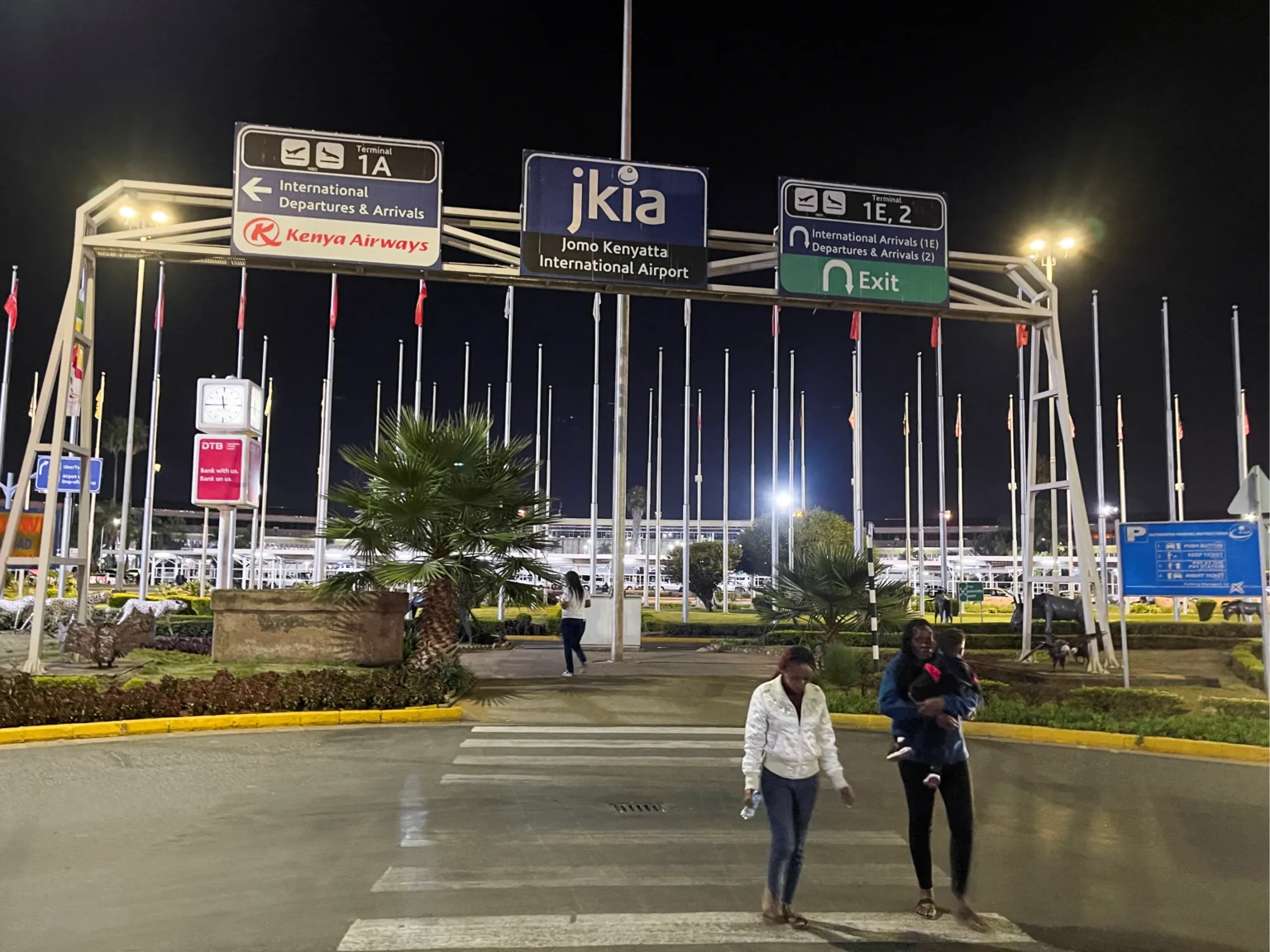
NAIROBI, Kenya — Departures and arrivals at Jomo Kenyatta International Airport (JKIA) were significantly disrupted on Monday, 16 February 2026, after workers represented by the Kenya Aviation Workers Union (KAWU) commenced industrial action, grounding flights and stranding passengers at East Africa’s busiest aviation hub.
The labour dispute centres on unresolved negotiations between KAWU and the Kenya Civil Aviation Authority (KCAA) over long-standing employment grievances, including stalled collective bargaining agreement (CBA) talks, salary reviews and contract worker rights.
Disruptions across carriers and Cargo
Several major airlines operating at JKIA, notably Kenya Airways and Jambojet, confirmed the industrial action has caused delays to both domestic and international flights.
Passengers were advised to review travel plans, check flight statuses, and consider rebooking where necessary.
“We sincerely regret the inconvenience and are working closely with the relevant aviation authorities and airport stakeholders to minimise disruption and maintain safe operations,” said Kenya Airways in a statement on Monday.
Jambojet similarly warned: “…all flights across our network are delayed, with the possibility of extended ground holding times, due to delayed clearances.”
In addition to passenger frustration, the labour action is affecting time‑sensitive freight operations, threatening knock‑on effects for regional logistics and cargo chains reliant on Kenya’s aviation infrastructure.
Passengers left waiting
Eyewitness reports from the terminal described long queues and delays exceeding six hours for some travellers, many with tight connections in Nairobi.
Airline representatives were actively assisting affected passengers, urging them to contact ticketing offices or airline customer service for live updates.
Meanwhile, operations by regional carriers such as RwandAir have also been thrown into disarray, with flights delayed, re‑scheduled or cancelled entirely as ground handling backlogs grow.
Government and regulator response
The KCAA has activated contingency and operational continuity measures designed to maintain core aviation safety and air navigation services amid the action.
The regulator emphasised that essential oversight functions remain active, and that stakeholders, including airlines, are engaged to manage the situation within legal framework.
Also Read: Kenya Airways flight en route to Dar es Salaam diverts back to JKIA after medical emergency
In previous statements, KCAA leadership underscored the authority’s commitment to dialogue and adherence to labour laws, even as tensions escalate.
However, the situation remains fraught. An earlier court injunction obtained by KCAA temporarily barred KAWU from striking until its case is heard later this month, but the union proceeded with the action regardless, deepening uncertainty over legal compliance and continuity of operations.
What workers are demanding
KAWU leaders cite a decade‑long failure to conclude CBA negotiations and address core terms of service that have left many employees without salary reviews or formal recognition after years of service.
The union’s list of grievances includes:
- Implementation of long‑overdue Collective Bargaining Agreements that have remained stagnant since 2015.
- Conversion of contract workers to permanent pensionable terms in line with court directives.
- Recognition of union representation and fair labour practices across aviation agencies.
KAWU Secretary General Moss Ndiema warned the public to expect “a tumultuous week” as negotiations unfold.
