


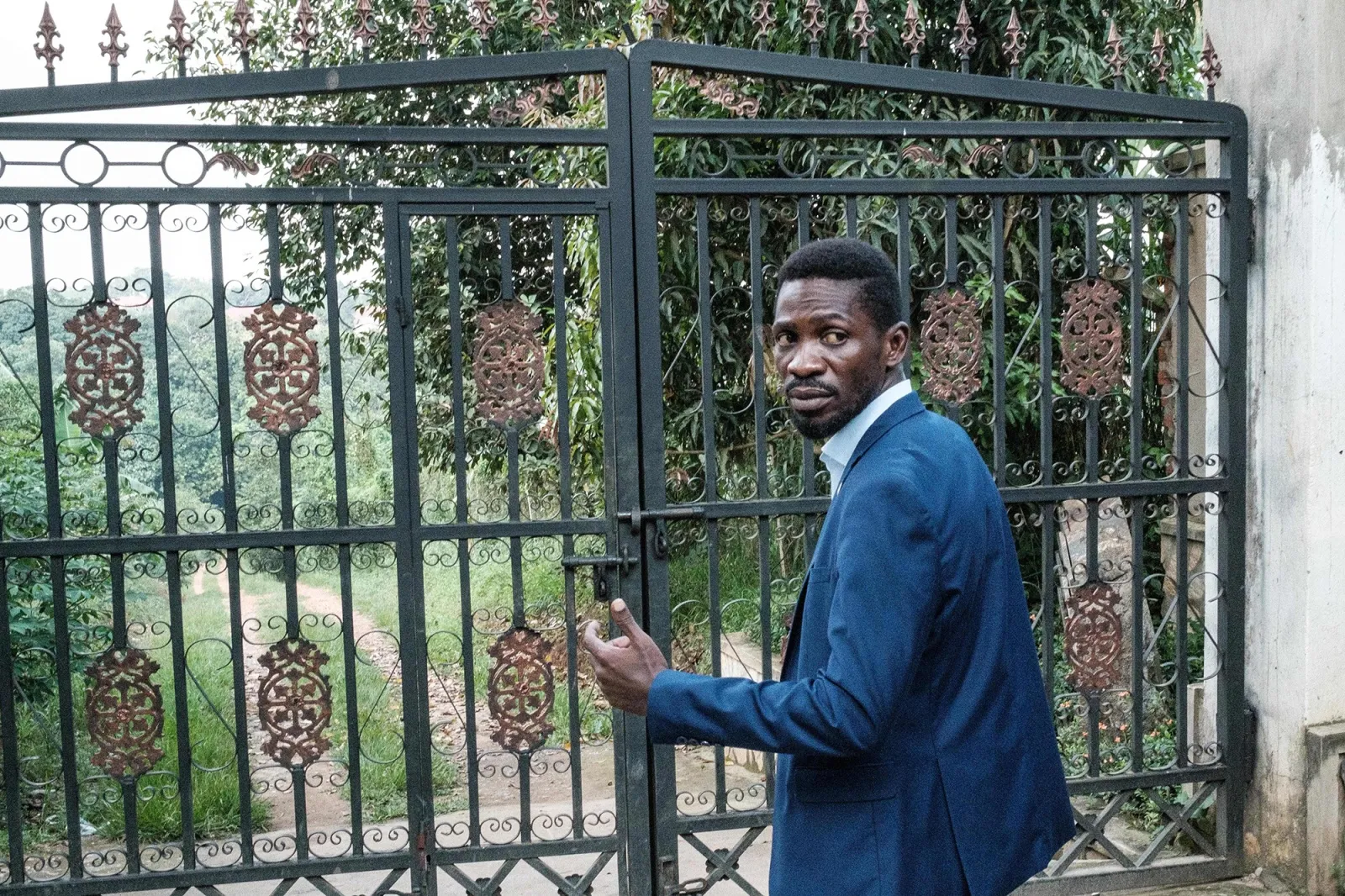
KAMPALA, Uganda — Uganda’s opposition leader Robert Kyagulanyi Ssentamu, popularly known as Bobi Wine, says that military forces have fully occupied his family home in Magere, Wakiso District, in what he describes as a renewed standoff with state security agencies.
In a social media post on Tuesday, Bobi Wine said armed soldiers had surrounded and entered his residence overnight, taking control of the property and preventing his family from accessing it.
“Last night, the military surrounding our home in Magere once again forced themselves into the house. They’re now fully occupying our entire home – inside, outside, and around it,” he wrote on X (formerly Twitter). “We are still unable to assess the extent of the destruction caused to the house when they first broke it and vandalised it on January 23.”
The renewed occupation comes amid reports that Bobi Wine quietly left Uganda about a week ago amid escalating tensions following the disputed January 15 presidential election, in which long-time president Yoweri Museveni was declared the winner.
The opposition has rejected the results, asserting widespread irregularities and intimidation throughout the campaign and voting period.
Military presence and allegations
The government and army have not officially commented on the latest claim. In previous incidents, authorities denied that there had been a military operation at Bobi Wine’s home, a position later complicated by a photograph released by Gen. Muhoozi Kainerugaba, the Chief of Defence Forces and son of President Museveni, showing Bobi Wine’s wife, Barbie Kyagulanyi, with an armed soldier standing beside her during a January 23 raid.
In recent weeks, Bobi Wine has been in hiding, citing fears for his personal safety after what he described as a military assault on his home and ongoing harassment of his supporters.
Reports from human rights observers and legal advocates point to a broader pattern of arrests and detentions of opposition figures and supporters after the election.
International legal appeal
In response to the occupation, Bobi Wine’s long-term counsel, Robert Amsterdam, of the international law firm Amsterdam & Partners LLP, has called on the Commonwealth Secretariat to take decisive action against Uganda.
In a statement submitted to the Commonwealth Ministerial Action Group (CMAG), Amsterdam argued that the continued military occupation and alleged targeting of Bobi Wine and his family represent serious breaches of Uganda’s commitments under international law, including the International Covenant on Civil and Political Rights (ICCPR) and the African Charter on Human and Peoples’ Rights.
“Uganda is in open breach of the Harare Declaration and the Commonwealth Charter. When senior commanders publicly threaten an opposition leader and the government fails to repudiate those threats, responsibility attaches at the highest level,” Amsterdam said.
Also Read: Bobi Wine reportedly flees Uganda after claiming security threats
“The Commonwealth must act now through CMAG engagement, a fact-finding mission and clear consequences such as the indefinite suspension of Uganda from the Commonwealth. Anything less would indicate tolerance of violence, impunity and the further demise of any hope of even a semblance of democratic rule.”
Uganda has been a member of the Commonwealth since regaining independence in 1962. The organisation has, on rare occasions, suspended member states, for example, Zimbabwe in 2002 — over serious violations of democratic norms.
Reactions and legal concerns
Rights groups within Uganda have also condemned the reported siege of Bobi Wine’s residence. The Uganda Law Society described the deployment of security forces around the home as an arbitrary restriction on liberty that undermines constitutional protections, including freedom of movement and access to necessities.
Critics say the military’s presence at political figures’ homes and the broader pattern of detentions reflect a shrinking civic space and growing intolerance of dissent since the disputed vote.
The government has consistently denied targeting Bobi Wine and other opposition leaders, with officials maintaining that no security organ is pursuing him and that he remains free to return home.
But the ongoing military presence and conflicting narratives have fuelled domestic and international scrutiny of Uganda’s post-electoral environment.
