


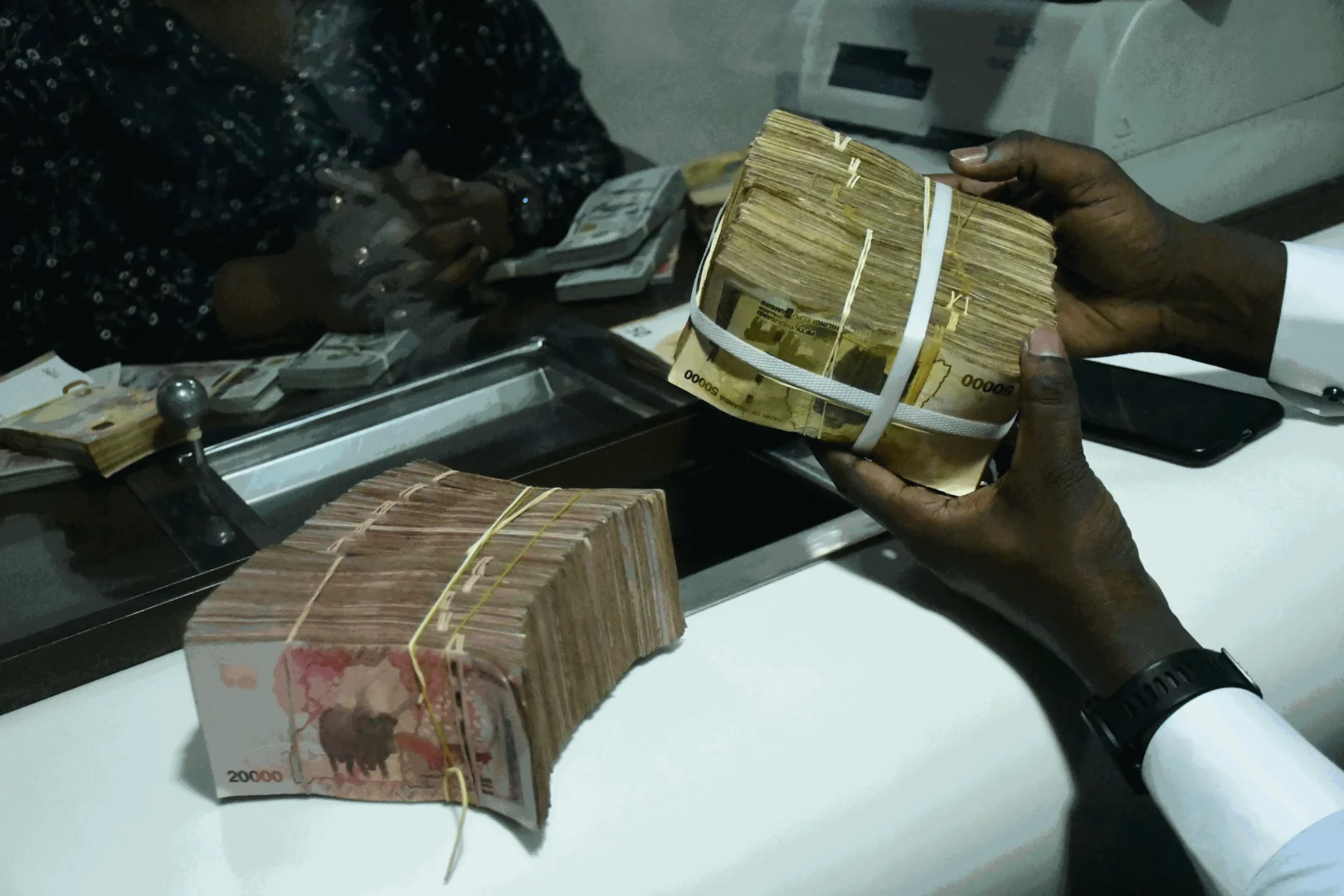
KAMPALA, Uganda — The Uganda Shilling has continued to strengthen against the US Dollar, defying the political uncertainty that often accompanies general elections, even as the country concluded parliamentary and presidential polls last week.
By mid-January, the local currency was trading at approximately Shs3,443 on the buying side and Shs3,453.18 on the selling side, according to official Bank of Uganda rates.
Central bank data shows the Shilling has appreciated by about six per cent over the past 12 months, including a sharp four per cent gain within a single month.
As of January 20, 2026, the exchange rate hovered around Shs3,458 per Dollar. Just a week earlier, ahead of the presidential election on January 13, the Dollar was trading as high as Shs3,604 on the buying side, with sellers receiving Shs3,594.7.
When markets reopened following the polls, the Dollar weakened to about Shs3,490, signalling renewed confidence among currency traders.
Exports, investment and remittances
The Bank of Uganda attributes the Shilling’s resilience largely to strong export earnings, particularly from coffee and gold, which remain Uganda’s top foreign-exchange earners.
Seasonal inflows from tourism and diaspora remittances, which typically rise toward the end of the year, have also supported the currency.
In addition, officials point to increased foreign direct investment, especially in the oil and gas sector, as Uganda edges closer to commercial oil production later this year.
The Ministry of Energy and Mineral Development says sustained capital inflows linked to energy infrastructure have boosted Dollar supply in the local market.
Central Bank downplays intervention
Despite speculation that the central bank may be supporting the currency, the Bank of Uganda has downplayed its role, insisting it has not intervened in the foreign exchange market in recent weeks.
Its last known liquidity-tightening operation was in November 2025, when Shs509.6 billion was withdrawn from the system to stabilise earlier volatility.
Also Read: Four African countries delisted from money laundering watchlist, Kenya still under scrutiny
Concerns had been raised that heavy government and political party spending during the election season could fuel inflation or weaken the Shilling.
However, both the Bank of Uganda and the Ministry of Finance, Planning and Economic Development have dismissed such fears, citing adequate fiscal buffers and stable macroeconomic conditions.
Post-election confidence returns
Economists say the brief volatility seen before the polls was largely driven by investors holding onto Dollars amid political uncertainty. With the elections concluded, market confidence appears to be returning.
“At this pace, we could see the exchange rate reach 3,400 Shillings per Dollar by the end of the month,” says Alex Kakande, a financial and investment advisor. “This is good news for importers, but tough for exporters and Ugandans abroad sending money home.”
A stronger Shilling reduces the local currency value of Dollar-denominated earnings, affecting exporters and diaspora remittances, even as it lowers import costs and eases inflationary pressure.
Global factors at play
Beyond domestic fundamentals, the Shilling’s performance mirrors a broader global softening of the US Dollar, following recent interest rate cuts by the US Federal Reserve, aimed at stimulating borrowing and investment.
While the Dollar was initially expected to remain strong, resilience in other major economies has shifted currency dynamics.
The Uganda Shilling has strengthened against the Kenyan Shilling, appreciating from about KSh27.83 per UGX before election day to roughly KSh26.67 by Wednesday. This underscores the Shilling’s broader regional resilience and highlights its relative outperformance among East African currencies in the wake of Uganda’s elections.
