



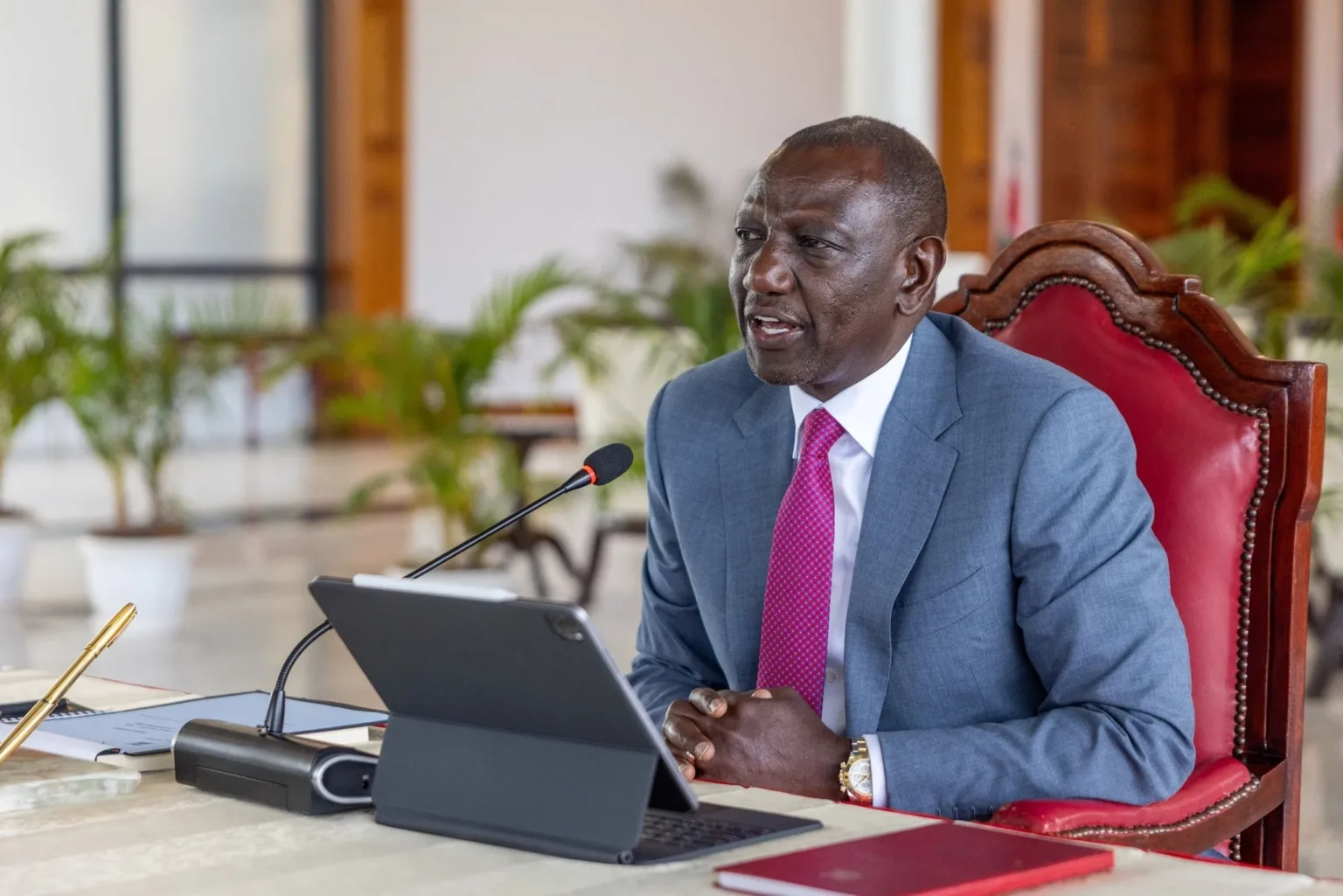
MERU, Kenya — President William Ruto has directed all learners across the country to report to school starting Friday, regardless of financial hardship or lack of school uniforms, in a forceful intervention aimed at safeguarding access to education at the start of the academic year.
Speaking in Meru during the disbursement of funds under the National Youth Opportunities Towards Advancement (NYOTA) business support programme, the President instructed provincial administration officers to ensure full enforcement of the directive and to remove barriers preventing children from resuming classes.
The Head of State said the government had released KSh44 billion in capitation funds to support learning in the first term, insisting that no child should be locked out of school due to school fees or uniform requirements.
“There is sufficient money for our children to be taught in the first term, so every child, with or without uniform and school fees, should report to school tomorrow morning,” he said.
“I want all chiefs, assistant chiefs and members of provincial administration. Every child must report to school tomorrow morning because we have provided the money to teach our children.”
CBC transition under scrutiny
President Ruto also addressed concerns surrounding the transition from primary school to junior secondary under the Competency-Based Curriculum (CBC), warning that financial challenges should not undermine implementation of the new education system.
He said his administration remains committed to ensuring a smooth and inclusive transition, particularly for learners joining junior secondary school, a stage that has faced logistical, funding and infrastructure pressures since the CBC rollout.
The government has previously acknowledged gaps in classrooms, learning materials and staffing at junior secondary level, prompting increased scrutiny from parents, education stakeholders and legislators.
Low reporting raises alarm
The directive comes amid slow reporting rates for learners transitioning to junior secondary school.
As of Wednesday, January 22, the Ministry of Education reported that over 930 students who sat the 2025 Kenya Junior Secondary Education Assessment (KJSEA) had reported to school, out of 1.13 million registered candidates.
Education Cabinet Secretary Julius Ogamba said the government had deployed teams on the ground to trace learners who have not yet reported, as authorities move to enforce compulsory education under the Basic Education Act.
Also Read: Uganda delays new school term to February 10 amid election tensions
The low turnout has intensified debate over the affordability of education, the preparedness of public schools under CBC, and whether government capitation levels are sufficient to absorb all learners without additional costs being passed on to parents.
Broader implications
Education experts say the President’s directive signals a hardline policy stance against exclusion and could redefine how public schools handle uniforms, levies and informal charges, particularly at the start of the term.
However, they caution that enforcement must be matched with timely release of funds to schools and adequate support for overstretched institutions to prevent disruption to learning.