



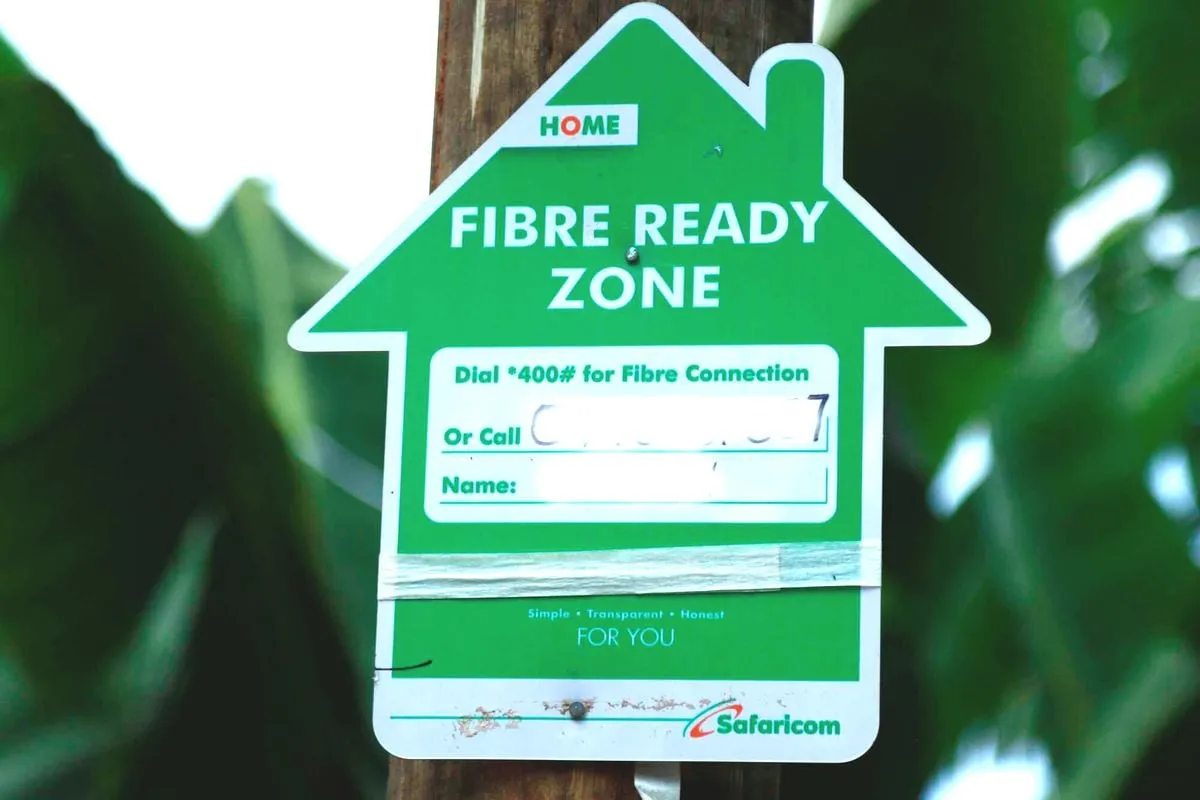
NAIROBI, Kenya — Safaricom PLC has announced plans to introduce tokenised Wi-Fi and prepaid fibre internet services in the second half of its 2026 financial year, marking a significant shift in how fixed broadband is priced and consumed in Kenya.
The new products will allow customers to pay for internet access on a daily, weekly or monthly basis, breaking away from the traditional requirement to commit to full-month subscriptions regardless of usage.
The telecommunications firm said the move is aimed at expanding internet access and improving affordability by adopting flexible pricing models similar to those that have driven widespread adoption of mobile data bundles.
Under the proposed system, customers will purchase time-based internet access, enabling them to connect only when needed rather than paying a fixed monthly fee even during periods of low or no usage.
Safaricom said its tokenised Wi-Fi service will allow users to buy digital tokens that grant internet access for specific durations, while prepaid fibre will offer high-speed broadband without long-term contracts or recurring monthly bills.
The company said the approach is intended to lower entry barriers, particularly for low-income households, students and small businesses whose internet needs may be irregular or seasonal.
“Tokenised and prepaid internet services will give customers greater control and flexibility over how they consume fixed broadband,” Safaricom said, adding that the model mirrors the success of mobile data bundles, which have been instrumental in expanding internet usage nationwide.
Market impact and competition
Industry analysts say the move could reshape Kenya’s fixed broadband market, where uptake has lagged behind mobile internet largely due to affordability constraints and rigid subscription structures.
Flexible payment options are widely viewed as a practical response to income volatility, especially in urban informal settlements and peri-urban areas where households often rely on shared or informal Wi-Fi services.
Safaricom’s fixed broadband segment currently serves more than 400,000 customers. However, the company estimates the potential market for fixed internet in Kenya at approximately four million users.
By introducing prepaid and token-based options, Safaricom aims to reach households and enterprises that have remained offline due to cost concerns or inflexible billing models.
Also Read: Safaricom enables seamless PayPal withdrawals directly via M-Pesa app for Kenyan users
The new services are also expected to intensify competition with informal Wi-Fi vendors and low-cost neighbourhood internet providers, particularly in densely populated urban areas.
Leveraging its national fibre backbone and established infrastructure, Safaricom says it can offer more reliable service and consistent speeds while maintaining affordability.
Growth strategy and rollout timeline
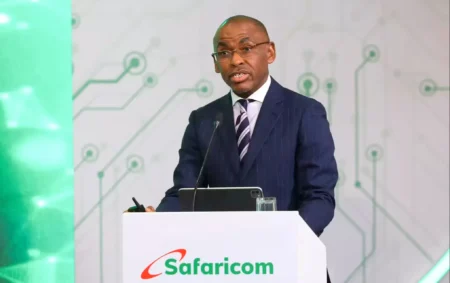
Safaricom Chief Executive Officer Peter Ndegwa has repeatedly identified fixed broadband as a central pillar of the company’s next phase of growth.
“We have just over 400,000 customers on fixed broadband today, in a market that is only serving about 1.2 million,” Ndegwa said in December 2025.
“At a country level, the opportunity is closer to four million. That leaves roughly three million people still to be connected.”
Safaricom’s financial year runs from October to March, placing the expected rollout of the new services between October 2025 and March 2026.
The initiative forms part of a broader strategy to accelerate growth in the fixed broadband segment, which company executives say remains significantly underserved despite rising demand for reliable home and business connectivity.
Ndegwa has previously described fixed broadband as one of the biggest opportunities in Kenya’s digital economy, arguing that closing the connectivity gap will be critical to supporting remote work, digital learning and small-business growth.
“Today, the market is only serving about 1.2 million users, so there is still another three million to be served,” he said.