



RABAT, Morocco — Senegal are Africa’s champions once again. On paper, history will record that Pape Gueye’s thunderous extra-time strike delivered a second Africa Cup of Nations title for the Teranga Lions, confirming their status as the continent’s dominant football force of this era.
But the truth; uncomfortable, unavoidable and deeply revealing — is that this AFCON final will not be remembered primarily for Senegal’s brilliance or Morocco’s heartbreak.
It will be remembered for a collapse of order, a prolonged standoff between football and authority, and a night when African football struggled to govern itself on its biggest stage.
This was not merely a final. It was a stress test, and the system buckled.
A final derailed by authority and delay
For long stretches, the match itself was tense but technically modest, shaped by caution, fatigue and the weight of expectation.
Morocco, the hosts and Africa’s highest-ranked team, controlled territory early. Senegal, streetwise and resilient, carved the clearer openings.
Then came the moment that detonated the evening.
Deep into injury time, with eight minutes already added on, VAR intervened to recommend a review of a tug on Brahim Diaz from a corner. Referee Jean Jacques Ndala awarded the penalty, a decision that immediately ignited fury on the Senegal bench and disbelief in the stands.
What followed was not protest. It was chaos.
Players poured onto the pitch. Technical areas emptied. Senegal’s coach Pape Thiaw ordered his players down the tunnel.
Fans attempted to breach security barriers, some wielding metal chairs. Police in riot gear formed human walls between footballers and supporters.
The match stopped being a sporting contest and became a public-order emergency.
VAR without authority is a liability
VAR was introduced to African football to improve fairness and credibility. Instead, in Rabat, it exposed a fatal weakness: technology without trust is incendiary.
The issue was not simply whether the penalty was correct. It was process, timing and authority. A decision of such magnitude, delivered after a prolonged delay, in a febrile atmosphere, without effective crowd management, was a failure of governance.
By the time Diaz finally stepped up, after an extraordinary wait, the moment had been drained of sporting purity. What should have been a climactic test of nerve had become a psychological ordeal.
His attempted Panenka, calmly read and collected by Edouard Mendy, will live in highlight reels. But it was also the product of a player placed in an almost impossible situation.
African football did not protect the game, or its protagonists.
Morocco’s grand project meets an unforgiving reality
For Morocco, the defeat cut deeper than a missed penalty or a conceded screamer.
This tournament was supposed to be a culmination. For more than a decade, King Mohammed VI has invested heavily in football infrastructure, youth development and global ambition.
The World Cup semi-final run in Qatar in 2022 was proof of concept. AFCON glory at home was meant to be the crowning validation.
Instead, Morocco became only the fourth host nation to lose an AFCON final, shattering a near-perfect historical pattern.
The symbolism was cruel: Africa’s most ambitious football project undone not just by Senegal’s excellence, but by a night that spiralled beyond control.
Senegal: Champions of chaos
Lost in the disorder is a vital truth: Senegal deserved this title.
They absorbed pressure. They survived controversy. And when the moment came, Pape Gueye delivered a goal of continental significance — surging from midfield, shrugging off Achraf Hakimi and unleashing a strike that clipped the underside of the bar on its way in.
This was the goal of a team that understands tournament football: patience, resilience, and ruthless execution.
That Senegal were able to finish the match amid missile-throwing, pitch incursions and a heavy police presence only reinforced their mental strength. They won not just a final, but a hostile environment.
A disturbing image for African football
Perhaps the most damning image of the night was not the goal, the penalty, or the trophy lift.
It was the sight of celebrating players separated from their own supporters by lines of riot police.
Also Read: Understanding the difference between CHAN and AFCON
For a continent pitching itself as a co-host of the 2030 FIFA World Cup, this final was supposed to showcase organisational maturity. Instead, it raised urgent questions about security preparedness, referee protection, crowd psychology and crisis response.
African football’s credibility does not hinge on passion alone. It hinges on control.
Mane’s farewell: A triumph framed by turbulence
If this truly was Sadio Mane’s final AFCON, then his legacy remains intact. Two titles. Captaincy reclaimed. Lifted shoulder-high by teammates who have defined a golden generation.
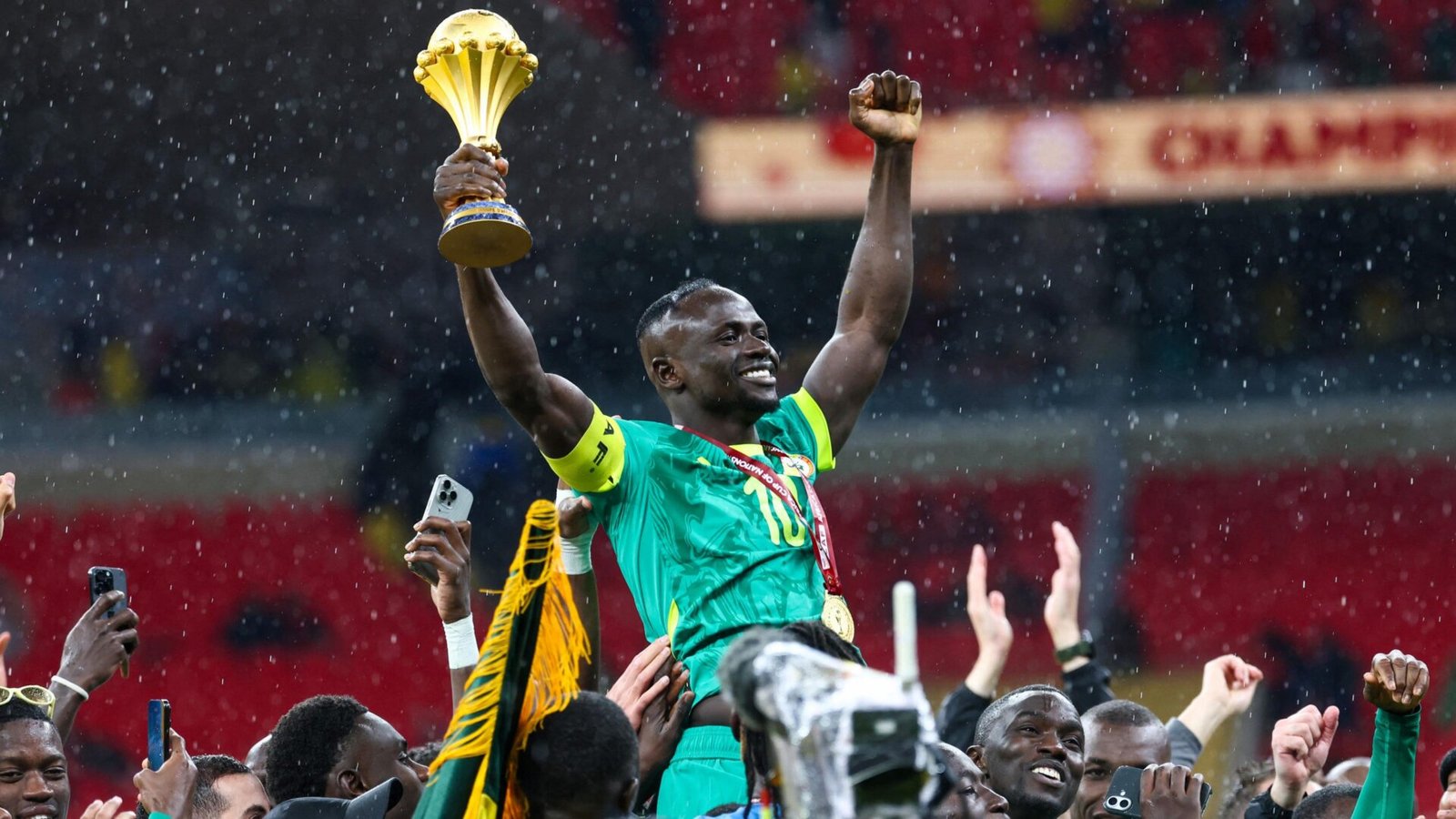
But even his farewell could not fully escape the night’s disorder. That says everything.
The verdict
Senegal will take the trophy home. Morocco will mourn a destiny deferred. African football, however, must confront a harder truth.
This final exposed structural fragility; in officiating authority, in VAR integration, in crowd control, and in governance under pressure.
The football was good enough. The systems were not.
And until that imbalance is addressed, African football will continue to win matches, while losing control of its own story.
