


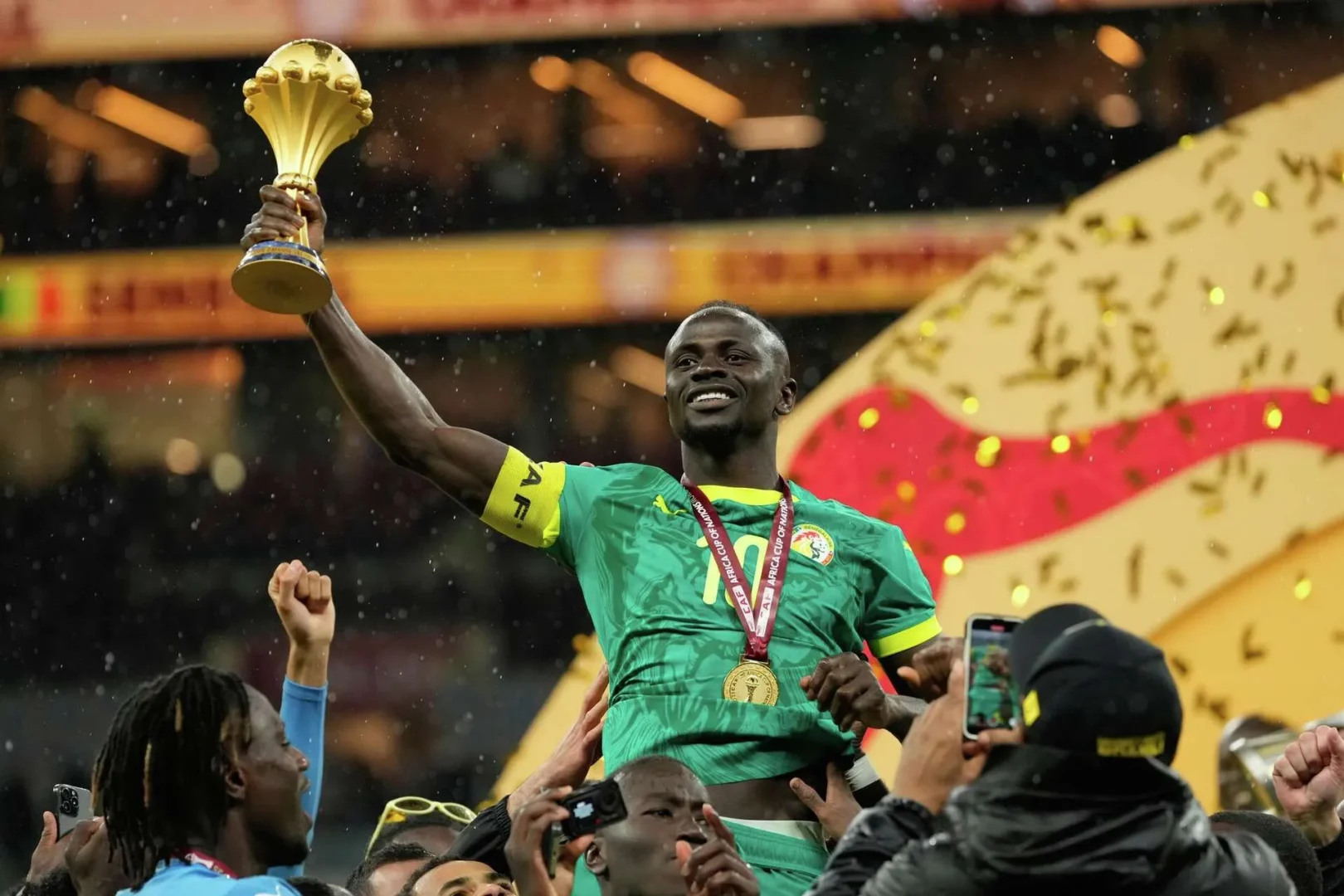
RABAT, Morocco — In one of the most surreal and contentious finals in Africa Cup of Nations (AFCON) history, Senegal edged hosts Morocco 1‑0 after extra time on January 18, 2026, but the scoreline barely begins to describe the drama that unfolded in Rabat.
What began as a tightly contested match evolved into a chaotic spectacle that ignited debate about officiating, leadership and the spirit of football itself.
At the heart of the narrative stood Sadio Mané, the talismanic forward whose influence transcended his on‑field contributions to shape the emotional and ethical arc of the game.
This was not merely a final; it was a moment of leadership that will be dissected in coaching rooms and media commentary across continents.
A final that defied expectations
The match itself was cagey, with few clear scoring opportunities and tension simmering long before the controversy erupted. Senegal had a second‑half effort disallowed under contentious circumstances, fueling early frustration among players and fans alike.
With regulation time winding down and the score locked at 0‑0, referee Jean‑Jacques Ndala, after a lengthy VAR review, awarded Morocco a late penalty for a challenge on Brahim Diaz by Senegal defender El Hadji Malick Diouf.
The decision, given after almost the full eight minutes of added time had elapsed, was met with incredulity and fury from the Senegal bench.
In a dramatic protest rarely seen at such a high level, Senegal’s head coach, Pape Thiaw, instructed his players to leave the pitch. They marched off in unified dissent against what they perceived as an unjust decision. Only one figure stayed — Mané.
Images and footage captured the moment he re‑entered the field and persuaded his teammates to return, averting what could have been a historic forfeiture.
Calm in the eye of the storm
The penalty, delayed by nearly eighteen minutes, eventually was taken by Morocco’s Brahim Diaz.
Opting for a Panenka, a chip meant to catch the goalkeeper off guard, he delivered a weak attempt that Senegal goalkeeper Edouard Mendy comfortably saved, dramatically shifting momentum back to the visitor.
When play resumed, it was as if Senegal exhaled. Just minutes into extra time, midfielder Pape Gueye struck a powerful left‑footed effort from distance to beat Morocco’s Yassine Bounou and seal a 1‑0 victory.
For many observers, the final will be remembered more for its controversy than its conclusion.
Social media and fan forums exploded with conflicting interpretations; from accusations of officiating bias to admiration for Senegal’s resilience.
One widely shared sentiment online bluntly described the penalty decision and walk‑off saga as “absolute mayhem,” underscoring how unpredictable and emotional the contest became.
Mané: Leader, symbol, legacy
For Mané, this final may represent the zenith of his international story, and perhaps his closing chapter in AFCON competition.
Already a two‑time champion, he was voted best player of the tournament, a testament to his consistent quality across successive campaigns.
But it is his intervention on the pitch in Rabat that captured the imagination of fans and pundits alike.
Former Nigeria international Daniel Amokachi lauded Mané’s actions as emblematic of leadership and character, describing him as “an ambassador for football… who knows what football is all about.”
Across forums and supporter reactions, many echoed this sense that Mané did more than merely influence his own teammates; he embodied a broader ethos of perseverance.
One fan comment succinctly captured that view: “This is more than football… he showed character and kept his team focused when everything could have fallen apart.”
Beyond the pitch: A human narrative
Mané’s influence is not limited to football. His story; from barefoot kickabouts on the red clay of Bambali to lifting Africa’s premier trophy, is rooted in humility, generosity and community engagement.
He has financed hospitals, schools, mosques and infrastructure in his hometown, efforts that have endeared him to supporters far beyond sporting arenas.
It is a reminder that footballers, particularly in Africa, often carry profound social significance.
In Mané’s case, his leadership in Rabat mirrored the compassion and commitment he has shown off it, qualities that have helped him transcend club and national stardom to become a figure of continental significance.
A final that will echo
As Senegal prepares for the upcoming World Cup later this year, this AFCON triumph will be both a source of confidence and a subject of introspection.
The controversial scenes, the late drama and the leadership display ensure that this final will be referenced not just in pitchside analysis rooms, but in broader conversations about officiating standards and sportsmanship in African football.
Whatever the future holds, including speculation that Senegal might persuade Mané to postpone international retirement — the 2025 AFCON final has already secured its place in football history: not just for the trophy lifted, but for the unpredictable, human drama that unfolded in its wake.
