

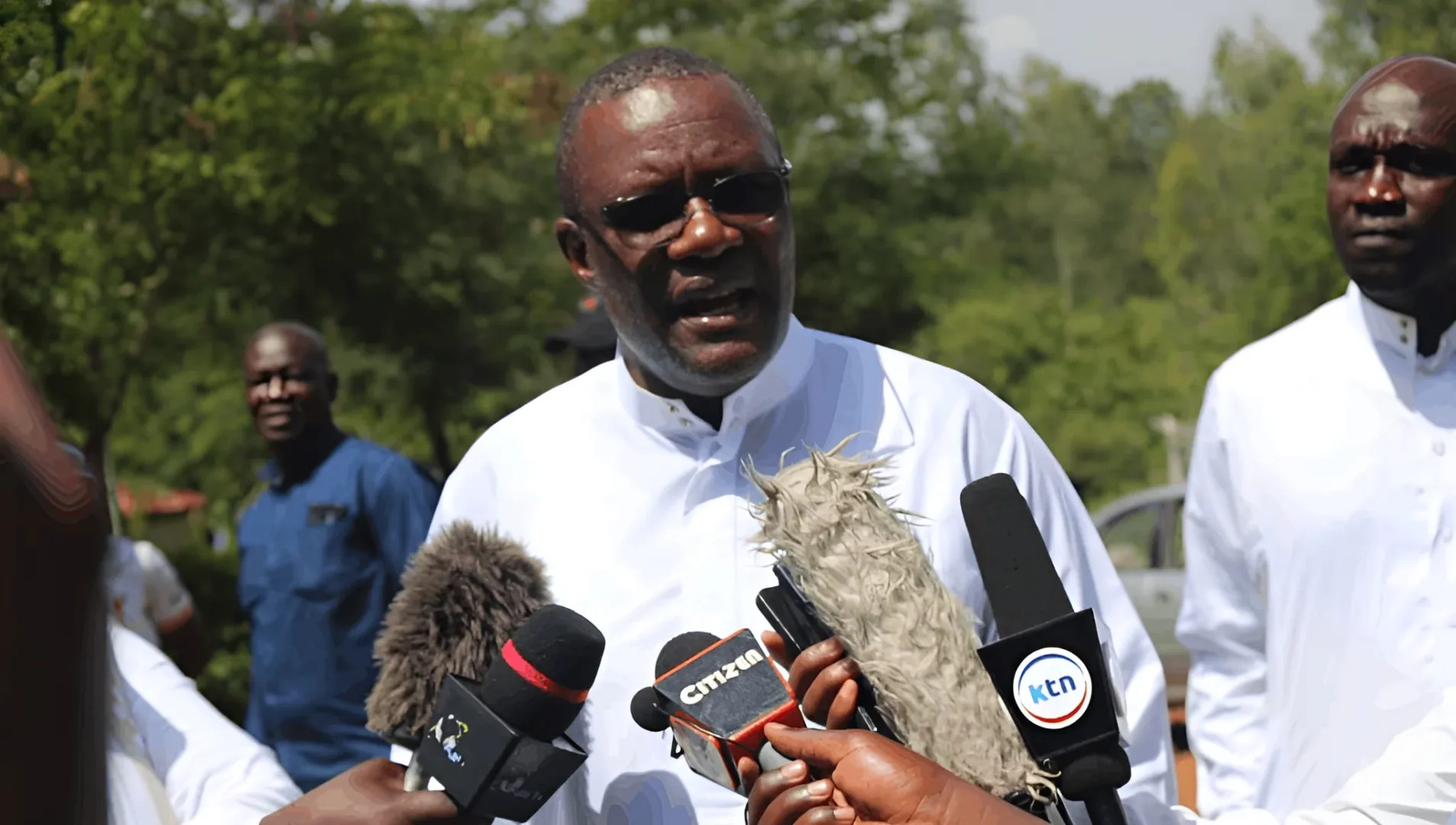
NAIROBI, Kenya — Senior government official Eliud Owalo has resigned from his role as Deputy Chief of Staff in charge of Delivery and Government Efficiency in the Office of President William Ruto, signalling his intention to contest the 2027 presidential election, a move analysts say marks an early beginning to the political realignments ahead of next year’s polls.
Owalo announced his resignation on 11 January 2026, saying that continuing in his government role would be untenable after publicly declaring his presidential ambitions.
“Following my declaration earlier today that I intend to run for the Presidency of the Republic of Kenya in the year 2027, my position as the Deputy Chief of Staff, Delivery and Government Efficiency is no longer tenable,” he wrote on social media. “I have therefore resigned from the position with immediate effect.”
As Deputy Chief of Staff, Owalo was tasked with coordinating government programme delivery and improving inter-agency performance, roles central to tracking implementation across ministries, departments and agencies.
Shift from technocrat to politician
Owalo’s transition from a government administrator to a presidential aspirant is widely interpreted as a strategic pivot from technocratic service to frontline politics.
Before his State House appointment in August 2024, he served as Cabinet Secretary for Information, Communication and the Digital Economy, where he played a key role in overseeing policy reforms in the ICT sector and driving government digitisation initiatives.
His political career also includes roles as a strategist and campaign manager in past national elections, working with prominent political figures across Kenya’s political landscape.
Early contestation signals a crowded race
Owalo’s early declaration positions him among the first high-profile figures from within the Executive Office to publicly launch a presidential bid. Kenya’s 2027 election campaign is expected to feature a wide field of contenders, including incumbents and seasoned opposition figures.
His resignation highlights the early shift of figures within President Ruto’s inner circle toward electoral contestation.
Political commentators say Owalo’s move could signal not only personal ambition but broader fissures within Kenya’s ruling coalition and early jockeying for influence ahead of the polls.
Some analysts believe his bid could attract support in regions where he has strong networks, particularly in western Kenya.
Reaction from political rivals
Not all responses to Owalo’s candidacy have been positive. Millie Odhiambo, Member of Parliament for Suba North, dismissed his presidential ambitions as lacking substance unless anchored within a major political force such as the ruling United Democratic Alliance (UDA).
Also Read: Ruto’s ‘recycling’ trend: Will Justin Muturi follow incompetent predecessors?
She warned that without such a platform, his bid could amount to little more than symbolic positioning or a stepping stone to other elective roles.
“If he does not contest under the United Democratic Alliance (UDA), he risks becoming a kingpin of a smaller party that will fight against ODM, which is a steep uphill battle,” Odhiambo said, adding that the move could lead him instead toward provincial or parliamentary ambitions.
Ambitions, party affiliation and strategy
Owalo has not yet publicly outlined which political party or coalition he intends to run under.
Kenya’s political landscape for the 2027 election is still taking shape, with alliances, coalitions and candidate nominations likely to evolve throughout 2026.
Observers note that Owalo’s early entry could shape debate around reform, governance and service delivery, themes he has emphasised throughout his career, even as more established political figures prepare their campaigns.
The unfolding 2027 election dynamics, including how major parties position their candidates and whether incumbents face significant intra-party challenges, will become clearer as the campaign season advances.