


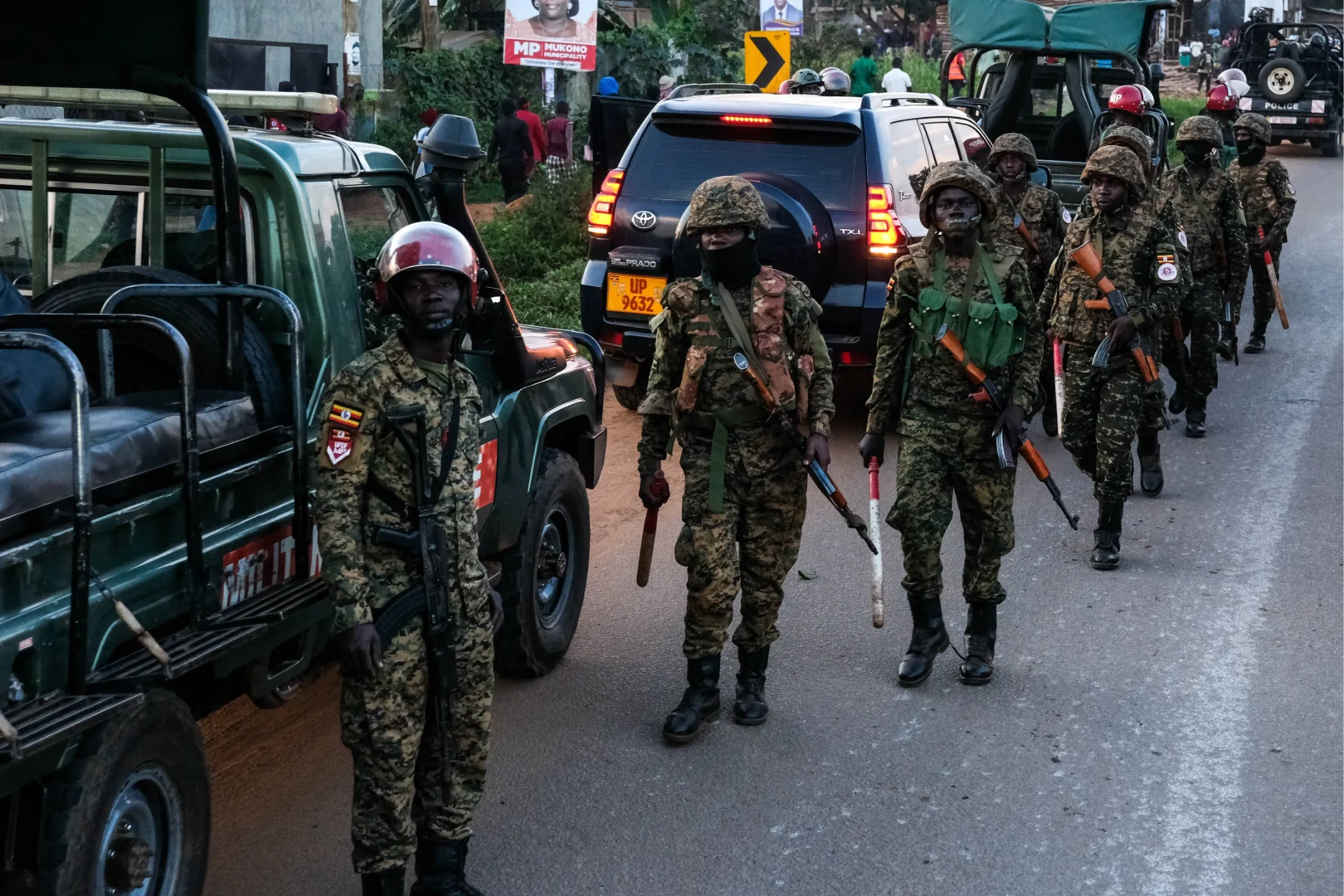
KAMPALA, Uganda — With just days to go before Uganda’s presidential and parliamentary elections on 15 January 2026, heavily armed units of the Uganda People’s Defence Forces (UPDF) have been deployed across Kampala and other major towns in a highly visible security operation that underscores deepening political tensions ahead of the polls.
The deployment, involving foot patrols and armoured personnel carriers, extends beyond the capital to cities including Mbale, Jinja, Arua, Gulu and Kasese, where soldiers are operating alongside the police to maintain public order and protect polling infrastructure.
Authorities insist the presence of the army is precautionary, aimed at safeguarding voters and public property during a period marked by heightened political activity.
Colonel Chris Magezi, the UPDF’s acting defence and military spokesperson, sought to allay public concern, emphasising that the deployment should not be seen as a signal of imminent disorder.
“Cases of criminality or threats to public order will be dealt with promptly and in compliance with the laws of Uganda,” he said, adding that security forces would work closely with the police to deter violence or intimidation by political actors or their supporters.
Uganda’s Constitution and the UPDF Act permit the military to support civil authorities in maintaining public safety and order, including during elections, where tensions have historically escalated.
A broader security context
The intensified patrols reflect longstanding concerns about election-related instability in Uganda.
Rights groups and international observers have warned of an environment of repression, citing reports of arbitrary arrests, torture, enforced disappearances and disruption of opposition campaign activities in the run-up to the vote.
A recent report from the United Nations Human Rights Office noted a “systemic pattern of intimidation” that includes detention of political figures and restrictions on civic freedoms.
Amnesty International has also accused security forces of targeting opposition supporters with heavy-handed tactics, including arbitrary detentions and ill-treatment of detainees, in what the rights organisation describes as a “brutal campaign of repression.”
Such allegations echo earlier reports of clashes between the UPDF and National Unity Platform (NUP) supporters, including documented instances of security personnel using force against campaign teams.
Campaigning under watchful eyes
Opposition leaders, including NUP presidential candidate Robert Kyagulanyi Ssentamu, known as Bobi Wine, have continued to campaign despite the visible security presence.
His appearances in districts such as Busiro North and South have been accompanied by government troops and police, highlighting the uneasy balance between political campaigning and state security priorities.
Analysts say the heavy deployment, particularly around areas where opposition support has grown, signals both the government’s determination to avoid widespread unrest and its concern over the possibility of isolated incidents escalating into broader conflict.
Opposition supporters and international rights monitors have warned that such a military footprint close to polling day could intimidate voters and deter free political expression.
Some civil society groups have called for clearer legal frameworks governing military involvement in elections to prevent abuses of authority.
Historical precedent and institutional preparedness
Uganda has a history of using military and police forces to secure electoral periods, with previous elections seeing similar deployments to deter violence and protect voting materials.
While the government defends the measures as necessary to maintain stability, critics argue that the security posture is disproportionately heavy in a civilian electoral context.
Also Read: Uganda police ramp up security drills ahead of 2026 general elections
In addition to military movements, the Uganda Police Force has mobilised new vehicles, motorcycles and officers nationwide to support “public order and safety,” reflecting a broader security strategy encompassing both army and civilian police units.
Public reaction and the road ahead
Public reaction to the deployment has been mixed. Some Ugandans, particularly business owners and civic leaders in urban centres, welcome the visibility of security forces as a deterrent against unrest, while others fear the presence of soldiers near polling stations will undermine voter confidence and chill civic participation.
Amid these concerns, rights groups continue advocating for respect for fundamental freedoms, including freedom of assembly, expression and association, as set out in national law and international human rights covenants.
As election day approaches, the balance between security and civil liberties will be closely watched by domestic observers and the international community.
The coming week is poised to test both Uganda’s electoral institutions and the ability of its citizens to exercise their rights in a peaceful, orderly environment.
