



KAMPALA, Uganda — In the shadows of Uganda’s criminal justice system, where power often whispers louder than the law, a father’s desperate quest for truth over the murder of his four-year-old daughter has evolved into a battle for survival.
This is the story of Naphatali Asiimwe and his family — and of little Elizabeth Kembabazi, affectionately known as “Dota.”
Her brutal murder in Kanyogoga Village in Namuwongo, Makindye Division, on November 11, 2020, triggered protests, fear, and a trail of unanswered questions that remain unresolved more than five years later.
A village on the edge
On a tense morning in April 2024, Vivid Voice News investigations team arrived at Buganda Road Chief Magistrate’s Court to scenes of confrontation.
Residents from Kanyogoga Village had gathered in protest, demanding justice for a child whose killing they believe has been buried by politics and intimidation.
What began as whispers of frustration had transformed into open defiance.
Through the noise and anguish, one name repeatedly surfaced:
Yasin Omar — Local Council II chairperson of Bukasa Parish.
Kanyogoga, a densely packed settlement of resilience and hardship in Kampala’s urban sprawl, is a place where leadership wields immense influence over survival. Here, Omar is regarded by many residents as “untouchable.”
They believe he would have remained a local power broker, had the murder of a four-year-old not pulled the village into national scrutiny.
The murder that shattered a community
On that November day in 2020, Dota was raped, strangled and killed.
She was two days shy of her fourth birthday.
Her parents, Naphatali Asiimwe and Judith Kobusingye, describe her death as a “political sacrifice.”
Judith later told Vivid Voice News:
“When I saw it (her body), I fainted…”
Another village leader recounted the horror:
“She died with a lot of pain, very young, four years, neck twisted, knifed, and raped.”
Politics behind the blood
Asiimwe had served as vice chairperson of Kanyogoga Village since 2004 under Chairman Emmanuel Masengere. When Masengere died during the COVID-19 lockdown, his son Sande Masengere attempted to seize leadership.
Asiimwe told Vivid Voice News:
“When our chairman passed on, his son (Sande Masengere) picked interest in taking over his father’s leadership forcefully and unlawfully.”
What followed was a bitter political fracture. Villagers aligned into rival camps — Pro-Asiimwe and Pro-Sande — fueling tensions that would soon turn deadly.
One resident recalled:
“If they see you talking to Mr Asiimwe, you’re an enemy… When we found the body, everybody’s suspicions ran to them — Sande, Sande…”
A case that would not move
Among the first suspects: Sande Masengere, Yasin Omar, and Richard Iragena.
“Among the suspects, Sande Masengere is available, Hajji Yasin Omar is available, Richard Iragena…” Asiimwe stated.
Sande later surrendered himself to police, allegedly for “safe custody,” after a meeting convened by Yasin Omar.
Yet no one was charged.
The murder file vanished from Kabalagala Police Station.
It resurfaced at the State House Anti-Corruption Unit, a baffling move for a child-murder investigation.
Asiimwe said:
“When I asked who brought this file and what was the cause, they told me one of the chairmen complained… they told me Yasin Omar…”
Even after the file was returned to police, progress stalled.
Judith explained:
“It’s never been in court (the file). It’s stuck at Kibuli (CIID). It’s only the libel file making progress.”
When the victims became the accused
Out of desperation, Asiimwe turned to social media, naming those he believed were obstructing justice.
That decision triggered Civil Suit No. 300 of 2021 — Yasin Omari vs. Naphatali Asiimwe, Judith Asiimwe & Geoffrey Ssemata — accusing them of libel.
Omar told Vivid Voice News:
“They involved me in a matter that I am not connected with. Police investigated, I am not involved at all. There’s a case of a child and my name was mentioned.”
From that point, Asiimwe says the pressure intensified.
“Everybody is being harassed because of my daughter.”
Another resident alleged:
“Yasin deceived these people that he talks with the president… now he uses the medal to intimidate authorities.”
A father in hiding
For five months, Asiimwe lived away from his family, fearing for his life.
“My biggest fear is that in this I can easily be killed… I can even lose my life.”
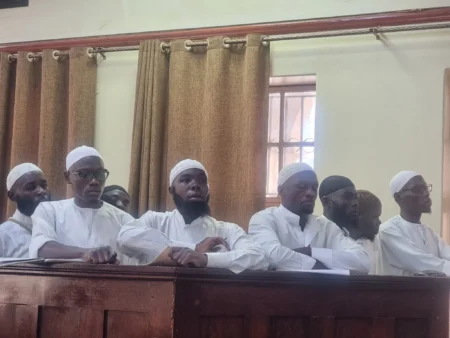
Eventually, he surrendered himself at Buganda Road Court in April 2024, accompanied by supporters wearing “Justice for Kembabazi” T-shirts.
Despite surrendering, he was remanded to prison for weeks.
Also Read: Bryan White murder probe deepens as police uncover shrines at socialite’s home
At one hearing, a judge interrupted proceedings when corruption allegations surfaced:
“Someone picked money in my name, please take it back.”
Chief Magistrate Ronald Kayizzi demanded the money be returned, calling out the misconduct in open court.
Five years later: No justice
Former Kampala Metropolitan Police spokesperson Patrick Onyango explained the release of suspects:
“The State Attorney’s legal advice” cited “lack of evidence to directly link him.”
To date:
- No one has been charged for Dota’s murder
- The case file remains stagnant
- The family remains under pressure
Both Sande Masengere and Yasin Omar have declined to comment anything substantial about this matter.
The DPP has not clarified the investigation’s status.
A nation’s question
Who killed Elizabeth Kembabazi, affectionately known as “Dota?”
And why has Uganda’s justice system failed to answer?
Until those questions are resolved, Dota’s case stands as one of the country’s most haunting unresolved crimes; a child lost, a family broken, and a community trapped between grief and fear.