

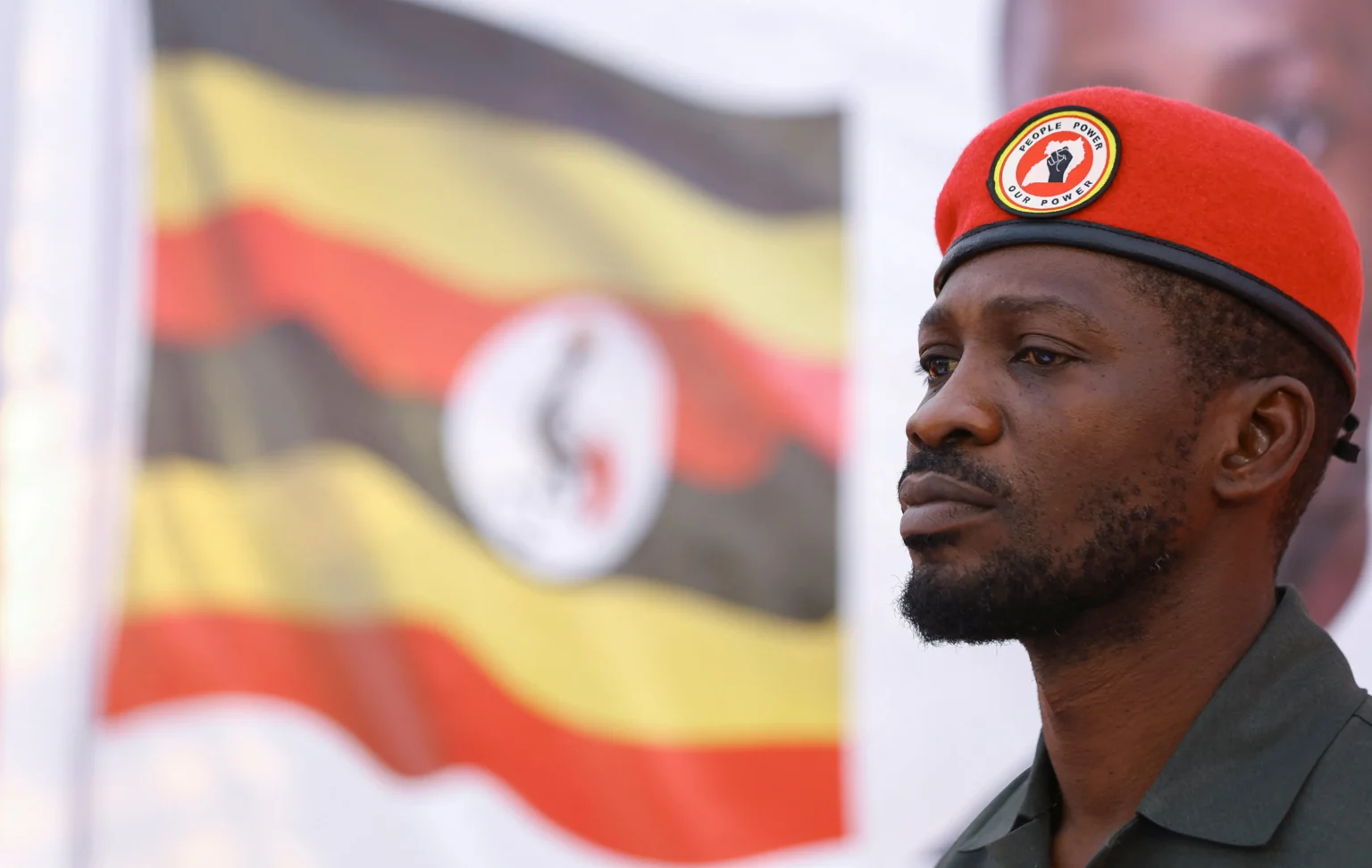
KAMPALA, Uganda — Uganda’s leading opposition figure, Robert Kyagulanyi Ssentamu, widely known as Bobi Wine, has unveiled a comprehensive blueprint for what he calls a peaceful and orderly transition of power should he win the January 15, 2026 general election, an announcement that both asserts his readiness to govern and sharply rebukes incumbent President Yoweri Museveni’s ongoing criticisms of his campaign.
Delivered on New Year’s Day in Kampala, Bobi Wine’s address juxtaposed a detailed institutional transition plan with a pointed dismissal of Museveni’s allegations that his campaign’s public support is artificially orchestrated.
Blueprint for “New Uganda” governance
Bobi Wine framed the forthcoming election not merely as a contest of individuals, but as a defining moment to reshape national systems and priorities.
“In the new Uganda, change will not just be about faces, but national systems and priorities as well,” he said, insisting that the change he seeks will be “institutional, constitutional, and peaceful.”
In outlining his vision, Bobi Wine pledged a set of reforms aimed at reversing what he describes as decades of political stagnation and governance failures. His transition blueprint, he said, reflects a technical and political roadmap being prepared in advance of the election.
Central elements of the plan include:
- Ending human rights violations and restoring constitutional rule in its “purest form.”
- Establishing professional, independent security forces that are accountable to law rather than political interests.
- Enforcing a zero-tolerance approach to corruption across public institutions.
- Guaranteeing free quality public education, decent employment with fair pay, and a social safety net for citizens unable to work.
“We invite Ugandans to hold us accountable to those standards,” Bobi Wine said, reinforcing his call for public engagement in monitoring national progress.
According to him, a structured transition mechanism is already being developed under the leadership of a technical team tasked with drafting governance frameworks, reviewing laws, evaluating civil service delivery, and consulting ordinary Ugandans to ensure an orderly transition.
“This team is reviewing laws, institutions, civil service delivery and consulting ordinary citizens to ensure that from day one, a new Uganda is governed in an orderly and constitutional manner,” he explained.
Bobi Wine also said the political and technical teams would merge immediately after the election to refine the transition roadmap and prepare systems and personnel “to receive instruments of authority in May 2026.”
Throughout the transition period, he assured compatriots that every citizen’s safety would be guaranteed regardless of political affiliation, promising a broad-based, merit-driven government.
“During the transition period, we shall ensure the safety of every citizen regardless of who they supported in the past,” Bobi Wine said.
Rebutting Museveni: “Fed on fake intelligence”
Bobi Wine’s address also directly countered President Museveni’s claims that his National Unity Platform (NUP) has been mobilizing supporters using large convoys — allegations first highlighted during Museveni’s own New Year speech.
“I don’t look at Gen Museveni with anger. I look at him with pity,” Bobi Wine said.
“By his age, he is being fed fake intelligence.”
Museveni had asserted that opposition supporters were being transported between events in large numbers — up to “possibly 200 vehicles” — to create an illusion of mass support.
Bobi Wine responded by pointing out the very limited movement permitted by security authorities.
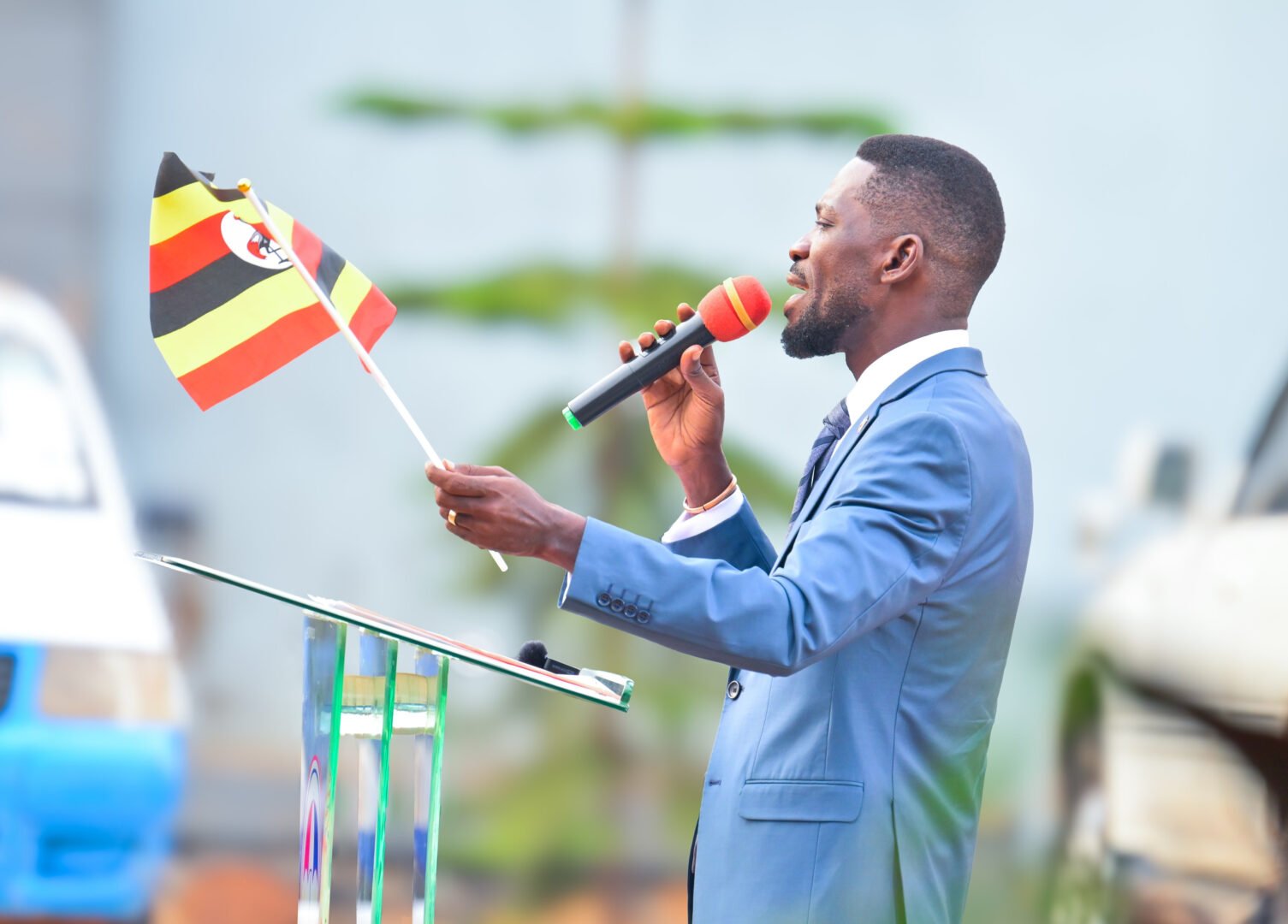
“Even where we’ve been allowed by security to pass, not more than five cars are allowed from my convoy. So, how would we ferry crowds?” he asked journalists at NUP headquarters in Kavule-Makerere.
He further accused security forces of deliberately preventing his supporters from attending rallies, asserting that live bullets, teargas, water cannons and dogs have been used to disperse gatherings and suppress visible turnout.
“They break up our gatherings with live bullets, teargas, water cannons and dogs so that no crowds follow us,” Bobi Wine said.
Campaign context and broader push for change
Bobi Wine’s blueprint remarks come against the backdrop of rising political tensions and repeated crackdowns on opposition events in recent months.
Also Read: Bobi Wine urges Ugandans to download Bitchat amid fears of election internet shutdown
Opposition figures report several instances of NUP supporters being injured or killed during campaigns, particularly in areas where Bobi Wine has strong grassroots support.
In previous campaign stops, he has criticised what he calls a biased Electoral Commission (EC) and security apparatus that he says fails to protect opposition activities while selectively enforcing regulations against his movement.
During rallies, he has also articulated broader policy goals that would form part of his agenda if elected, including overhauling the healthcare system, boosting infrastructure investment, and redirecting national spending from security procurement to essential services.
Unity, peace and a “new social contract”
Despite the rhetoric of political competition, Bobi Wine repeatedly emphasised the need for unity across societal divisions.
“Uganda needed a peaceful transfer of power and a new social contract grounded in justice and fairness,” he said.
His call for unity extends beyond politics to business, religious communities, and civil society, echoing similar appeals for non-violence he has made throughout the campaign.
Looking ahead to January 15, 2026
The January election pits Bobi Wine against President Museveni in what many observers describe as a high-stakes rematch of the disputed 2021 polls, which Bobi Wine unsuccessfully contested in court amid allegations of irregularities and voter suppression.
With its detailed focus on transition planning, governance reforms and national unity, Bobi Wine’s blueprint sets out a clear contrast with Museveni’s long incumbency — a message likely to resonate with voters fatigued by decades of uninterrupted rule.