

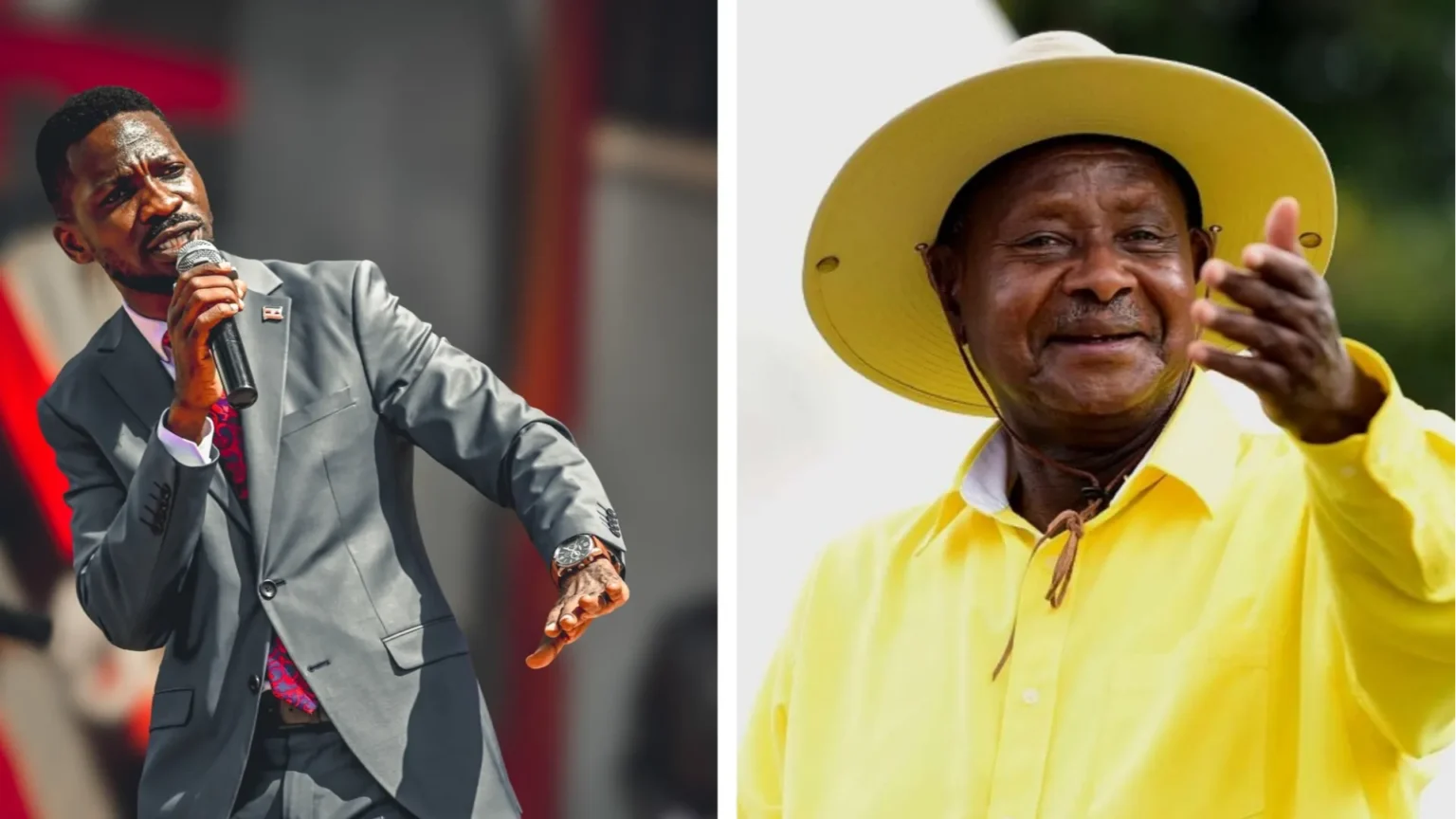
KAMPALA, Uganda — Uganda’s leading opposition figure Robert Kyagulanyi Ssentamu, known widely as Bobi Wine, has confronted President Yoweri Museveni over longstanding claims of vote-rigging in the 2021 general election, demanding that the head of the Electoral Commission (EC) be dismissed if the president truly believes the poll was manipulated.
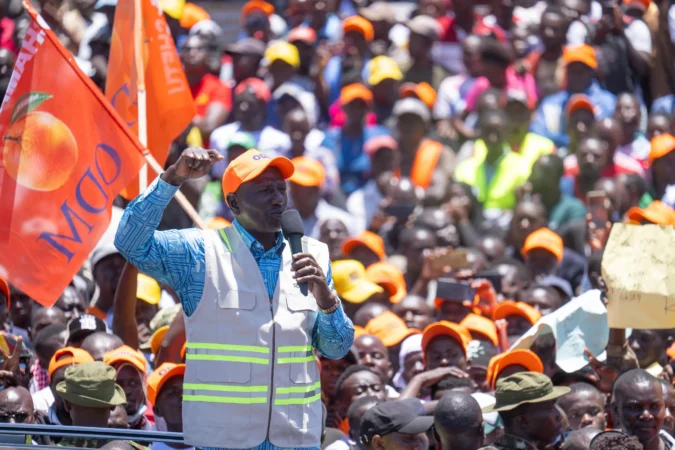
Speaking to supporters at a rally on Wednesday in Kitoffaali Trading Centre, Kyannamukaaka Town Council in Masaka District, Bobi Wine questioned the credibility of the electoral body, citing allegations made by both himself and Museveni against the commission led by Justice Simon Byabakama.
“We are all complaining that our votes were stolen during the 2021 General Election. Our candidates are currently being unfairly nominated by Justice Byabakama. Gen Museveni also complained that 2.7 million of his votes were rigged under the watch of the same commission. Let him sack Byabakama if he is genuine in what he says,” Bobi Wine told the crowd.
Political context: A contest shaped by legacy claims
Museveni — Uganda’s longest-serving leader, in power since 1986 — has periodically accused the National Unity Platform (NUP) and other opposition forces of manipulating electoral outcomes in their favor, particularly in the historically contested Buganda region.
In September 2024, the incumbent president alleged that up to one million votes were improperly counted in the Buganda region in 2021; he reiterated this claim on 15 December 2025, raising the figure to 2.7 million votes allegedly lost through practices like ballot stuffing and multiple voting.
Despite these assertions, Museveni was declared the winner of the 2021 election — a result Bobi Wine unsuccessfully challenged in Uganda’s courts, maintaining that he was the legitimate “president-elect.”
The controversy over vote integrity has re-emerged as a major theme in the build-up to the 15 January 2026 general election, with both camps mobilizing intense support while trading accusations over the fairness of the electoral landscape.
Electoral Commission under scrutiny
Under Uganda’s constitution, the president appoints members of the Electoral Commission (EC) and serves as commander-in-chief of the armed forces.
Justice Byabakama was first appointed as EC chair in November 2016 and was reappointed to a seven-year term in 2025, positioning him to preside over the 2026 polls.
Bobi Wine’s reference to “unfair nominations” by the EC also pointed to internal disputes within the NUP over candidate endorsements.
At the Masaka rally, he specifically faulted the commission for approving Jamil Kivumbi as the NUP candidate for Bukoto Central parliamentary seat, despite the party’s endorsement of Alex Kalinzi Ntamu.
“NUP is a fully registered political party and we reserve the right to endorse candidates, not EC. We wrote to them to rectify this, but they are still adamant,” Bobi Wine said.
Justice Byabakama’s opponents have long argued that his leadership raises concerns about the independence of the election management process, especially given the EC’s structural placement under executive appointment.
Campaign trail: From vote theft to land reforms
Beyond institutional criticism, Bobi Wine used the Masaka platform to reaffirm commitments to socioeconomic reforms if elected.
Among them, he pledged to return land to rightful owners displaced under past policies, urging residents to preserve their proof of ownership.
Speaking at the same rally, Masaka District Woman MP Joan Namutaawe highlighted pressing local concerns, including the lack of electricity in surrounding villages — an issue she said was hindering development.
Also Read: Bobi Wine urges Ugandans to download Bitchat amid fears of election internet shutdown
“Mr President, we are a few kilometers away from Masaka City, but some villages here still lack electricity. Which gains can these protect?,” she asked.
Masaka sub-region has historically been a stronghold of opposition support. In the 2021 presidential election, official figures showed that Bobi Wine outpolled Museveni in both Masaka City and Masaka District, despite the incumbent’s overall national victory.
Observers note deepening tensions
Political analysts describe the exchange between Uganda’s two most prominent political figures as symptomatic of a broader contest over electoral legitimacy and public trust.
With Museveni seeking to extend his rule into a fifth decade and Bobi Wine galvanizing support among younger and dissatisfied voters, allegations over election integrity and institutional bias are central to campaign narratives.
Critics argue that persistent claims of vote theft and counterclaims undermine confidence in electoral governance, potentially deepening divisions ahead of what is expected to be one of Uganda’s most closely watched polls in decades.