

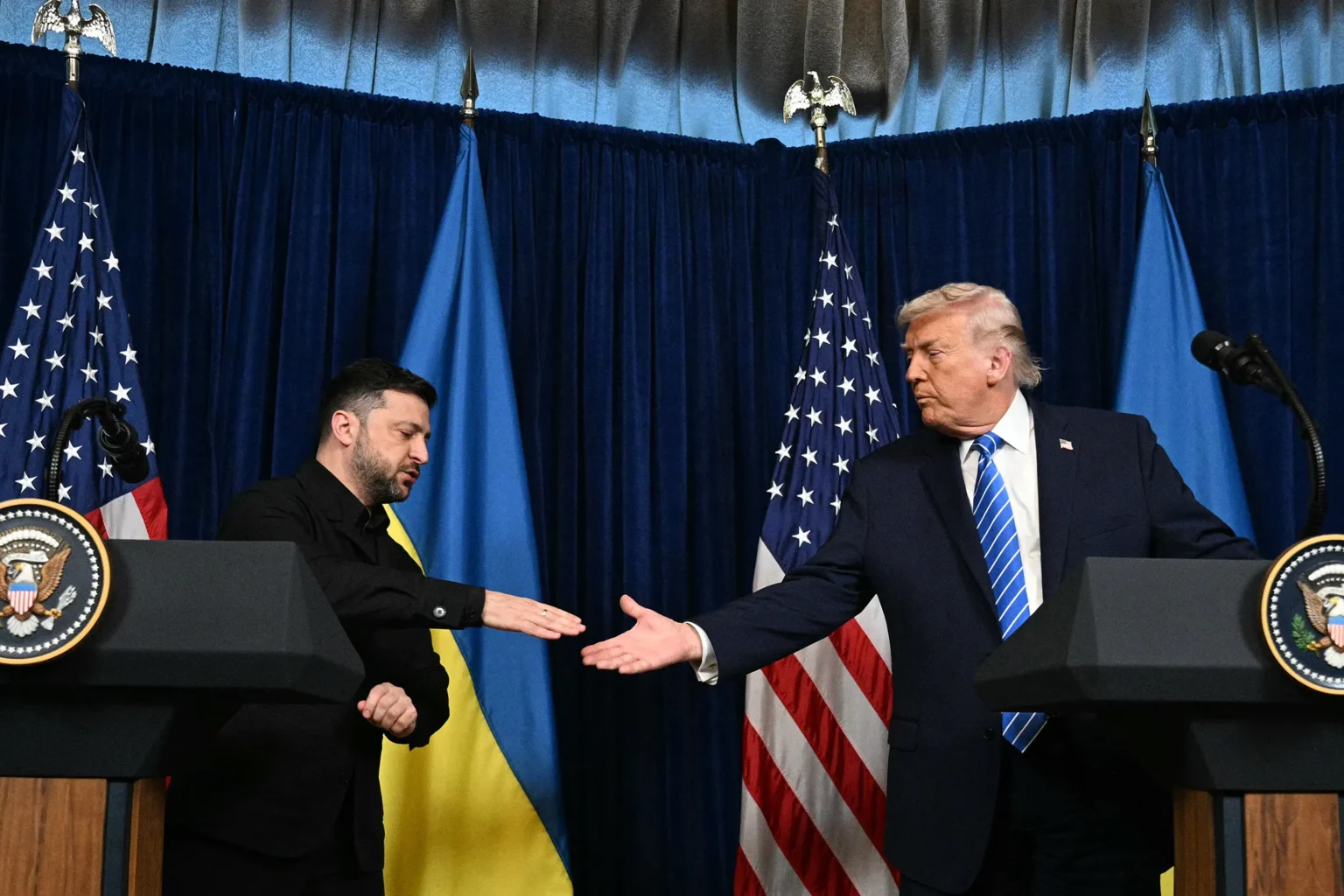
PALM BEACH, Florida — In a high-stakes meeting at the Mar-a-Lago resort on Sunday, December 28, 2025, President Volodymyr Zelensky and U.S. President Donald Trump moved closer to a revised peace framework. A central pillar of the talks was a proposed 15-year U.S. security guarantee for Ukraine—an offer Zelensky welcomed but signaled a desire to extend significantly further.
President Trump indicated that the two nations are “close to 95%” in agreement on the security components of the plan. However, the duration remains a point of negotiation. While the U.S. has tabled a 15-year commitment, Zelensky is advocating for a half-century of protection to prevent future Russian aggression.
“Without security guarantees, this war cannot be considered truly over. We cannot acknowledge that it has ended, because with such a neighbour there remains a risk of renewed aggression,” Zelensky explained to reporters.
The Ukrainian leader added that he urged the U.S. to “consider the possibility of 30, 40, 50 years.” Trump, while not confirming a specific timeframe, noted that he expects European allies to “take over a big part” of the long-term support effort.
Unresolved issues: Donbas and Zaporizhzhia
Despite progress, the fate of the Russian-occupied territories remains the primary obstacle. Russia currently holds approximately 75% of the Donetsk region and 99% of Luhansk, collectively known as the Donbas.
Trump characterized the Donbas situation as “unresolved, but it’s getting a lot closer.” However, the Kremlin remains firm, insisting on a total Ukrainian withdrawal from the regions Moscow claims.
Zelensky has countered with a proposal for a “free economic zone” policed by Ukrainian forces, insisting that the final decision must involve the Ukrainian people via a referendum.
The status of the Zaporizhzhia nuclear plant also remains a “core issue” yet to be settled.
The ceasefire dilemma
Zelensky has called for a 60-day ceasefire to allow for a national referendum on any proposed peace plan. This proposal appears to have little traction with Moscow or the U.S. administration.
Following a pre-summit phone call between Trump and Russian President Vladimir Putin, reports suggest both leaders believe a temporary ceasefire would only serve to prolong the conflict.
Also Read: Putin rules out military expansion into Europe, warns West to respect Russia’s interests
Trump acknowledged Moscow’s lack of interest in a pause for a referendum, stating, “I understand that position,” while adding his belief that the Russian leader “wants Ukraine to succeed.”
Key components of the revised peace plan
| Feature | Current Status / Proposed Terms |
| U.S. security offer | 15 Years (Zelensky requesting 30–50 years). |
| Territorial status | Donbas: Unresolved; Russia demands full withdrawal. |
| Nuclear safety | Zaporizhzhia Plant: Status remains a sticking point. |
| Referendum | Proposed by Kyiv; requires a 60-day ceasefire. |
| International role | France and EU to discuss “ironclad guarantees” in Paris next month. |
Conflict continues amid diplomacy
While leaders discussed peace in Florida, the reality on the ground remained violent. Overnight, Russia launched 25 airstrikes across Ukraine, with Kyiv claiming to have intercepted 21.
Simultaneously, the Russian Ministry of Defence reported the interception of 89 Ukrainian drones, primarily over the Bryansk region.
Zelensky indicated that a follow-up meeting involving Ukrainian and U.S. delegations—and potentially European leaders—could take place at the White House in January to finalize the roadmap.