


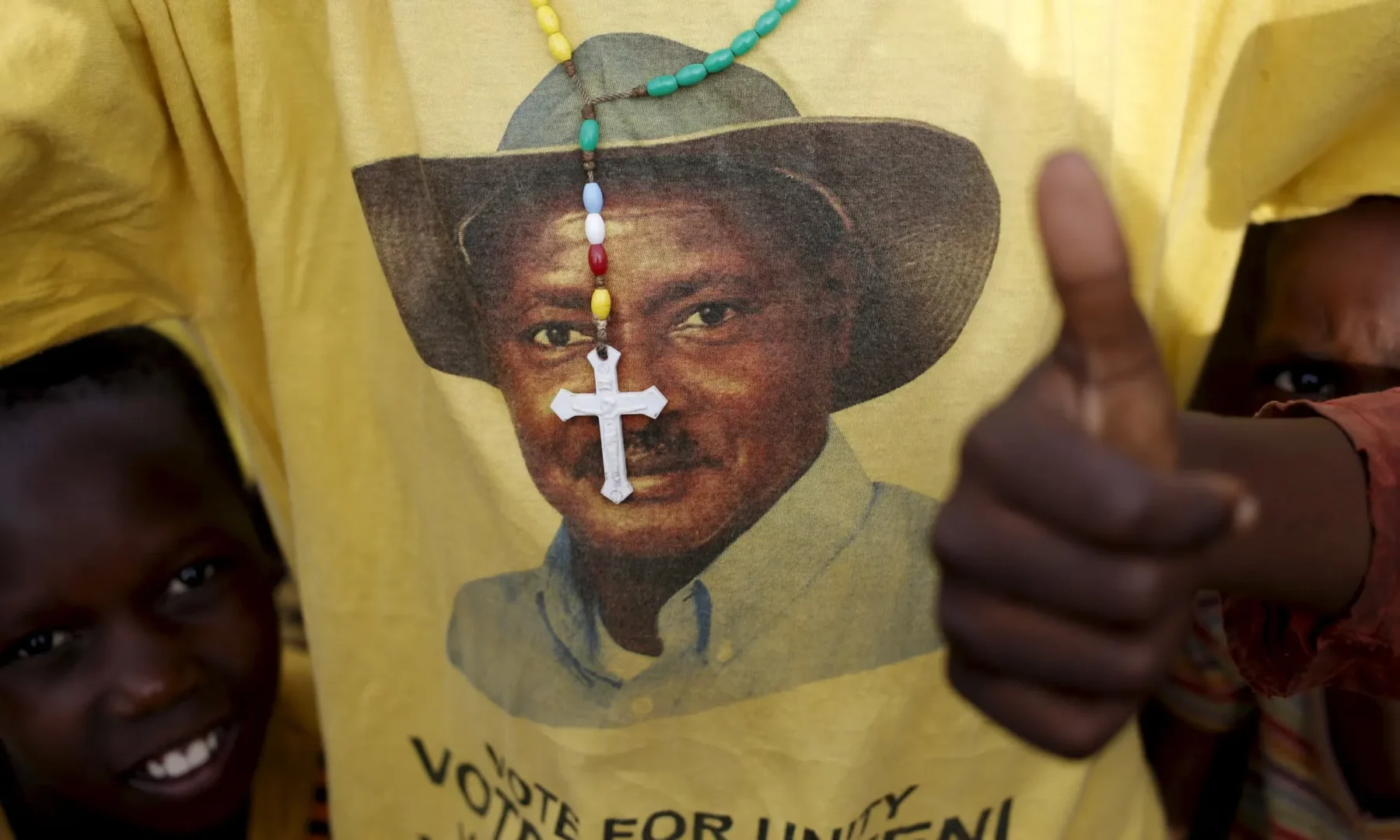
KAMPALA, Uganda — Love him or loathe him, President Yoweri Museveni remains the most consequential political figure in Uganda’s post-independence history. As the country moves toward the 2026 general election, his National Resistance Movement (NRM) has adopted a campaign slogan that speaks directly to its long-term narrative: “Protecting the Gains.”
The slogan follows the 2021 message, “Securing Your Future,” and signals a leadership intent on defending nearly four decades of governance achievements — even as public frustration, demographic change, and global economic headwinds reshape Uganda’s political terrain.
Museveni’s journey to nearly 40 years in power has delivered undeniable transformation in security, infrastructure, health, education, and macroeconomic management. Yet it has also produced deep controversies over governance, civil liberties, institutional balance, and political inclusion.
The 2026 election will not merely determine who governs Uganda next; it will define how Museveni’s legacy is ultimately judged.
Security: From state collapse to regional stabiliser
When Museveni took power in 1986, Uganda was emerging from years of civil war, economic collapse and institutional breakdown. His administration prioritised national stability, ending internal insurgencies in large parts of the country and restoring state authority.
Uganda today remains one of the region’s most significant contributors to peacekeeping operations, including in Somalia under the African Union (AU) framework. Internally, major insurgencies such as the Lord’s Resistance Army (LRA) were decisively neutralised. These security gains enabled long-term investment, tourism growth, and regional integration.
However, new security challenges persist: transnational terrorism risks, election-related unrest, urban crime, and political confrontation.
Critics argue that heavy-handed policing and militarisation of politics threaten to undermine public trust in state institutions, a challenge Museveni must confront directly as the 2026 race intensifies.
Infrastructure: The physical transformation of a nation
Few areas reflect Museveni’s developmental impact more visibly than infrastructure. Over the past two decades, Uganda has expanded its paved road network several-fold, modernised major highways, and dramatically increased electricity generation capacity. Hydropower projects, oil-related infrastructure, expanded airports, and urban road upgrades have reshaped both trade and daily life.
Electricity access has more than tripled since the early 2000s, and transport corridors now connect Uganda more efficiently to Kenya, Rwanda, South Sudan and the Democratic Republic of Congo (DRC). These investments have lowered transaction costs and improved investor confidence.
Yet public debt — much of it tied to infrastructure financing — has risen sharply. Debt sustainability, project cost overruns, and corruption concerns remain major risks that threaten to erode the very gains these projects were designed to protect.
Agriculture: Backbone of the economy under pressure
Agriculture continues to employ the majority of Ugandans and remains central to food security and export earnings. Under Museveni, Uganda has expanded irrigation, introduced modern farming technologies, and strengthened export chains for coffee, tea, fish and horticulture.
Uganda is now Africa’s leading coffee exporter, with agricultural exports generating billions of dollars annually. Yet rural poverty remains stubborn, climate change threatens productivity, and land fragmentation undermines smallholder incomes. Youth participation in farming remains limited, compounding unemployment challenges.
The administration’s future credibility will hinge on modernising agriculture faster — integrating technology, expanding agro-processing, improving market access and making farming financially attractive to young Ugandans.
The economy: Resilience amid global headwinds
Uganda’s economy has shown consistent long-term growth, weathering global shocks from the 2008 financial crisis to the COVID-19 pandemic and recent geopolitical disruptions. Inflation remains comparatively controlled in the region, and oil production — expected to come online fully within the decade — promises significant fiscal transformation.
However, public debt levels have risen substantially, fiscal space has narrowed, and youth unemployment remains the country’s most explosive socio-economic challenge. COVID-19 recovery policies were criticised by economists as insufficiently targeted, leaving many households and small businesses struggling to regain pre-pandemic footing.
As 2026 approaches, economic credibility will depend on debt discipline, private-sector growth, job creation, and translating macro-stability into tangible improvements in household welfare.
Political legitimacy and the generational challenge
Uganda is now one of the youngest countries in the world, with the majority of its population under 30. This demographic shift has fundamentally altered the political landscape. Many young Ugandans did not experience the instability that legitimised Museveni’s early rule. Their priorities are jobs, opportunity, inclusion, and accountable governance.
Also Read: Starlink and Uganda’s 2026 election battle: Who controls the internet controls the vote
Opposition movements, particularly those driven by youth, have capitalised on this generational shift. While the NRM continues to dominate formal institutions, the legitimacy contest is increasingly fought on digital platforms, urban centres, and among first-time voters.
Museveni’s greatest political challenge may not be winning elections, but sustaining national cohesion across generational lines.
Governance, institutions and international standing
Institutionally, tensions between the executive and Parliament, concerns over judicial independence, and restrictions on civic space have drawn increasing domestic and international scrutiny. Relations with Western partners remain strained over governance and human rights issues, while regional diplomacy, particularly with Rwanda, remains complex and sensitive.
Uganda’s international standing as a stabilising force in East Africa coexists uneasily with criticism of its democratic trajectory. How Museveni navigates these competing realities will shape both foreign investment and diplomatic partnerships in the next decade.
The 2026 election and the meaning of “Protecting the Gains”
The NRM’s slogan, “Protecting the Gains” — is more than campaign rhetoric. It reflects a leadership argument that Uganda’s stability, growth and development remain fragile and reversible. Yet protection alone is no longer sufficient. The next phase of Uganda’s national journey requires renewal: generational inclusion, institutional strengthening, economic transformation, and political openness.
Museveni’s ultimate legacy will not be measured only by how much he built, but by whether the systems he leaves behind are strong enough to sustain Uganda without him.
The final chapter still being written
Love him or loathe him, Museveni’s imprint on Uganda is undeniable. He delivered stability from chaos, built critical infrastructure, expanded education and health systems, and positioned Uganda as a regional power. He also presided over rising political discontent, governance controversies, and an increasingly restless youthful population.
As the 2026 election approaches, Uganda stands at a crossroads: between consolidation and renewal, between continuity and transformation. The choices made now; by Museveni, the NRM, and the electorate — will determine whether the gains of the past four decades become the foundation of a stronger republic, or the ceiling of its political evolution.
The final verdict on Museveni’s 40-year journey remains unwritten — and Uganda itself will be the author.
