


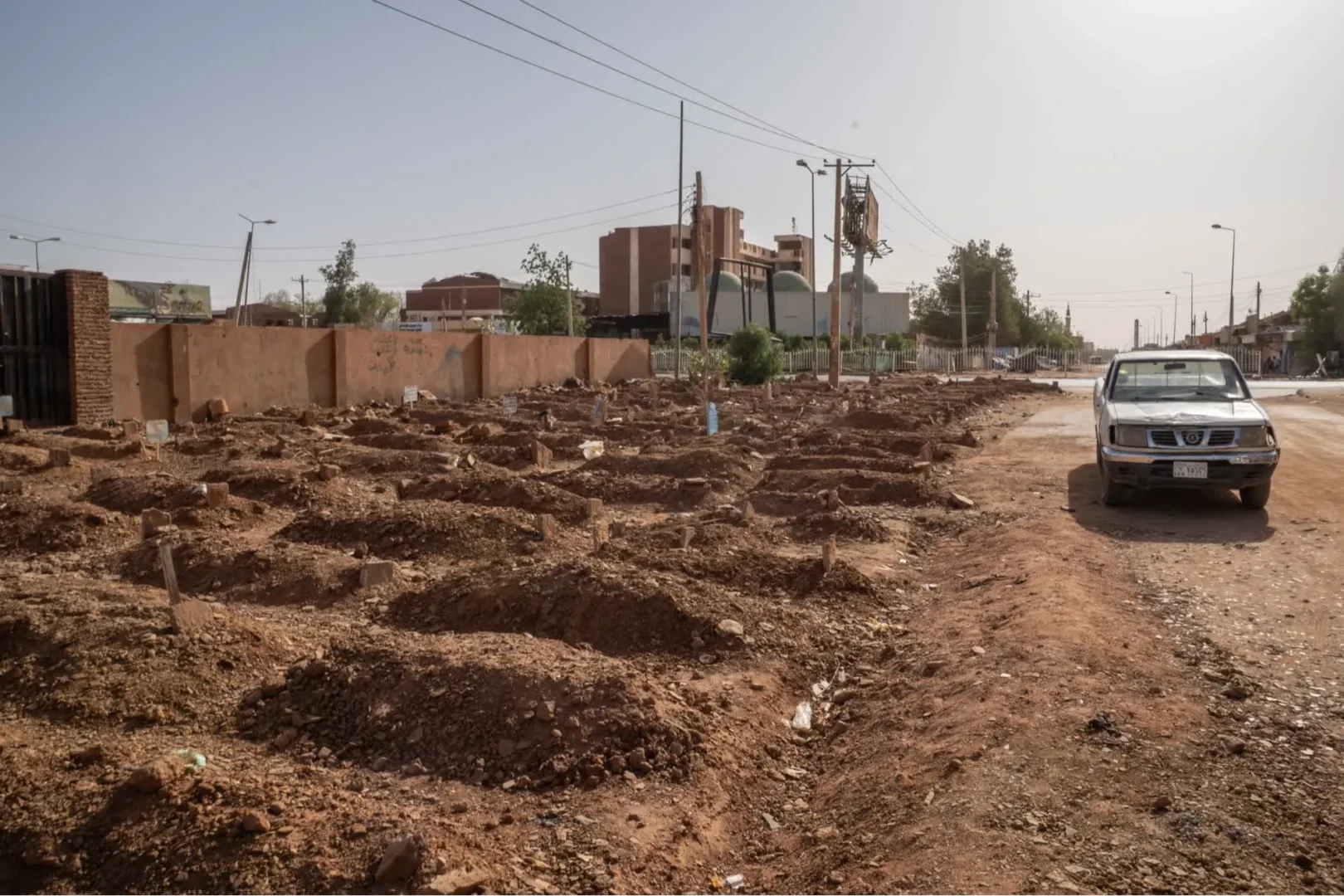
DARFUR, Sudan — A harrowing new report from the United Nations Human Rights Office has uncovered the scale of a systemic massacre in Sudan’s Darfur region, revealing that a targeted assault on the Zamzam displacement camp left more than 1,000 civilians dead.
The findings suggest that many victims were victims of summary executions during a three-day spree of violence.
The 18-page document details an environment of extreme brutality orchestrated by the Rapid Support Forces (RSF) between April 11 and 13, targeting a site already decimated by chronic hunger and the wider Sudanese civil war.
Siege and starvation: The prelude to the massacre
Prior to the direct assault, Zamzam camp, which houses nearly half a million displaced persons—was subjected to a months-long blockade.
According to UN investigators, the RSF obstructed the movement of food and essential medical supplies, creating a man-made famine that left the population physically incapacitated and unable to defend themselves or flee.
When the offensive finally began, fighters reportedly moved through the camp with the intent to liquidate civilians.
Beyond the total death toll, investigators confirmed that at least 319 individuals were executed at close range, either within the camp’s perimeter or while attempting to escape.
“War Crimes of Murder”
The scale of the atrocities has led the UN to signal potential legal consequences for the perpetrators. In a statement released alongside the July 2025 findings, the U.N. High Commissioner for Human Rights emphasized the gravity of the violations.
“Such deliberate killing of civilians or persons hors de combat may constitute the war crime of murder,” said the U.N. High Commissioner for Human Rights, Volker Turk.
Testimony from the frontline of survival
The report is based on 155 interviews conducted with witnesses and survivors who managed to cross into neighboring Chad. Their accounts paint a picture of intimate, cold-blooded violence.
One survivor recounted a chilling incident where RSF fighters located eight people seeking refuge in a single room.
The fighters reportedly pushed their rifles through a window and opened fire, killing everyone inside. Other testimonies detailed widespread instances of:
- Systemic rape: Targeted sexual violence against displaced women and girls.
- Torture: Physical abuse used to extract information or spread terror.
- Forced abductions: Men and boys taken from shelters and subsequently missing.
A pattern of escalating violence
The assault on Zamzam appears to have been a precursor to further atrocities. The UN report links these events to a subsequent October offensive in the city of al-Fashir, where the RSF is accused of kidnapping and executing thousands more.
Also Read: Sudan’s RSF paramilitaries bows to US pressure, agrees to humanitarian ceasefire
The majority of the city’s inhabitants are currently unaccounted for.
While the RSF has not officially responded to this specific report, the group has historically denied targeting non-combatants, claiming they would investigate and hold any rogue members accountable for abuses.
The crisis continues to expand beyond Darfur. On Tuesday, the UN human rights office reported that drone strikes in Sudan’s Kordofan region killed over 100 civilians this month, highlighting a nationwide trend of rising casualties among the innocent.
