


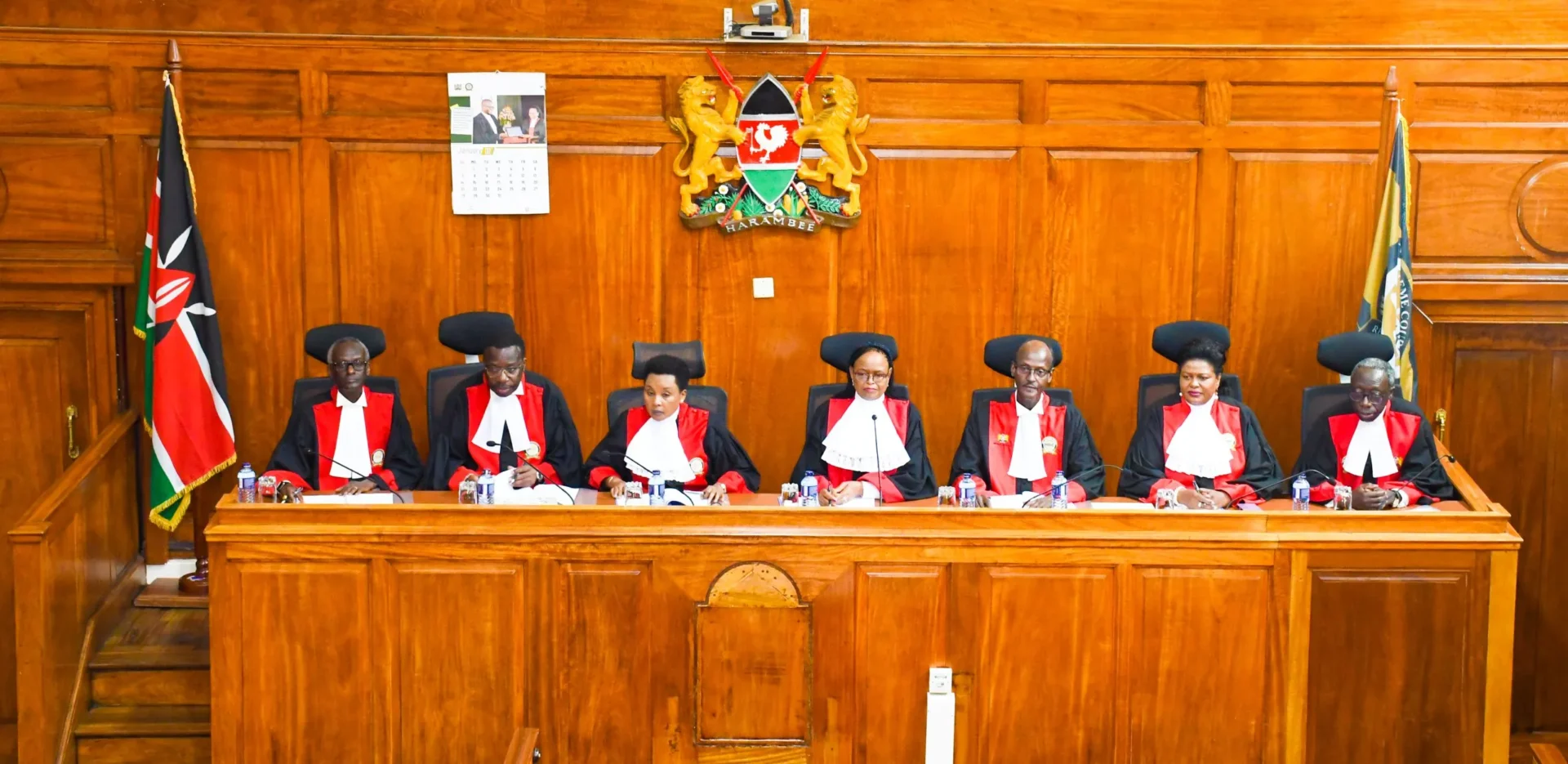
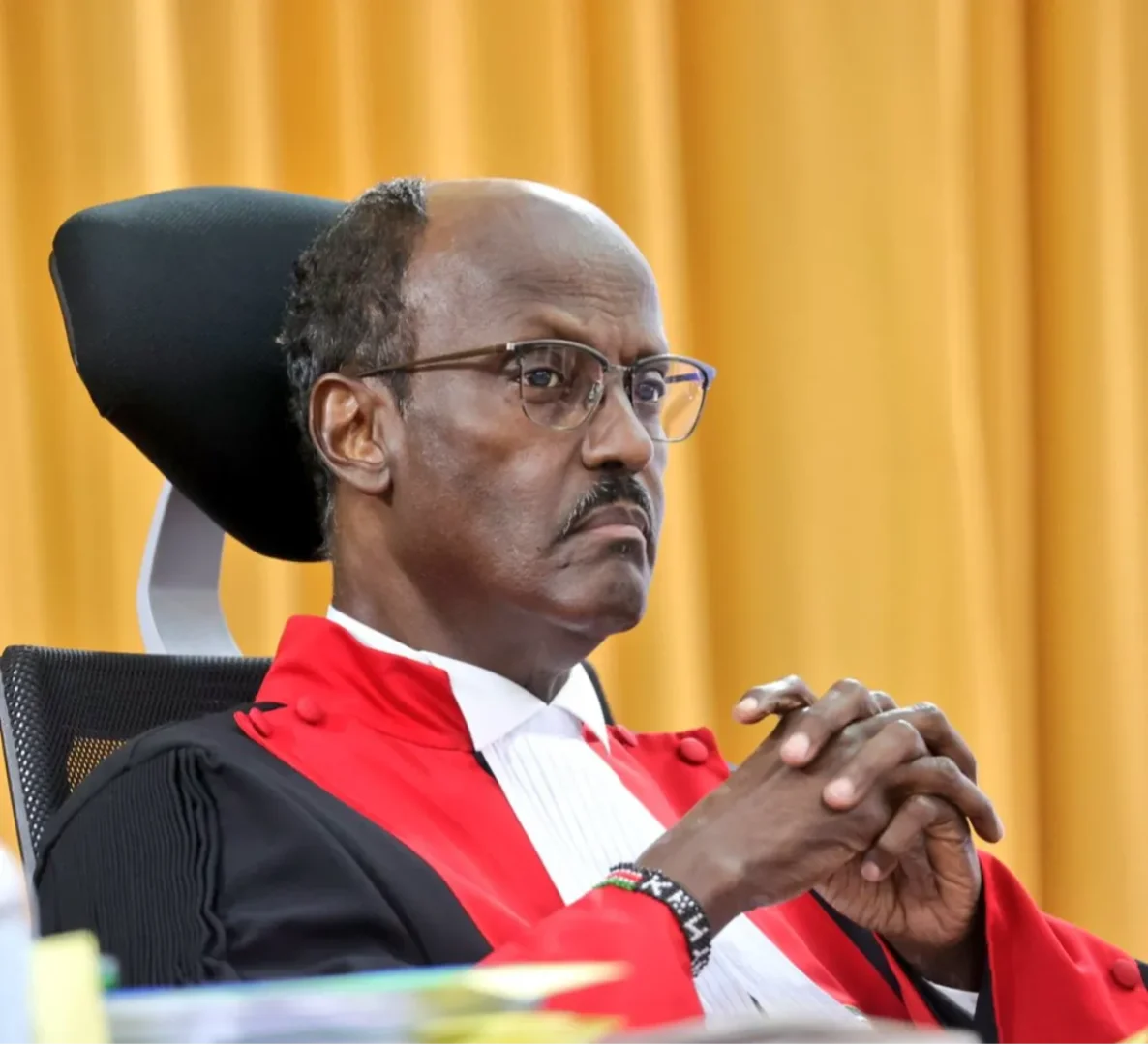
NAIROBI, Kenya — The Kenyan Judiciary faces a significant institutional void following the passing of Supreme Court Justice Mohamed Khadhar Ibrahim.
Sources close to the family indicate that while Justice Mohammed had sought specialized medical intervention in India, he was eventually returned to Kenya to spend his final days at home.
Prior to his appointment to the Bench in 2011, Justice Mohammed established a formidable reputation as a pioneering advocate and human rights defender.
His career was defined by a commitment to public-spirited lawyering that fundamentally shaped the landscape of constitutional litigation and expanded access to justice in Kenya.
Beyond the immediate grief felt across the legal community, his passing raises a critical constitutional question: What is the legal procedure when a sitting judge of the nation’s highest court dies in office?
The constitutional mandate of the Supreme Court
Established under Article 163 of the Constitution of Kenya, 2010, the Supreme Court serves as the final arbiter of law and the ultimate custodian of constitutional interpretation.
The court is legally composed of the Chief Justice, the Deputy Chief Justice, and a minimum of five other judges.
While the court requires seven judges for a full bench, it maintains the authority to adjudicate most matters with a reduced number. As specified in the Constitution:
“The Supreme Court shall be properly constituted for the purposes of its proceedings if it is composed of five judges,” Article 163 (2) states.
The court’s jurisdiction is powerful and specialized, encompassing presidential election petitions, advisory opinions for both levels of government, and appeals of significant public importance.
Because its rulings bind all lower courts and authorities, a vacancy on this bench is a matter of national importance.
Legal implications of a judicial vacancy
Unlike retirement or removal through a tribunal, the death of a judge creates an immediate vacancy by operation of law. The process for addressing this loss involves several key steps:
- Formal notification: The Judiciary must officially notify the Judicial Service Commission (JSC), the body responsible for judicial appointments under Article 171.
- Operational continuity: The court continues to function as long as it meets the five-judge quorum.
- Judgment delivery: If a judge passes away after hearing a case but before the verdict is delivered, the Supreme Court Act provides a remedy.
Section 25 of the Act stipulates:
“Where a judge presiding over a matter is not able to deliver a judgment on account of death, suspension, removal from office, retirement or infirmity, which occasions a lack of the prescribed quorum of the Court, the Chief Justice may substitute such judge.”
Also Read: Kenya mourns Supreme Court justice Mohamed Khadhar Ibrahim, dead at 69
In specific instances where a substitution cannot remedy the loss of a quorum, the matter may require a complete re-hearing to maintain the integrity of the proceedings.
The path to replacement
There is no provision for “acting” Supreme Court judges; vacancies must be filled through a rigorous and transparent recruitment process.
The JSC is required to advertise the position and invite applications from individuals with at least 15 years of experience as superior court judges, distinguished practitioners, or legal academics.
The appointment process follows a strict constitutional sequence:
- Selection: The JSC interviews candidates and recommends a nominee to the President.
- Nomination: Per Article 166, the President submits the name to the National Assembly.
- Vetting: The Justice and Legal Affairs Committee conducts public hearings to vet the nominee.
- Appointment: Following parliamentary approval, the President formally appoints the judge.
As the law dictates:
“The President shall appoint the Chief Justice, the Deputy Chief Justice, and all other judges, in accordance with the recommendation of the Judicial Service Commission,” it states.
Preserving judicial independence
The death of Justice Mohammed also brings into focus the concept of security of tenure.
Judges are appointed to serve until the mandatory retirement age of 70 to insulate them from political pressure.
While death is the only event that ends this service without procedural safeguards, the constitutional framework ensures that the transition remains orderly.
As the nation remembers the legacy of Justice Ibrahim Mohammed, the established legal pathways through the JSC, Parliament, and the Executive will ensure that the Supreme Court remains robust and capable of fulfilling its mandate.
