


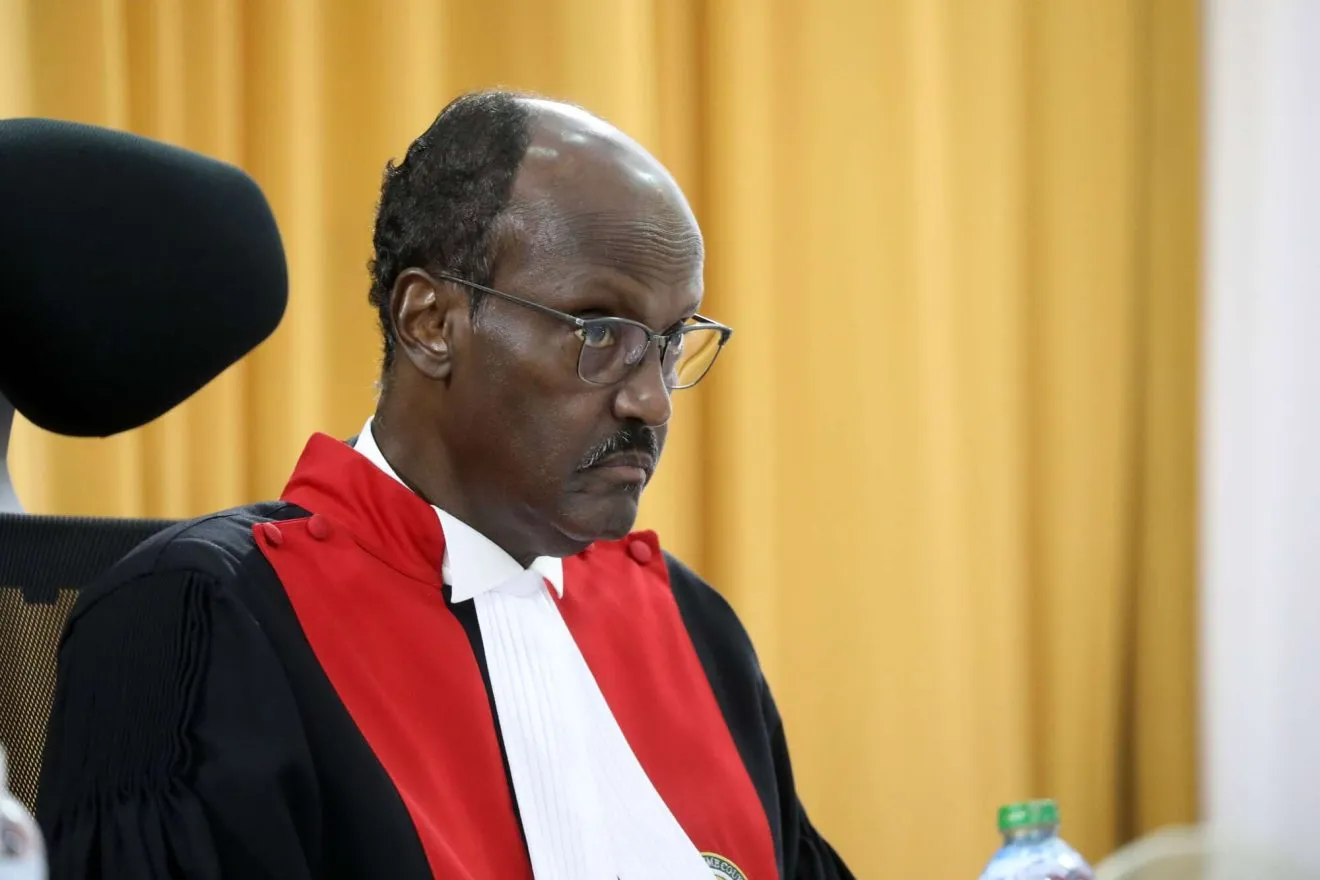
NAIROBI, Kenya — The Kenyan Judiciary and the legal fraternity are in mourning following the death and subsequent interment of Supreme Court Justice Mohamed Khadhar Ibrahim. The distinguished jurist was laid to rest on Thursday at the Kariokor Muslim Cemetery in Nairobi, in strict adherence to Islamic rites, following his passing on Wednesday.
Justice Ibrahim’s death occurred at a Nairobi hospital shortly after his return from India, where he had been flown for specialized medical treatment approximately three weeks prior. Upon his return on Monday, he was admitted to the Intensive Care Unit (ICU) until his passing.
Chief Justice Martha Koome led the nation in honoring the late judge, describing him as a jurist defined by “exceptional humility and integrity”. In her formal condolence message, she stated:
“Justice Ibrahim will be remembered as a steadfast guardian of constitutionalism, electoral justice, and human dignity. The Judiciary, the Supreme Court and the JSC mourn the loss of a distinguished jurist whose legacy bridges courageous advocacy and principled judging, and whose life exemplified fidelity to his oath of office, service to country, and compassion for the voiceless,”.
Law Society of Kenya (LSK) President Faith Odhiambo echoed these sentiments, noting that the Justice served with “unparalleled grace and distinguished intellect”. She added:
“His rare calmness spoke of a man who fully understood the role of judicial authority as an opportunity to serve, and the nuances of justice as a tool for maintaining social order. His passing on is a big loss to the Supreme Court, the Judiciary, and to the administration of Justice in Kenya,”.
Ms. Odhiambo further characterized him as an “independent, astute voice of reason” whose contributions to Kenyan jurisprudence displayed a “great wealth of knowledge, depth of character and dedication to advancing the law”.
Admitted to the Bar in 1982, Justice Ibrahim was a pioneer, becoming the first member of the Kenyan Somali community to be admitted as an Advocate of the High Court of Kenya. His career was marked by a deep-seated commitment to civil liberties:
- Public interest litigation: He was actively involved in civic advocacy during Kenya’s turbulent political transitions, working with organizations such as Kituo cha Sheria and the Lawyers Committee for Human Rights.
- Pro-democracy activism: He was among the lawyers who agitated for the restoration of multi-party politics in Kenya.
- Constitutional legacy: As a founding member of the inaugural Supreme Court bench in 2011, he played a critical role in shaping the apex court’s early jurisprudence.
Judicial philosophy and notable rulings
Justice Ibrahim was often viewed as a conservative and principled member of the bench. One of his most notable stances was a dissenting opinion, alongside Justice William Ouko, regarding the registration of an NGO for the LGBTQ+ community.
The two judges argued that the government could not facilitate an organization whose objectives appeared inconsistent with existing penal codes. They maintained:
Also Read: What happens when a sitting Supreme Court judge dies in office in Kenya
“In the face of Sections 162, 163 and 165 of the Penal Code, it is unfathomable how Mr Gitari would have been expected to proceed to reserve a name or register an association whose proposed name or whose expressed objects are in furtherance of activities that are contrary to or inconsistent with the law.”
Throughout his tenure, he also demonstrated a commitment to judicial accountability. During the vetting process for judges, he successfully cleared a significant backlog of over 200 judgments, fulfilling an undertaking to then-Chief Justice Willy Mutunga to ensure the timely administration of justice.
Justice Ibrahim, who previously served as a High Court judge in both Nairobi and Mombasa, was scheduled to retire in December 2026. His passing leaves a significant void in the Supreme Court and the broader administration of justice in Kenya.
