


NAIROBI, Kenya — The High Court has dealt a significant blow to the Music Copyright Society of Kenya (MCSK) by declining to temporarily halt a decision that bars the organization from its primary functions of collecting and distributing music royalties.
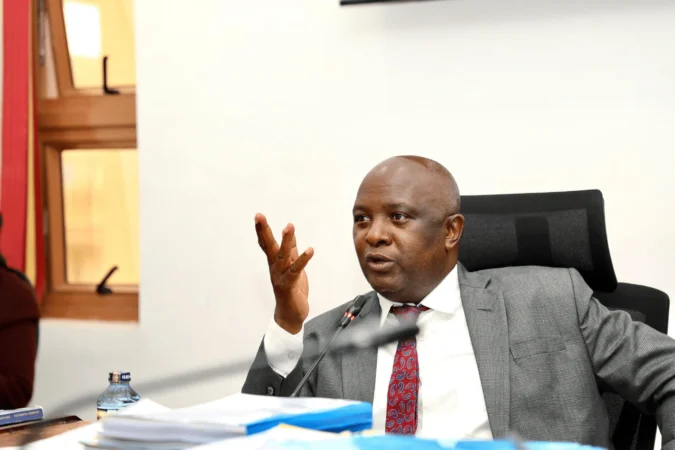
In a ruling delivered on December 11, 2025, Justice Linus Kassan directed that the urgent application be deferred for a full hearing next year.
“Upon perusal of the motion dated the 10th day of December 2025, I direct that the matter be heard inter-partes on the 21st day of July 2026,” he ruled.
The crisis for MCSK began on October 14, 2025, when the Kenya Copyright Board (KECOBO) declined to renew the society’s license for the 2025–2026 period.
This was later upheld by the Copyright Tribunal on November 25, 2025, which discharged interim orders that had previously allowed MCSK to continue operations.
Represented by lawyer Duncan Okubasu, MCSK moved to the High Court under a certificate of urgency.
The society sought to restrain KECOBO and the Performing and Audio-Visual Rights Society of Kenya (PAVRISK) from interfering with its activities. MCSK argued that the Tribunal’s decision was based on a flawed interpretation of the law.
“The Tribunal erred in law by misinterpreting and misapplying the Copyright Act (Collection Management Regulations, 2020 by imposing a rigid threshold of compliance and failing to properly assess whether the alluded deficiencies amounted to sufficient grounds to deny MCSK registration,” the motion stated.
KECOBO’s defense and compliance issues
KECOBO, through lawyer Alex Nyabwengi, maintained that only a duly licensed Collective Management Organisation (CMO) has the legal mandate to handle royalties under the Copyright Act.
The board revealed that it has already issued operating licenses to PAVRISK and KAMP Copyright and Related Rights for the current period.
The rejection of MCSK’s license was reportedly linked to a failure to meet statutory transparency requirements. According to court documents, KECOBO alleged that MCSK failed to submit certified annual returns and audited accounts for the preceding five years.
However, MCSK has contested these findings. Lawyer Okubasu argued:
“KECOBO also erred in law in finding that the appellant failed to provide audited accounts of the CMO for the 5 years preceding the date of the application.”
Also Read: Uganda’s copyright law faces scrutiny from musicians and industry leaders
The standoff is further complicated by a recent High Court ruling by Justice Chacha Mwita, which nullified existing royalty tariffs due to a lack of public participation. This effectively means there are currently no valid tariffs in place for any organization to collect royalties from music users.
The Tribunal noted that without a valid license, MCSK lacks the authority to issue unified licenses or engage in any collection activities. With the High Court refusing to grant a stay, MCSK remains sidelined from the industry until the inter-partes hearing scheduled for July 21, 2026.