


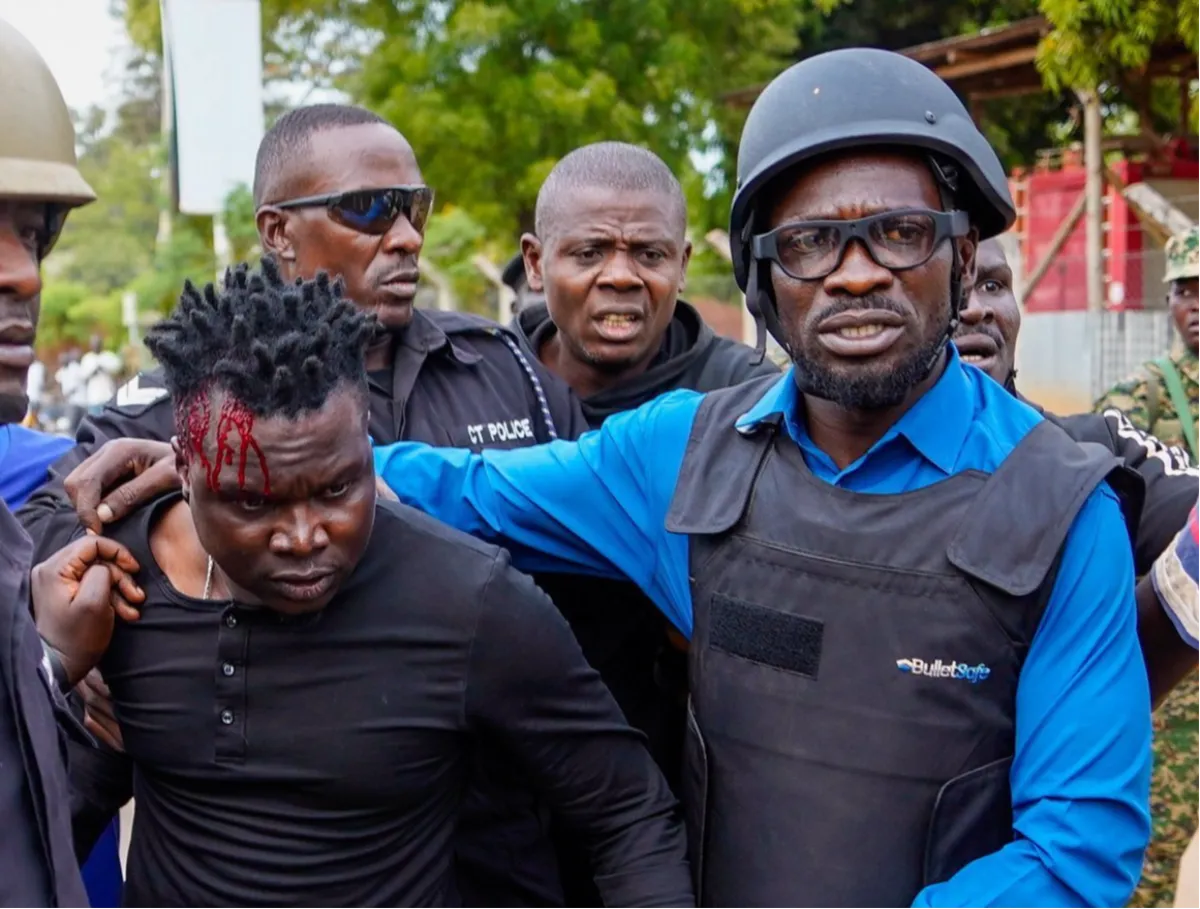
KAMPALA, Uganda — The images of Robert Kyagulanyi Ssentamu, popularly known as Bobi Wine, appearing in public wearing a ballistic helmet and a ceramic-plate bulletproof vest has become one of the most striking symbols of contemporary Ugandan politics.
As the country edges toward the 2026 general election, the attire is no longer merely protective gear. It reflects the extent to which political competition in Uganda has become securitised, and how the line between civilian politics and military force has steadily eroded.
Uganda’s electoral landscape has long been uneven, but the prominence of body armour on a leading opposition figure underscores a deeper reality: in a system where state power is tightly fused with coercive security structures, dissent increasingly comes at a physical cost.
From opposition politics to a security threat
Since his entry into formal politics in 2017, Bobi Wine has been treated by the ruling National Resistance Movement (NRM) less as a conventional political challenger and more as a destabilising force.
This framing intensified during the 2021 election cycle, when his National Unity Platform (NUP) galvanised urban youth, informal settlements, and parts of central Uganda that had long been politically marginalised.
Security agencies repeatedly disrupted his campaign, citing public order concerns. In several instances, his convoy was violently intercepted. In Kayunga in 2018, Wine was arrested following clashes that left his driver dead.
During later campaigns, his vehicles were allegedly fired upon, and members of his entourage injured.
Against this backdrop, the acquisition of an armoured vehicle and personal protective gear was presented by his team as a basic safety necessity rather than political theatre.
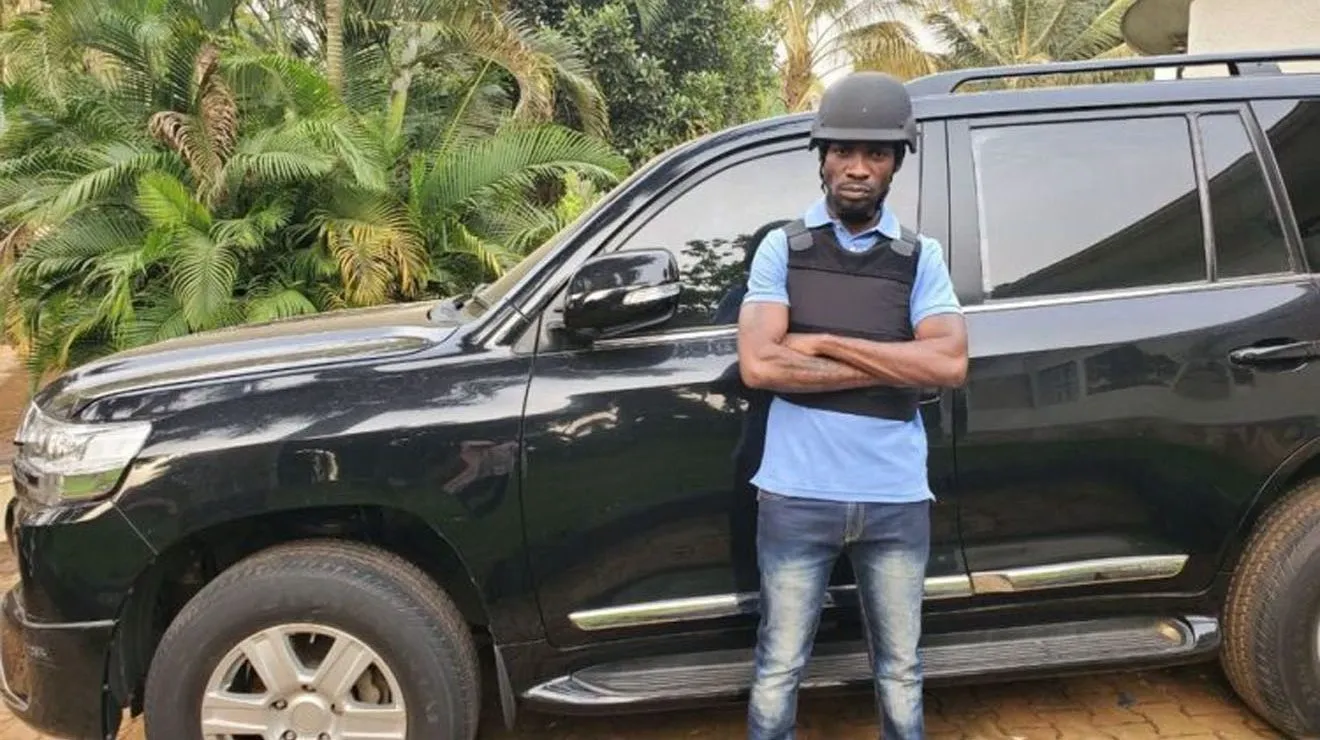
The state’s response, however, was uncompromising. The Uganda Revenue Authority (URA), backed by the Inspectorate of Government, impounded his armoured SUV, citing tax discrepancies and regulatory violations.
Officials argued that civilian possession of such vehicles raised security concerns. Critics, however, viewed the move as an extension of political containment through administrative and legal instruments.
The contrast is stark. President Yoweri Museveni—who has ruled Uganda since 1986—travels with elite protection from the Special Forces Command (SFC), an army unit answerable directly to the presidency.
Opposition leaders, by contrast, must justify even rudimentary self-protection in a political environment where threats are rarely investigated and accountability is minimal.
Identity, power and the question of ethnicity
Beyond security, Bobi Wine’s rise has unsettled deeper historical and regional power dynamics.
Uganda’s post-1986 political elite has been heavily dominated by figures from the western regions, particularly those aligned to Museveni’s Banyankole background.
While ethnicity is not always explicitly invoked, perceptions of exclusion and dominance remain politically potent—especially in central Uganda, the heartland of the Baganda community.
Tensions around identity resurfaced forcefully in 2025 following the abduction of Eddie Mutwe, Bobi Wine’s chief bodyguard. His detention became a national controversy after General Muhoozi Kainerugaba—the President’s son and Chief of Defence Forces—publicly acknowledged holding him.
Social media posts attributed to Gen. Muhoozi, which appeared to mock the detainee and referenced forcing him to learn Runyankore, were widely condemned by human rights groups and political observers.
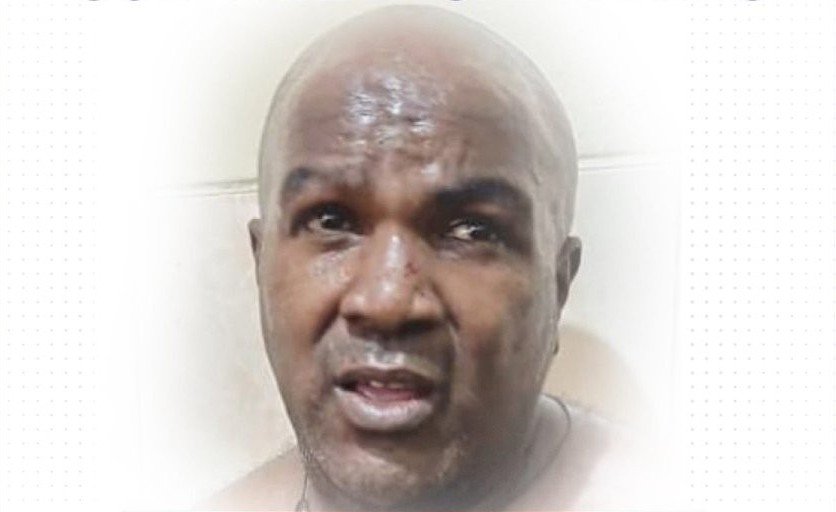
For critics, the episode was emblematic of the growing personalisation of state power, the blurring of military command with political messaging, and the use of symbolic humiliation to assert dominance.
It also reinforced long-standing fears about dynastic succession, with Gen. Muhoozi increasingly visible as both a military and political actor.
The human cost of political contestation
While Bobi Wine’s protective gear may shield him from immediate harm, it also exposes a moral dilemma at the heart of Uganda’s opposition politics. His supporters; many of them young, urban, and economically precarious, remain vulnerable.
In November 2020, protests triggered by Wine’s arrest were met with live ammunition. At least 54 people were killed within two days, according to official figures, though rights groups believe the number may be higher. None of the victims were armed. Few investigations have led to prosecutions.
Also Read: One killed at Bobi Wine rally, exposing deepening unrest ahead of Uganda’s 2026 polls
This imbalance raises uncomfortable questions. Can a movement claim to represent the dispossessed while its leadership survives through armour unavailable to its base?
Conversely, can an opposition leader afford visibility without protection in a system where violence has repeatedly been deployed against challengers?
Elections under the shadow of force
As Uganda moves toward 2026, political space continues to narrow. New public order regulations, restrictions on assemblies, and the routine deployment of military units in civilian settings have reinforced concerns that electoral competition is being managed through intimidation rather than persuasion.
The sight of a presidential contender in combat-grade protection sends a powerful signal—not just domestically, but across East Africa.
It suggests a polity where civilian authority is subordinate to force, where institutions are weakened by executive dominance, and where succession politics are being shaped within the barracks as much as at the ballot box.
For Bobi Wine, the helmet and vest are instruments of survival. For Uganda, they are a stark reminder that the promise of democratic transition remains unfulfilled—shielded not by law or consensus, but by steel and firepower.
