


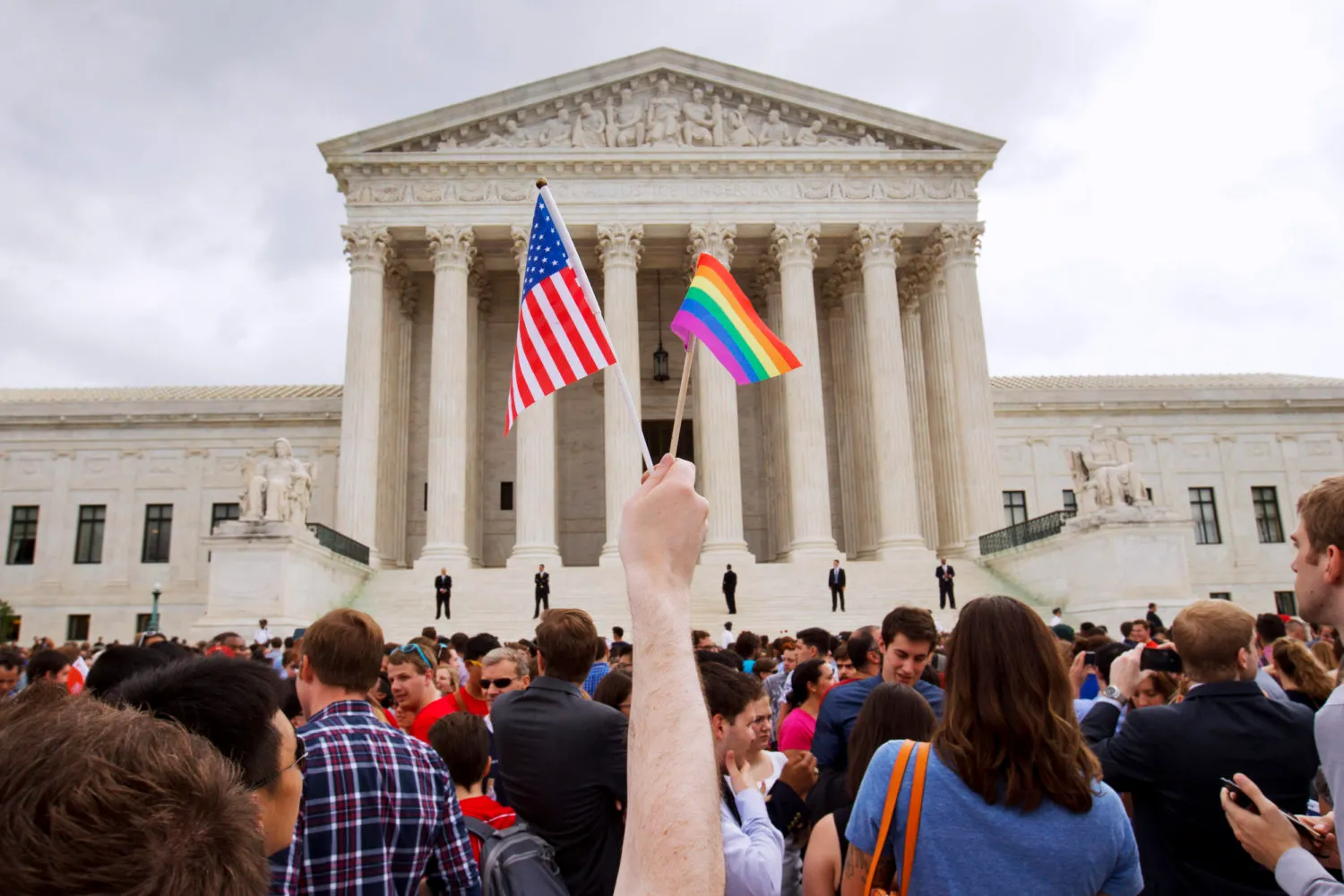
WASHINGTON D.C., United States — The Supreme Court on Monday refused a petition seeking to overturn its landmark 2015 Obergefell v. Hodges decision, which established the constitutional right to same-sex marriage nationwide.
The justices, without offering comment, denied the appeal lodged by Kim Davis, the former Kentucky court clerk whose refusal to issue marriage licenses to same-sex couples drew national attention a decade ago.
The denial of Kim Davis’s appeal
Davis’s appeal was an attempt to overturn a lower-court order requiring her to pay $360,000 in damages and attorney’s fees to a same-sex couple she had denied a marriage license.
In her legal filings, her lawyers explicitly called for the Obergefell precedent to be erased, repeatedly referencing the dissent of Justice Clarence Thomas.
Kelley Robinson, President of the Human Rights Campaign, praised the court’s decision not to intervene.
“The Supreme Court made clear today that refusing to respect the constitutional rights of others does not come without consequences,” Robinson said in a statement.
Divisions among the justices
The denial came against the backdrop of heightened scrutiny regarding the conservative court’s willingness to revisit major precedents, particularly after the 2022 decision that ended the constitutional right to abortion.
- Dissenters: Justices Thomas, Chief Justice John Roberts, and Justice Samuel Alito were among the four dissenting justices in the original 2015 Obergefell ruling and remain on the Court. Justice Thomas has since been the only member to publicly call for the ruling to be overturned. Chief Justice Roberts has been silent on the matter since writing his dissent, while Justice Alito, though a persistent critic, recently stated he was not advocating for its immediate reversal.
Also Read: Slovakia enshrines ‘male and female’ sexes in constitution, restricting LGBTQ+ rights
- The Roe contrast: Justice Amy Coney Barrett, who was not on the court in 2015, has previously suggested the court should correct mistakes by overturning precedent. However, she has more recently indicated that same-sex marriage may be in a different category than abortion due to the significant reliance interests involved, as millions of people have married and raised children under the protection of the Obergefell decision.
The Clerk who defied the court
Kim Davis first gained national notoriety in eastern Kentucky’s Rowan County when she refused to comply with the 2015 high court ruling, citing her personal religious faith.
Her defiance led to a federal judge jailing her for contempt of court in September 2015.
She was subsequently released after her staff began issuing licenses on her behalf, though her name was removed from the forms.
The Kentucky legislature later enacted a law officially removing the names of all county clerks from state marriage licenses.
Davis ultimately lost her reelection bid in 2018.
