


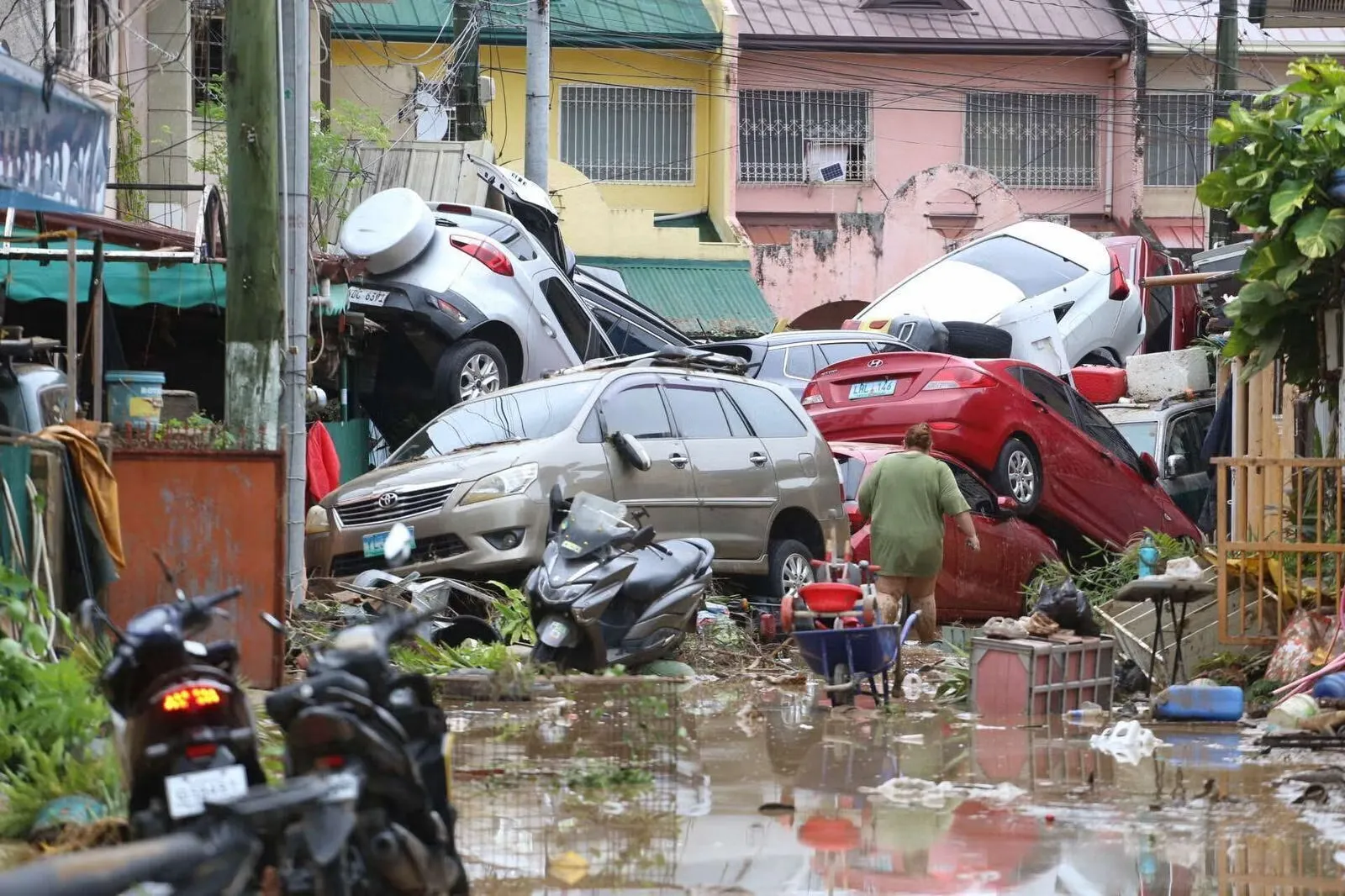
MANILA, Philippines — Typhoon Kalmaegi, which unleashed unprecedented destruction and claimed at least 114 lives in the Philippines, is now surging toward central Vietnam with rapidly increasing windspeeds.
Vietnam’s weather bureau has urged thousands of residents in coastal communities to evacuate ahead of the storm’s anticipated arrival, which is expected to generate waves reaching up to 8 meters (26 ft).
Kalmaegi is regarded as one of the strongest typhoons this year and threatens to compound the devastation in a country already reeling from a week of record-setting rains and deadly floods.
Vietnam is treating the approaching storm with urgency. Deputy Prime Minister Tran Hong Ha referred to Kalmaegi as a “very abnormal” storm and called on local officials to prioritize preparations.
Over 50 flights have been canceled or rescheduled, and six regional airports have suspended operations.
Philippines declares state of calamity
Earlier on Thursday, Philippine President Ferdinand Marcos Jr. declared a state of calamity across the nation following the extensive trail of death and destruction left by Typhoon Kalmaegi (locally named Tino).
The storm severely flooded entire towns on Cebu, the region’s most populous island, where the majority of the confirmed fatalities occurred. Official tallies report 71 deaths on Cebu, with another 127 people missing and 82 injured.
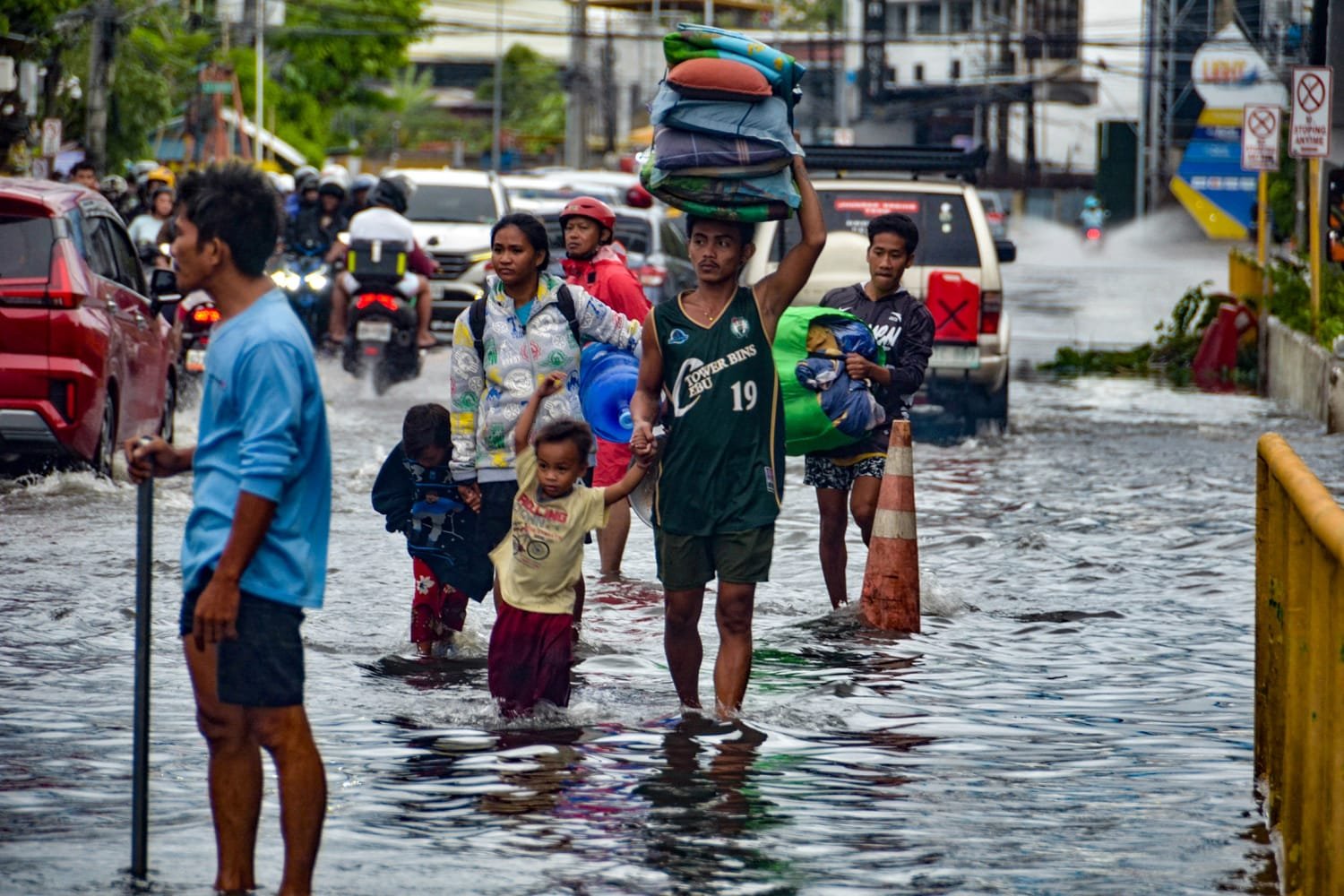
Cebu provincial authorities reported an additional 28 deaths not yet included in the national civil defense office count, according to AFP.
President Marcos Jr. explained his decision to local media, noting that the declaration was based on the damage caused by Kalmaegi and in anticipation of another storm, Uwan, expected to hit over the weekend:
“Almost 10 regions, around 10 to 12 regions, will be affected. So if that many areas are involved, with that kind of scope, then it’s a national calamity,” he told local media.
In the Philippines, a state of calamity is declared when there is mass casualty, major damage, and widespread disruption to livelihoods. The declaration grants government agencies increased power to access emergency funds and fast-track the procurement and delivery of essential goods and services.
Most of the fatalities in the Philippines were due to drowning, as the storm sent torrents of muddy water sweeping down hillsides and into populated areas.
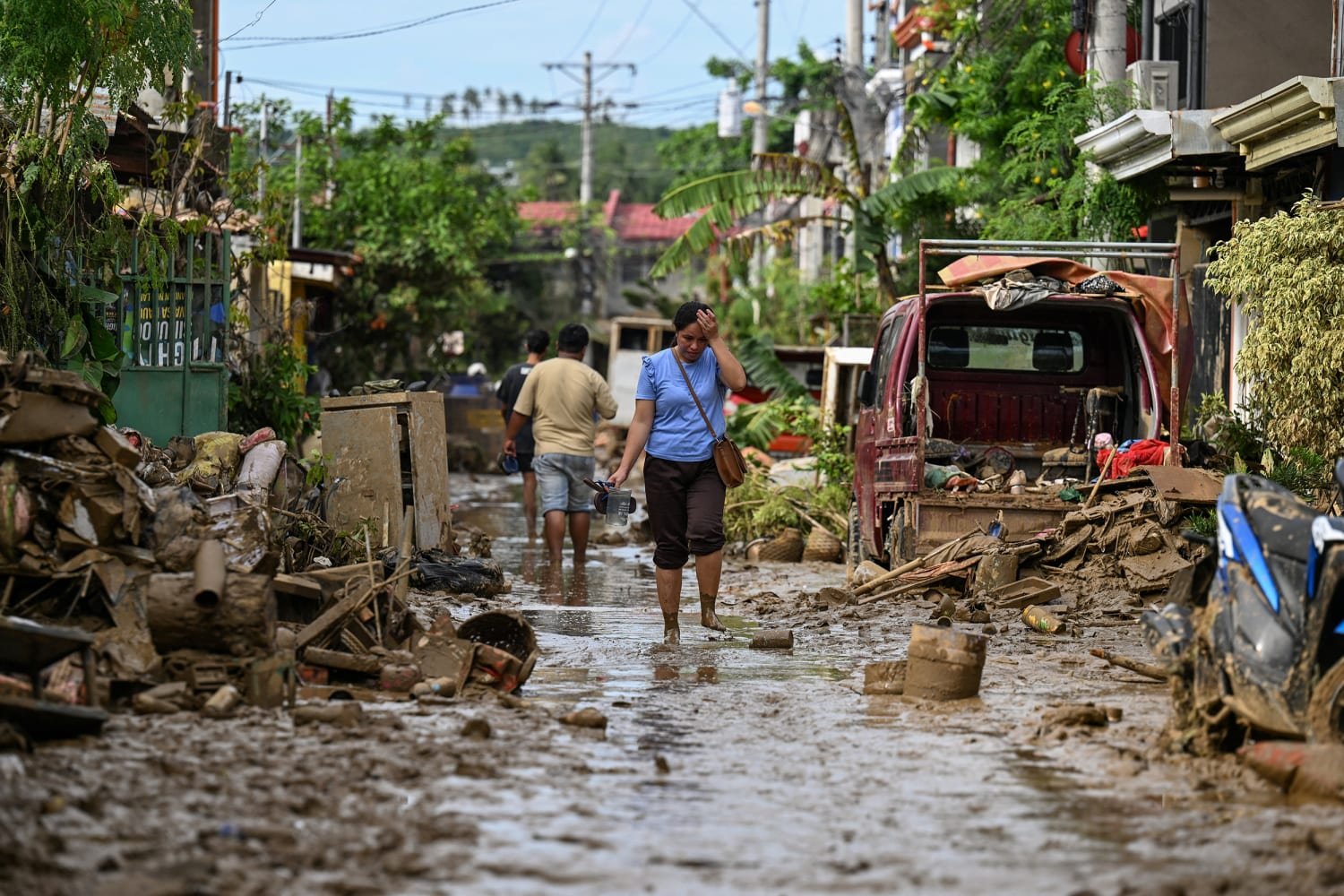
Damage to residential areas was catastrophic, with many small buildings swept away and thick layers of mud left behind. Local officials described the resulting havoc as “unprecedented.”
Survivors recount ‘worst flood ever’
The death toll in the Philippines also includes six crew members of a military helicopter that crashed on Mindanao island while deployed for relief efforts on Tuesday.
Residents returning to their destroyed homes are now contending with the mud and wreckage left by the floods. Jel-an Moira Servas, a business owner in Mandaue city, recounted the speed of the flooding to this publication:
“Right now, the rain has completely stopped and the sun is out, but our houses are still filled with mud, and everything inside is in shambles,” she said. “We don’t even know where to start cleaning. I can’t even look at it without crying.”
Volunteer rescuer Carlos Jose Lañas, 19, emphasized the scale of the emergency response failure:
“This is the worst flood I’ve ever experienced,” the 19-year-old said. “Almost all the rivers here in Cebu overflowed. Even emergency responders did not expect this kind of scenario.”
He noted the overwhelming demand for help:
“The rescue operation was too overwhelming for the emergency responders around Cebu, because there were a lot of people asking for help.”
The national disaster agency reported that over 400,000 people had been displaced by the disaster in Cebu, an island home to 2.5 million people.
Also Read: At least 13 dead as torrential rains trigger landslides and floods across Kenya
Kalmaegi marks the 20th tropical cyclone to strike the Philippines this year. The country had just begun recovering from two back-to-back typhoons—Super Typhoon Ragasa and Typhoon Bualoi—which killed over a dozen people just a month prior.
Exacerbating the situation, an extraordinarily wet monsoon season has prompted anger over sub-standard flood control systems often blamed on corruption.
Neighboring Thailand is also bracing for the impact of Typhoon Kalmaegi, with local officials warning of the high risk of flash floods, landslides, and river overflows.
