

NAIROBI, Kenya — A major, UK-funded sting operation coordinated by Interpol has resulted in the arrest of approximately 260 suspected cyber scammers across 14 African countries. The sweep targeted criminal networks that exploit social media and digital platforms to defraud victims through romance scams and “sextortion,” where individuals are blackmailed using explicit imagery.
The operation, carried out between July and August, identified more than 1,400 victims across Ghana, Kenya, Angola, and other nations, who collectively lost an estimated total of nearly $2.8 million (£2.1 million).
Interpol’s director of cybercrime, Neal Jetton, described the typical perpetrator tactics to the BBC’s Newsday programme: “It doesn’t take long before you develop a connection with somebody… and very quickly this trust is shattered.” Jetton noted that while scammers target various demographics, “typically a lot these scams do affect older people.”
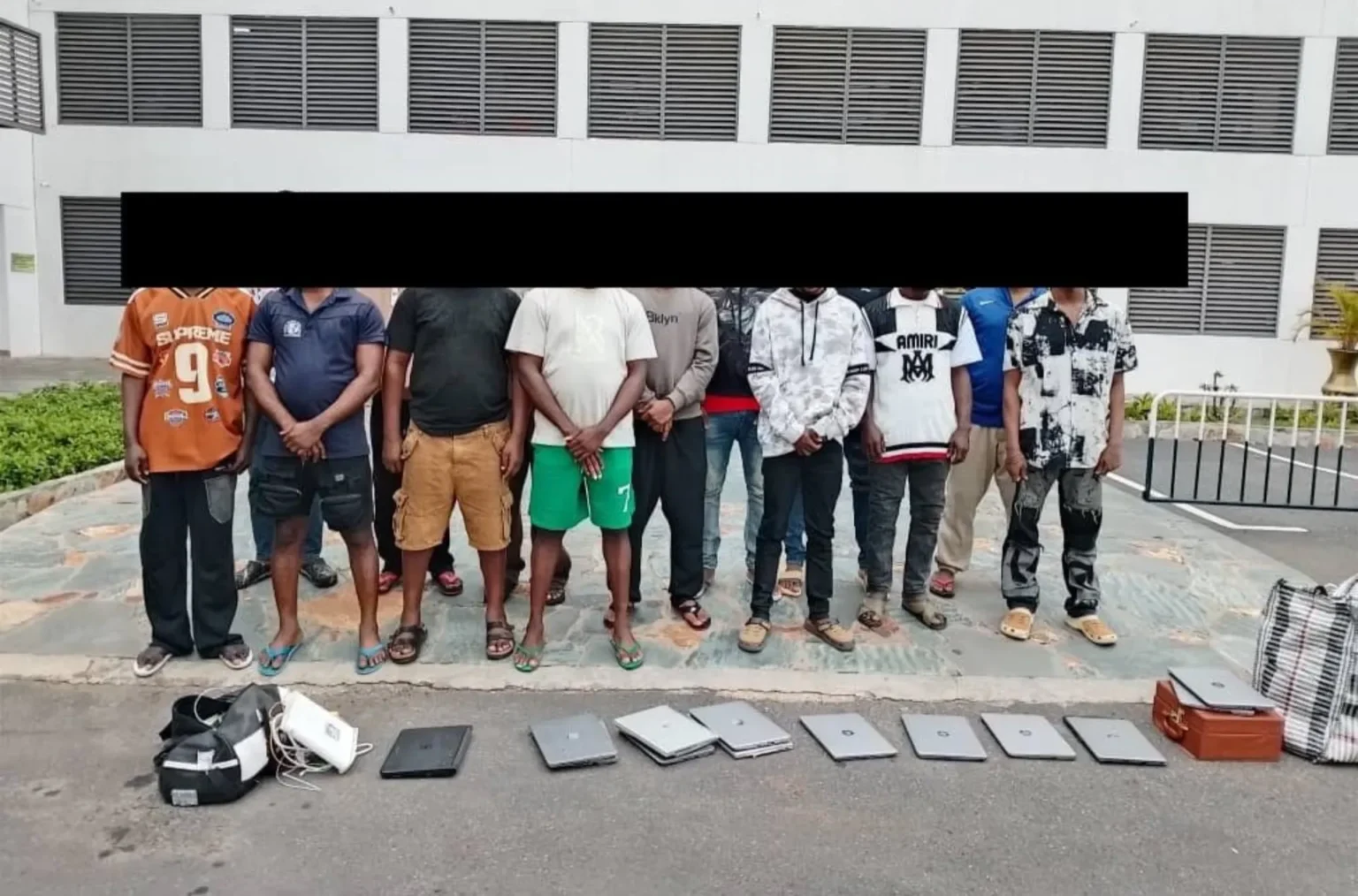
The multi-national crackdown resulted in the dismantling of 81 cyber-crime groups across Africa. Police successfully identified linked digital infrastructure, social media profiles, IP addresses, and domains, seizing critical evidence including SIM cards, USB drives, and forged documents during the arrests.

Cyril Gout, the acting executive director of police services at Interpol, underscored the growing threat, stating that the rise of online platforms has created new opportunities for criminal networks.
“Cyber-crime units across Africa are reporting a sharp rise in digital-enabled crimes such as sextortion and romance scams,” he said, noting that these crimes cause “both financial loss and psychological harm.”
Also Read: Nigeria deports 60 Chinese, 39 Filipinos over cybercrime and internet fraud
Jetton further highlighted the severity of the threat across the continent, explaining, “Whenever we ask a country to rank your top cyber threat, without fail, it is always online scams. It is very difficult to combat these kinds of crimes – millions of people click on [phishing emails] per day.”
Specifics of the operation
Authorities achieved notable successes in several countries:
- Ghana led with 68 arrests, identifying 108 victims and seizing 835 devices, recovering $70,000 from an estimated $450,000 in losses. Scammers used schemes ranging from fake courier fees to blackmail via secretly recorded intimate videos.
- Ivory Coast arrested 24 suspects, seizing 29 devices and identifying the highest number of victims at 809.
- Senegal apprehended 22 suspects, uncovering a network that impersonated celebrities to defraud 120 victims of approximately $34,000.
- Angola arrested eight suspects who primarily targeted 28 domestic and international victims via social media using fraudulent documents to conceal their real identities.
The comprehensive operation was conducted under the “African Joint Operation against Cyber-crime” project and involved cooperation from Benin, Burkina Faso, The Gambia, Ghana, Guinea, Ivory Coast, Kenya, Nigeria, Rwanda, Senegal, South Africa, Uganda, Zambia, and Angola.