

KAMPALA, Uganda — The Ugandan government has announced an expanded strategy to strengthen youth skills development as part of broader efforts to curb unemployment and reduce the number of young people seeking work opportunities abroad.
Vice President Jessica Alupo said the plan aligns with commitments outlined in the ruling National Resistance Movement (NRM) Manifesto, with government prioritising investment promotion, industrial expansion, and enterprise development over the next five years.
She said the approach is intended to accelerate job creation across key sectors while supporting small and medium-sized enterprises as well as youth-led businesses.
Labour convention focus
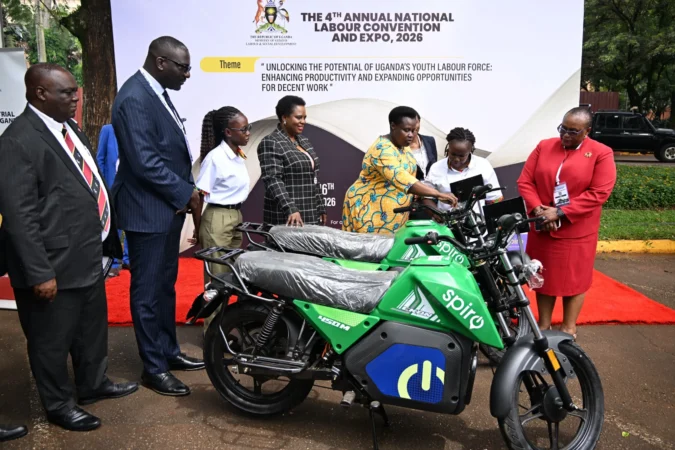
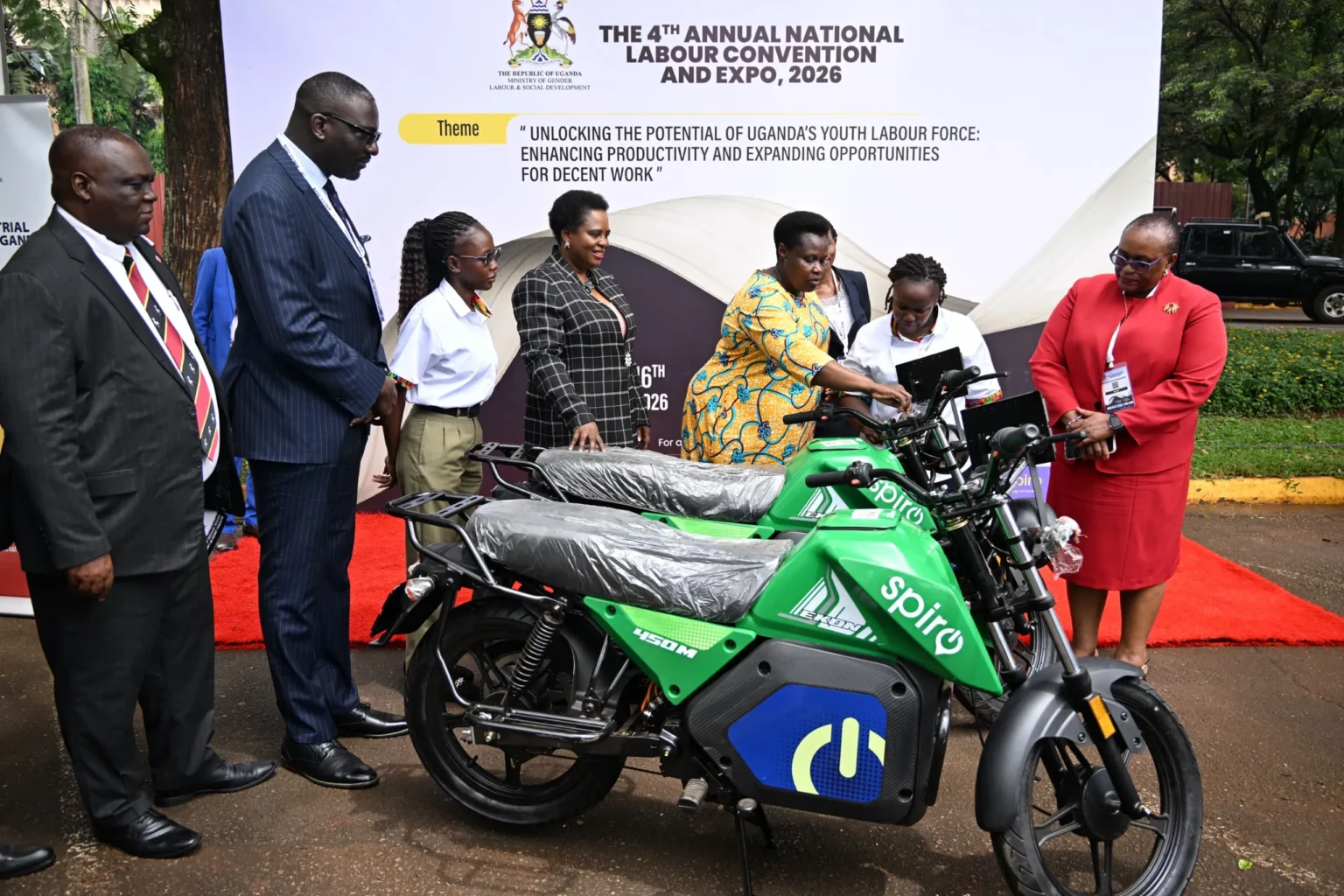
Speaking at the Fourth Annual National Labour Convention and Expo, organised by the Ministry of Gender, Labour and Social Development, Alupo said government would intensify enforcement of labour laws and standards, alongside efforts to strengthen workers’ rights and improve labour administration systems.
This year’s convention is being held under the theme: “Unlocking the Potential of Uganda’s Youth Labour Force: Advancing Productivity and Expanding Opportunities for Decent Work.”
Alupo said the theme reflects national development priorities anchored in Uganda Vision 2040 and the National Development Plan, both of which place human capital development at the centre of economic transformation.
Youth as an economic driver
She emphasised that Uganda’s youthful population should be positioned as a driver of productivity, innovation, and structural transformation across priority sectors, while warning that gaps in skills development and employment remain a challenge.
“The transformation we seek cannot be delivered by Government alone. The NRM Government believes in partnership. The private sector must take the lead in creating jobs and driving innovation. Employers must invest in their workers. Workers must embrace productivity, discipline, and patriotism. All of us must work together to build an economy that serves the interests of our people,” she said.
Alupo urged stakeholders to move beyond dialogue and focus on implementable solutions that can be scaled nationwide.
“Let us focus on what works—apprenticeships, enterprise development, digital innovation, and stronger linkages between education and employment,” she added.
Government policy direction
Minister of Gender, Labour and Social Development Betty Amongi, speaking on behalf of President Yoweri Museveni, said government is shifting its labour agenda from job creation alone to a broader focus on “quality, productive and decent employment” capable of sustaining livelihoods.
She said investments in industrialisation, infrastructure development, digital innovation, and regional integration remain central to expanding opportunities for young people.
Also Read: President Museveni pledges increased ghetto funding, calls for ‘pro-poor budgeting’
Head of Public Service Lucy Nakyobe highlighted ongoing reforms aimed at improving transparency in public recruitment, including efforts to curb corruption and ensure only qualified candidates enter the civil service.
She also noted increased coordination among ministries to expand access to internships and structured workplace training for graduates.
Skills and employment programmes
The government is implementing multiple interventions aimed at improving youth employability, including the Parish Development Model, the Youth Livelihood Programme, and the Skilling Uganda Strategy.
Reforms in Technical and Vocational Education and Training (TVET) are also being scaled up to better align training with labour market needs.
Officials say apprenticeship schemes and graduate volunteer programmes are helping bridge the gap between education and employment, particularly by improving practical work experience among young people.