


NAIROBI, Kenya — President William Ruto has defended his decision to host large and diverse delegations at State House Nairobi, dismissing criticism from opponents who argue the engagements undermine the prestige of the presidency.
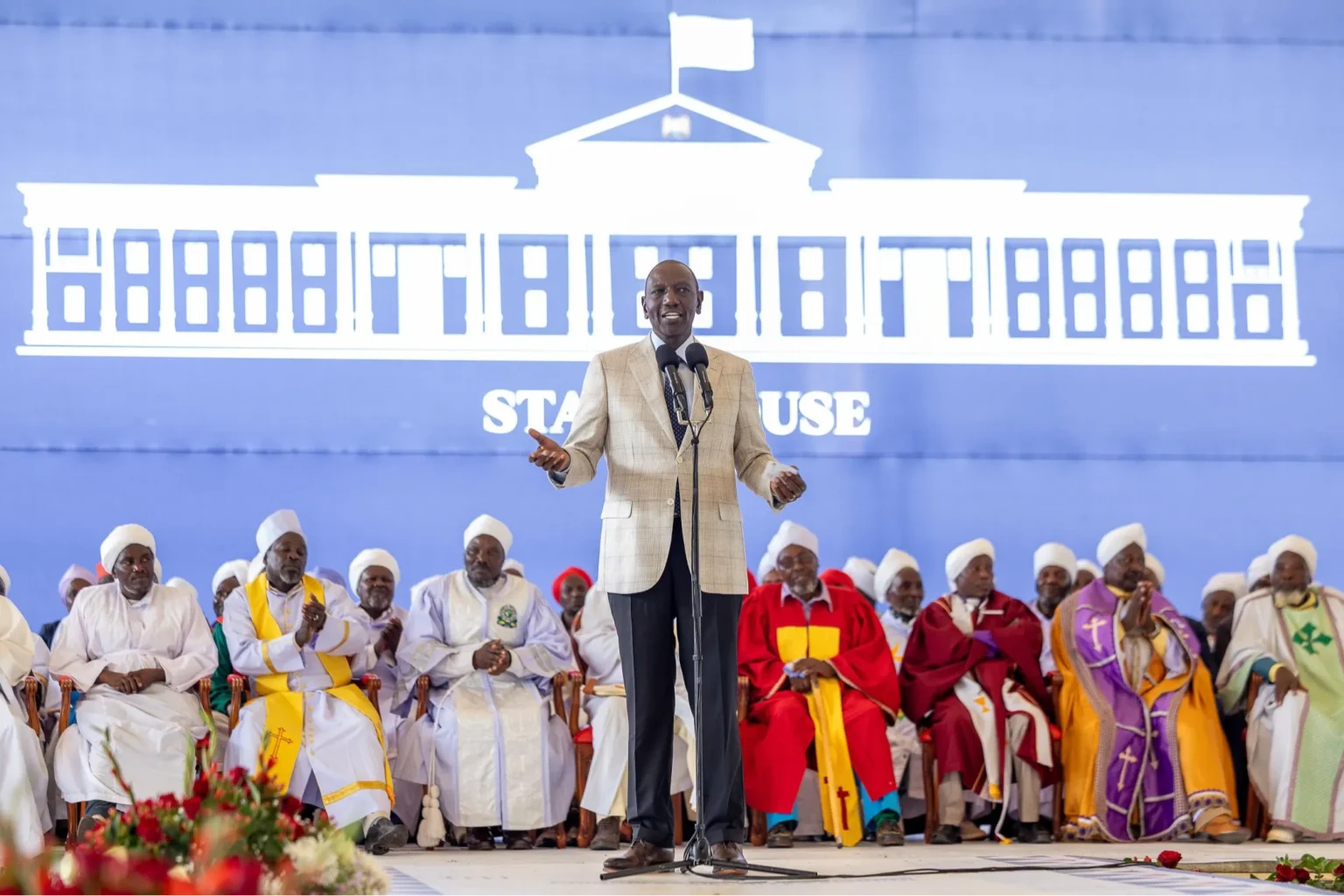
Speaking on Sunday while hosting members of the Akorino faith at State House, the President said the official residence should remain accessible to all Kenyans, regardless of social or economic status.
“State House is for all Kenyans,” Ruto said. “There are people who are not comfortable with me inviting ordinary Kenyans to State House.”
The Head of State appeared to respond directly to critics who have questioned the nature and scale of the gatherings, some of which have drawn thousands of attendees.
“There was one who said I have lowered the standards of State House. He said this place should be visited by presidents of other countries, envoys and all those with means,” Ruto said.
“But I have told them that I have not lowered the standards at State House, it is just that I have uplifted ordinary Kenyans. They should get used to it, those opposed to the visits.”
Ruto maintained that decisions on who accesses State House fall within his constitutional mandate, insisting that invited guests should not face scrutiny.
“Any Kenyan who gets an opportunity to come here should not be questioned by anybody,” he said. “And the people asking, they should know I am the President. I decide who should come and who should not come.”
In a pointed response to concerns about the cost and logistics of hosting such delegations, the President dismissed criticism over meals and event arrangements.
“Those opposing speak as who, and you go to the extent of asking about food. The food is not yours, the one cooking it is not your wife, the person sending invites is not you,” Ruto said.
“Where people will convene is not your home, why are you questioning? I am the one to decide who comes here, and if they continue to make noise I will invite you again and we’ll see what they can do,” he added.
The remarks come amid sustained criticism from opposition figures, who have accused the President of turning State House into a platform for political mobilisation ahead of future elections.
In previous months, critics argued that large-scale meetings, ranging from grassroots groups to professional associations, blur the line between official state functions and political campaigning.
Also Read: Ruto lectures Sakaja, other officials over casual dressing at State House
One such engagement reportedly brought together thousands of teachers during a commemorative event marking a key milestone in the President’s tenure.
Opposition leaders have also raised concerns over the use of public resources to facilitate such gatherings, particularly at a time when many Kenyans are grappling with a high cost of living.
Analysts say the issue reflects a broader debate about the role of State House in public engagement, transparency and political neutrality.
While the presidency has historically hosted delegations and stakeholder meetings, the scale and frequency of recent gatherings have drawn increased scrutiny.
Supporters argue that the approach promotes inclusivity and direct engagement with citizens, while critics contend it risks politicising state institutions and reinforcing patronage networks.