



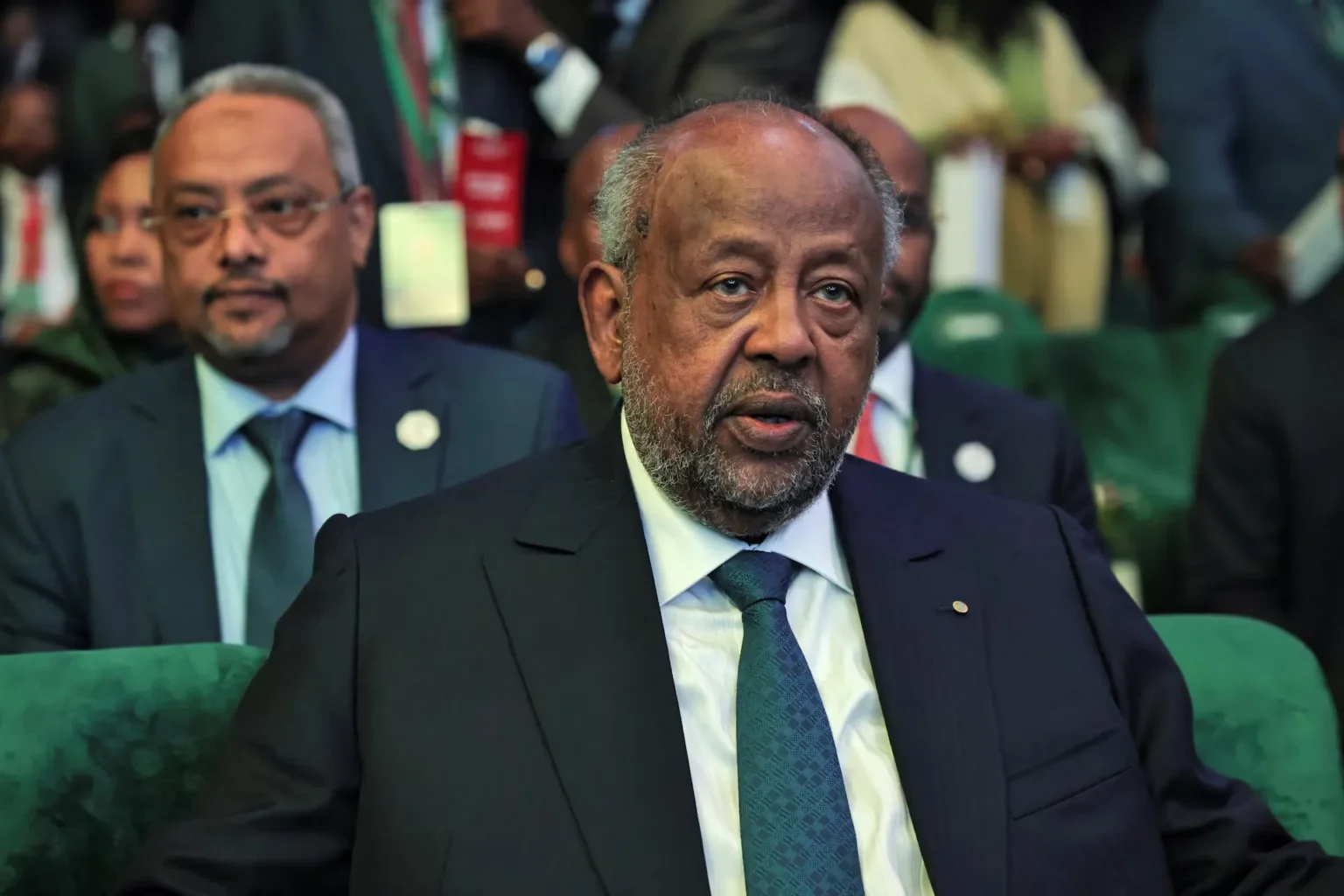
DJIBOUTI CITY, Djibouti — President Ismail Omar Guelleh has won re-election with 97.8% of the vote, according to state broadcaster Radio Television Djibouti, extending his rule to a sixth term and nearly three decades in power.
Guelleh, 78, confirmed his victory on X, posting an image captioned “RÉÉLU,” meaning “re-elected.”
The result was widely anticipated, given the dominance of his ruling party and the limited participation of opposition groups in the electoral process.
In Friday’s vote, Guelleh faced a single challenger, Mohamed Farah Samatar, representing a minor party without parliamentary representation.
Two of the country’s main opposition parties have boycotted elections since 2016, citing concerns over the independence of electoral institutions.
Official figures indicated a voter turnout of 80.4%. In the previous election in 2021, Guelleh secured more than 97% of the vote.
Recent constitutional changes have also shaped the political landscape. In October, parliament removed the presidential age limit of 75 and scrapped the requirement for a referendum to approve a new constitution, moves critics say consolidate executive power.
Djibouti occupies a critical position along the Gulf of Aden at the entrance to the Red Sea, one of the world’s busiest shipping routes.
Despite its population of under one million, the country hosts multiple foreign military bases, including those of the United States, China, France, Italy and Japan.
Its strategic role has grown in recent years, particularly amid instability in the Red Sea corridor, where vessels affected by attacks linked to Yemen’s Houthi militants have sought refuge in Djiboutian ports.
The government has also invested heavily in port and logistics infrastructure, positioning the country as a key trade gateway for neighbouring Ethiopia.
Djibouti has remained relatively stable compared to several countries in the Horn of Africa, a factor often cited by the government as evidence of effective leadership.
Also Read: Uganda’s long-time leader Yoweri Museveni declared 2026 election winner
However, human rights organisations have accused authorities of suppressing dissent, including restrictions on opposition figures, activists and journalists. The government has consistently denied allegations of systemic abuses.
In 2020, security forces dispersed rare anti-government protests following the arrest of a former air force officer who had publicly criticised alleged corruption and discrimination.
Guelleh, who first came to power in 1999 succeeding his uncle Hassan Gouled Aptidon, now extends his tenure further, reinforcing continuity in leadership in a region often marked by political volatility.
Analysts say his continued rule underscores both Djibouti’s strategic stability and the ongoing debate over democratic space and political pluralism in the country.