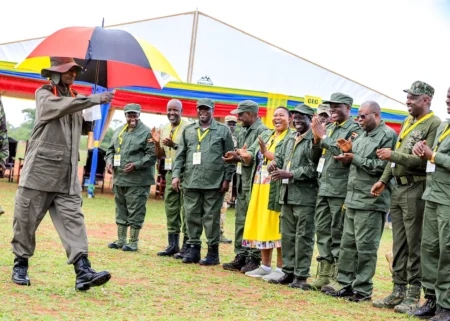


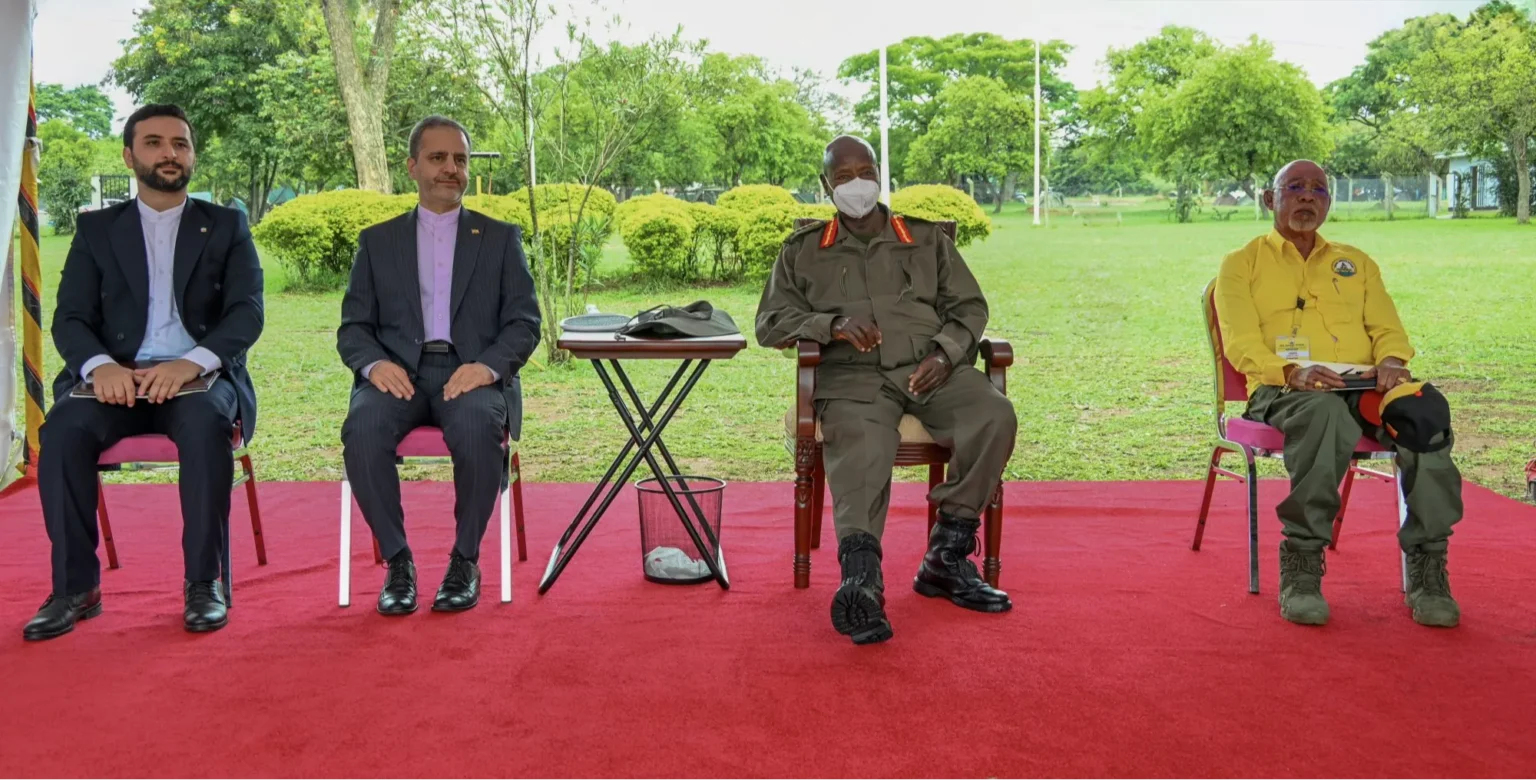
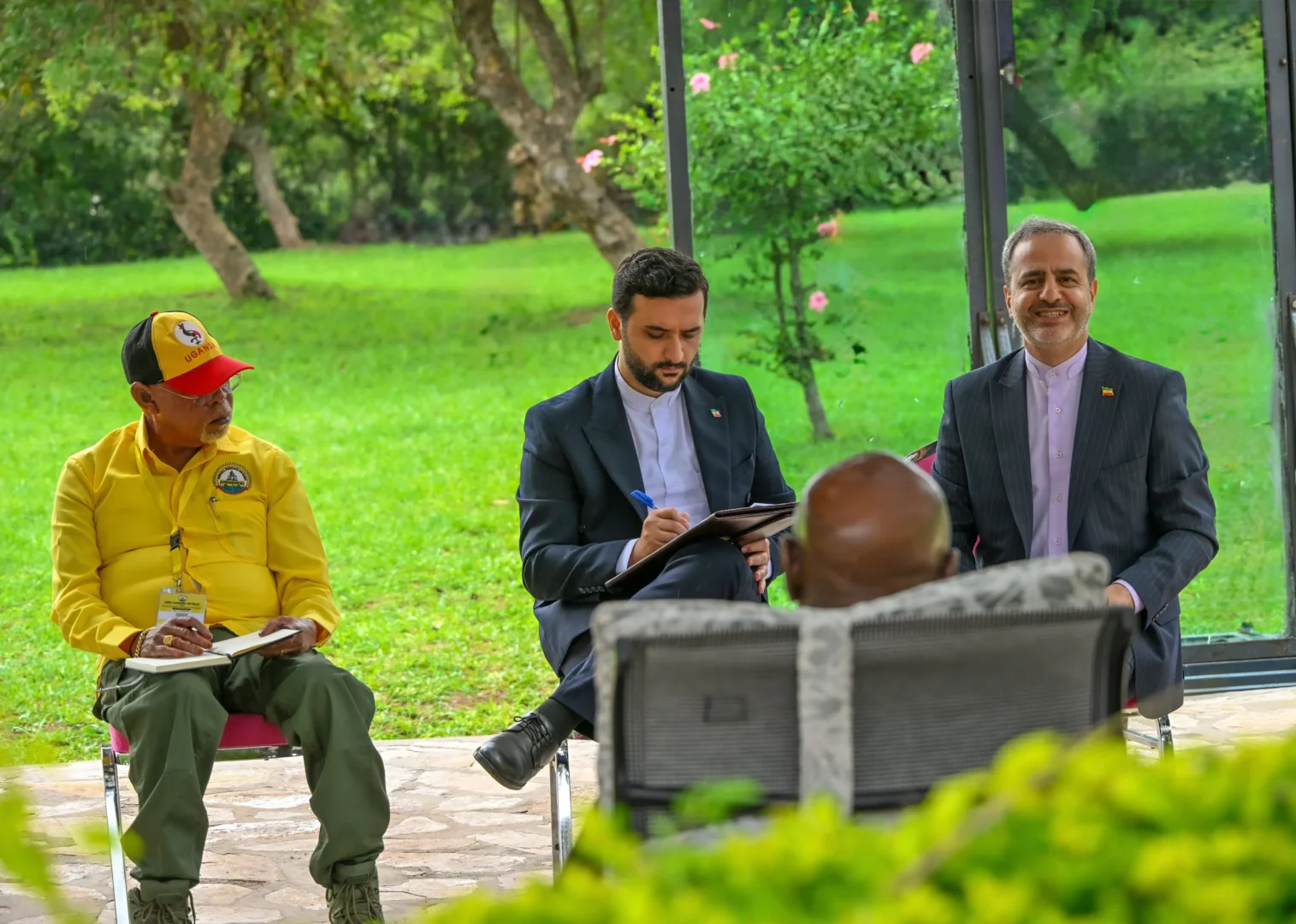
KYANKWANZI, Uganda — President Yoweri Museveni on Sunday held talks with Majid Saffar, Iran’s ambassador to Uganda, on the sidelines of the ruling party retreat in Kyankwanzi, as Kampala moves to manage diplomatic tensions triggered by recent remarks from the country’s military leadership.
Confirming the meeting, Museveni said: “I welcomed His Excellency Majid Saffar, the Iranian Ambassador to Uganda, who called on me this afternoon in Kyankwanzi. We discussed issues of mutual interest and cooperation between Uganda and Iran.”
While official details of the discussions were not disclosed, sources familiar with the engagement said the Iranian delegation sought clarification on Uganda’s position following a series of public statements by Chief of Defence Forces (CDF), Gen Muhoozi Kainerugaba.
Gen Muhoozi has in recent days expressed strong support for Israel, including remarks suggesting Uganda’s readiness to deploy troops in defence of Israeli interests, alongside criticism of positions aligned with Iran and Turkey.
The meeting was also attended by Foreign Affairs Minister Jeje Odongo, underlining the diplomatic significance of the talks.
Ambassador Saffar has stepped up engagements with Ugandan officials in recent months, reflecting Tehran’s interest in deepening ties in East Africa.
The outreach comes against a backdrop of heightened tensions between Iran and its Western and regional adversaries, particularly Israel and the United States.
Tehran has consistently maintained that its foreign policy posture is defensive and not directed at African states.
However, Gen Muhoozi’s comments, made on X, have sparked debate about Uganda’s foreign policy direction, with observers questioning whether Kampala’s long-standing non-aligned stance is facing internal pressure.
The controversy has also extended to Turkey, after Gen Muhoozi issued remarks demanding financial compensation and warning of potential diplomatic consequences.
Uganda’s Permanent Secretary at the Ministry of Foreign Affairs, Adonia Ayebare, later sought to ease tensions, emphasising the country’s commitment to maintaining strong bilateral relations and resolving disputes through “good faith talks.”
The developments come amid broader geopolitical volatility, including recent escalations involving Iran and Israel that have placed international partners on heightened alert.
Uganda’s relationships with both Iran and Israel are rooted in long-standing diplomatic and historical ties.
Also Read: Iran laughs off Uganda’s army chief Muhoozi Kainerugaba over ‘Tehran capture’ claim
Relations with Iran date back decades and were reinforced by the 2023 visit of former Iranian President Ebrahim Raisi, which yielded agreements in agriculture, visa facilitation and political cooperation.
At the same time, Uganda maintains historic links with Israel, notably shaped by the 1976 Entebbe rescue operation, a defining moment that continues to influence bilateral relations.
President Museveni, who currently chairs the Non-Aligned Movement, has consistently emphasised Uganda’s commitment to maintaining diversified partnerships across geopolitical blocs.
Analysts warn that increasingly vocal commentary from military figures on global conflicts risks complicating Uganda’s diplomatic positioning, particularly in sensitive geopolitical theatres.
As consultations continue behind closed doors, the Kyankwanzi meeting is seen as part of a broader effort by Kampala to reassure partners that its official foreign policy remains anchored in non-alignment, despite emerging internal divergences.