

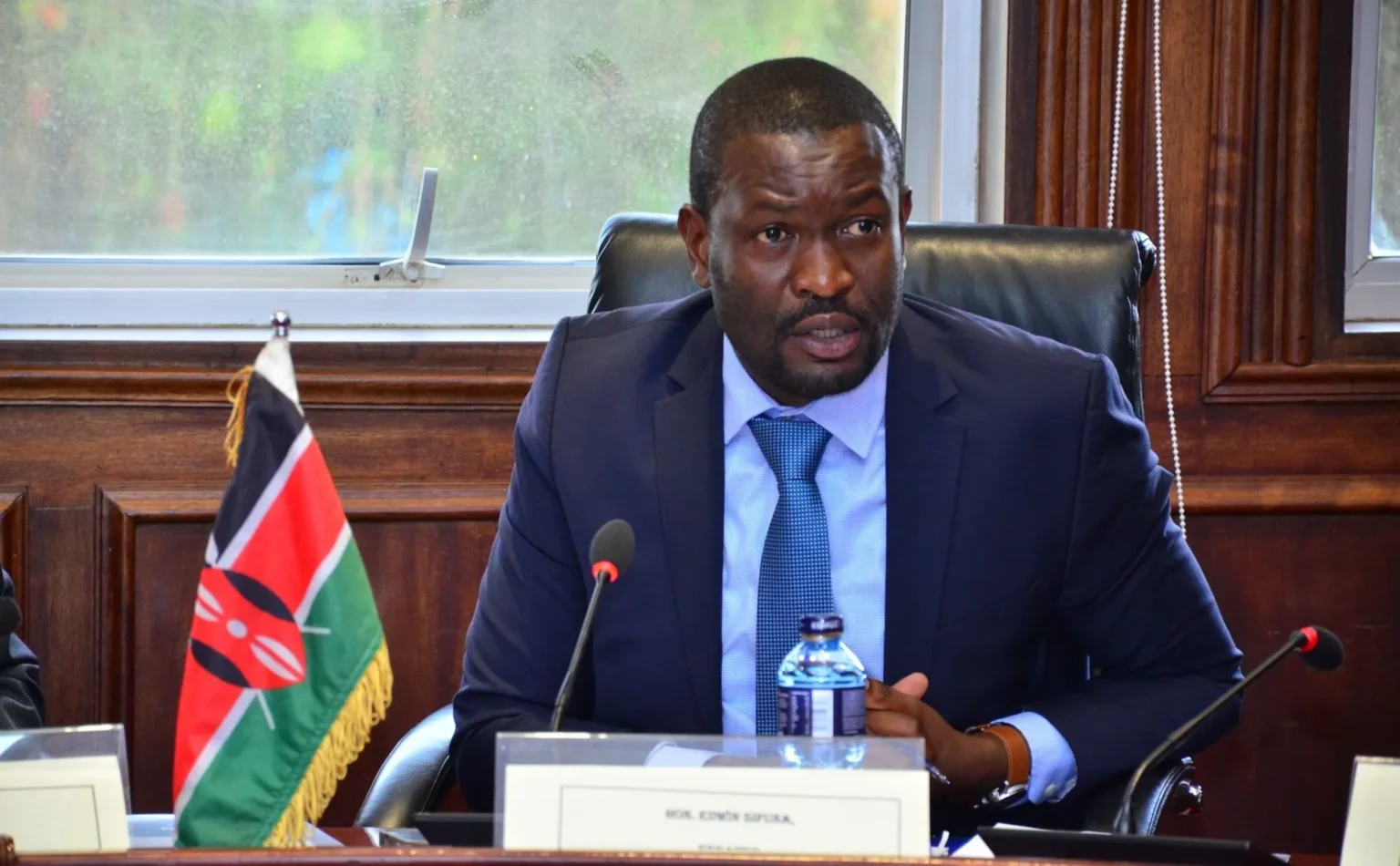
NAIROBI, Kenya — A deepening leadership dispute within the Orange Democratic Movement (ODM) has come into sharper focus after Nairobi Senator Edwin Sifuna publicly rejected any role under newly ratified party leader Oburu Odinga.
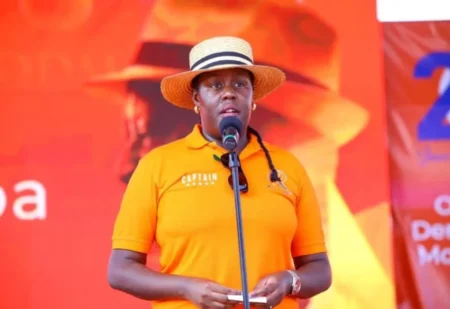
Speaking at a parallel National Delegates Conference (NDC) held at Ufungamano House, Sifuna declared he would not serve as Secretary General under Oburu’s leadership, signalling an escalation of internal divisions within the party.
“Oburu, look for your own SG. After Baba Raila Odinga, you … don’t deserve me!,” Sifuna said.
His remarks drew applause from members aligned with his faction, underscoring growing resistance to the party’s new leadership structure.
Oburu Odinga, who succeeded his late brother Raila Odinga, was formally ratified as party leader during a Special Delegates Conference held at Jamhuri Grounds on March 27.
However, the process has been contested by a rival faction led by Sifuna and Embakasi East MP Babu Owino.
The dissenting group has stopped short of outright defiance but maintains it does not recognise Oburu’s authority.
“We will respect Oburu Odinga as our elder but not our leader,” the legislator said.
At the heart of the fallout is a broader disagreement over the party’s strategic direction, particularly its engagement with the current administration under what has been described as a “broad-based” political arrangement.
Sifuna’s camp argues that such alignments risk undermining ODM’s independence and ideological identity, while the Oburu-led faction maintains that the approach is necessary for political relevance and national stability.
Addressing supporters at the official NDC, Oburu defended the party’s decision-making structures and criticised internal dissent.
“You cannot be a party leader, preside over a meeting of any of the organs, and then, when you come out because you do not like what the majority passed, you start attacking it and saying the complete opposite of what the party has passed through its established organs.”
The standoff has effectively split ODM into two visible blocs: the Oburu-aligned “Linda Ground” faction, which emphasises institutional discipline and adherence to party organs, and the “Linda Mwananchi” group, which is pushing for grassroots-driven reforms and a more independent political stance.
Also Read: Winnie Odinga ditches Sifuna camp, backs Oburu at ODM special National Delegates Convention
Friday’s parallel NDCs highlighted the scale of the divide, with both camps seeking to assert legitimacy and rally support among delegates and grassroots supporters.
Political analysts note that such factionalism, if unresolved, could weaken ODM’s cohesion ahead of future electoral cycles, particularly as Kenya’s political landscape continues to evolve following the 2022 general election and subsequent realignments.
With both sides holding firm positions, the dispute signals a prolonged internal contest over leadership influence and ideological direction within one of Kenya’s most prominent opposition parties.
Unless reconciled through formal party mechanisms, the divisions risk escalating into a broader fragmentation that could reshape the party’s role in national politics.