

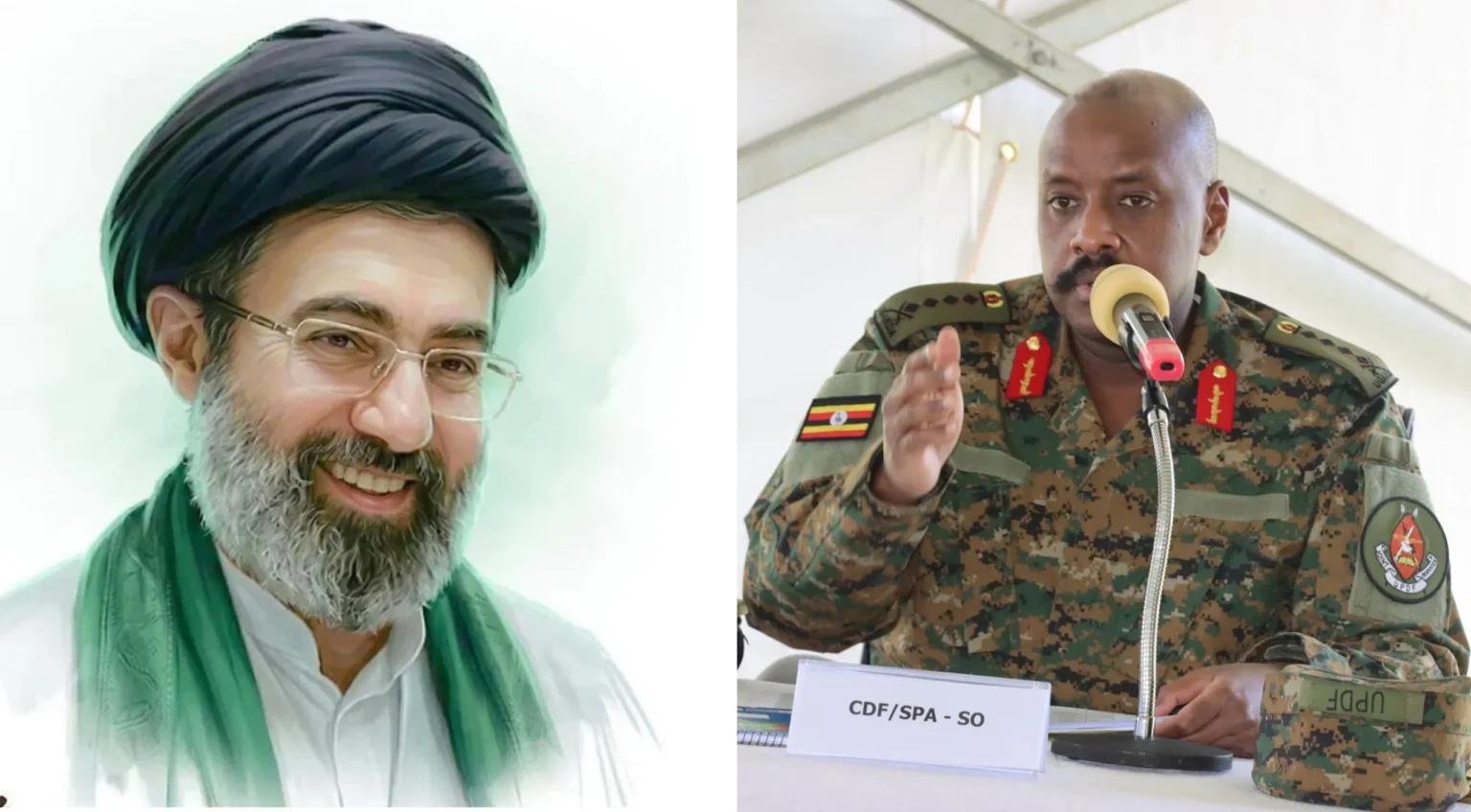
KAMPALA, Uganda — Uganda’s Chief of Defence Forces, Gen. Muhoozi Kainerugaba, has drawn international attention following a series of controversial social media posts in which he weighed in on the escalating tensions in the Middle East.
The military chief publicly signalled support for Israel in its ongoing confrontation with the Islamic Republic of Iran, stating that the Uganda People’s Defence Forces (UPDF) stood ready to assist if called upon.
Gen. Muhoozi suggested that Uganda could align itself militarily with Israel, referring to the country as a “brother” nation and indicating willingness to deploy troops in support of its operations.
In a now-deleted post on X (formerly Twitter), he made a bold assertion about Uganda’s military capabilities.
It can’t take us more than 2 weeks to capture Tehran. A UPDF Brigade is enough for that job.”
Gen. Muhoozi Kainerugaba’s now-deleted post on X (formerly Twitter.
The remarks quickly drew a reaction from Iranian officials, who dismissed the claims in a sharply worded response.
“Ladies and gentlemen, the latest phenomenon to entertain you on Africa’s Got Talent,” Iran wrote.
Gen. Muhoozi’s comments come at a time of heightened geopolitical tensions involving Iran, Israel, and the United States, with the region experiencing periodic escalations that have drawn global concern.
Also Read: Gen Muhoozi tells US to ‘re-evaluate whatever you want’ as diplomatic row explodes
While Uganda has historically maintained diplomatic relations with multiple global powers, analysts note that public military positioning in such conflicts, particularly through informal channels like social media, can carry diplomatic risks.
The Ugandan government has not issued an official statement clarifying whether the remarks reflect formal state policy.
In previous instances, officials have distanced government positions from statements made on personal social media accounts by senior figures.
The incident has also reignited debate over the role of social media in military communication, particularly when statements by senior officials intersect with sensitive international conflicts.
Experts warn that such remarks, even if informal, can influence diplomatic perceptions and potentially strain bilateral relations.