


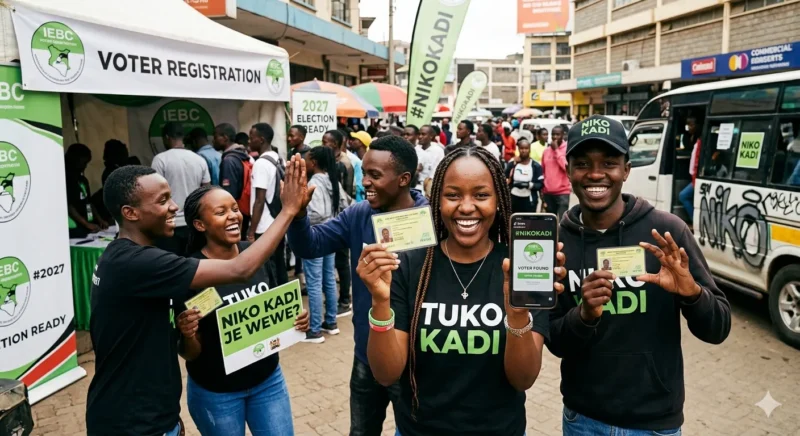


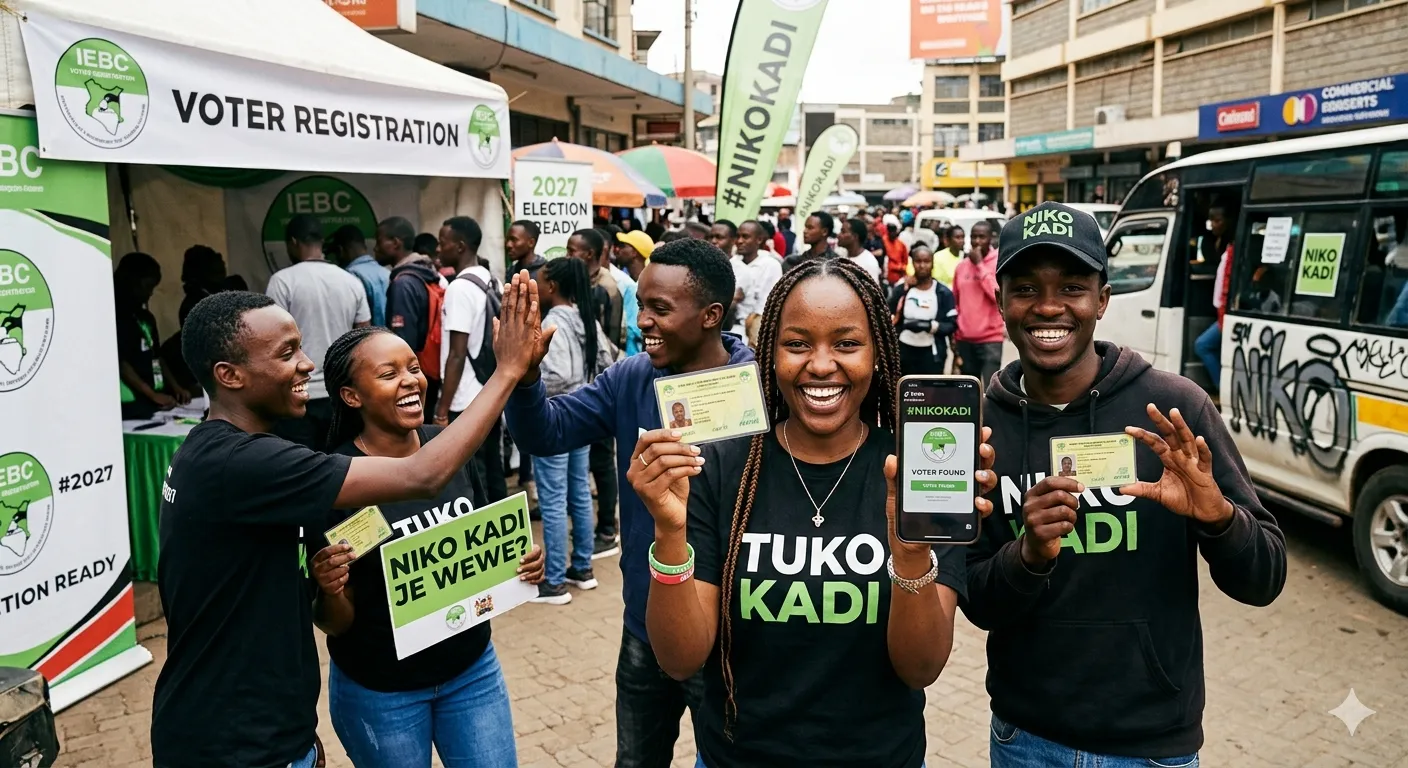
NAIROBI, Kenya — A viral sheng slang phrase, “Tuko Kadi,” has swept across Kenya, evolving from a social media trend into a youth-driven civic movement encouraging voter registration ahead of the 2027 general election.
Widely shared on platforms such as TikTok, X, and Instagram, the phrase has become both a cultural statement and a political signal, particularly among Gen Z.
Meaning behind the phrase
“Tuko Kadi,” loosely translated as “we have the card,” refers to possession of a voter’s card, an indication that one is registered and ready to vote.
Its variation, “Niko Kadi” (“I have the card”), is used to signal individual readiness to participate in the electoral process.
Originally rooted in urban slang associated with card games, where it implied having a winning hand, the phrase has been repurposed into a symbol of preparedness and empowerment among young voters.
From meme to movement
What began as a simple online expression has rapidly transformed into a grassroots mobilisation campaign.
Young Kenyans are using the hashtag #TukoKadi to share proof of registration, encourage peers to sign up, and normalise participation in democratic processes.
The movement gained traction in early 2026, coinciding with renewed voter registration efforts by the Independent Electoral and Boundaries Commission (IEBC), which is targeting millions of new voters ahead of the 2027 polls.
Across major towns, including Nairobi, long queues of young people have been reported at registration centres, reflecting growing enthusiasm among first-time voters.
Analysts say the trend reflects a shift in how young Kenyans engage with politics.
Following widespread protests in recent years, many youths are now turning from online activism to formal political participation through voting.
The campaign is largely organic and peer-driven, with no formal political affiliation.
Activists behind the movement have emphasised its independence, warning against attempts to politicise or co-opt it.
Part of the trend’s success lies in its use of humour and everyday language. Social media users have incorporated the phrase into jokes, conversations, and even personal relationships — often playfully questioning whether friends or partners are registered voters.
This approach has helped make civic engagement more relatable and accessible, particularly among younger demographics traditionally seen as disengaged from formal politics.
Challenges and concerns
Despite its momentum, the movement faces practical challenges, including limited access to registration centres and gaps in voter education.
Some participants have called for clearer communication from authorities on registration procedures and updates.
Also Read: Kenya waives Ksh 1,000 ID replacement fee for six months to boost voter registration
Critics have also cautioned that the trend risks becoming performative if not matched by actual voter turnout during elections. However, supporters argue that it represents a crucial step in reversing years of youth voter apathy.
More than a trend
As Kenya moves closer to the 2027 elections, “Tuko Kadi” is increasingly being seen as more than just a viral phrase.
It represents a broader cultural and political awakening among young people, one that blends digital influence with real-world civic action.
By turning voter registration into a visible and shared experience, Gen Z is redefining participation in democracy, signalling a shift from passive observation to active involvement in shaping the country’s future.
